Updated 16 October 2026 | Estimated reading time: 8–9 minutes
India’s list of internationally important wetlands expanded on 15 October 2026, when the Ministry of Environment, Forest and Climate Change announced the addition of Sukhna Wetland in Chandigarh and Sauj Jheel in Uttar Pradesh. The announcement took India’s Ramsar-site tally to 103. For competitive exams, the important facts are not just the national count: location, habitat, species and the conservation issues at each site make the development much easier to remember.
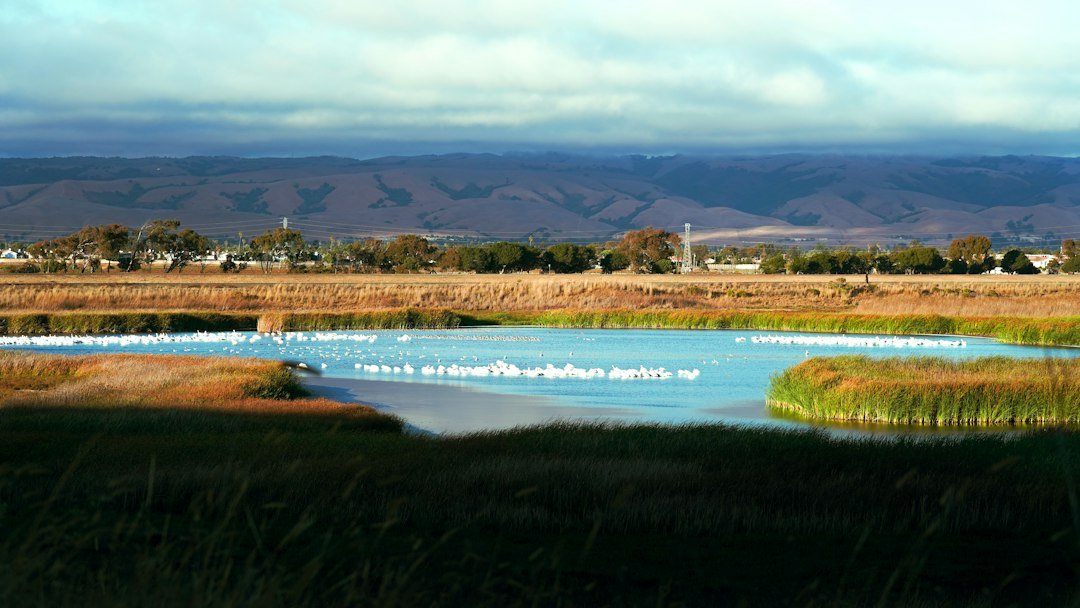
Illustrative photograph: Enq 1998 / Unsplash. This is a general wetland scene, not a photograph of Sukhna Wetland or Sauj Jheel.
What happened?
The Ministry’s official release, issued through the Press Information Bureau, reported that the two wetlands had been designated for the List of Wetlands of International Importance under the Convention on Wetlands, commonly known as the Ramsar Convention. The Convention’s own announcement gives Sukhna Wetland the Ramsar site number 2602 and Sauj Jheel the number 2603. The designation recognises the sites’ ecological significance; it also puts a sharper focus on site-specific management and the long-term maintenance of their ecological character.
The total of 103 in the dated announcement is the figure to use for this development. International site directories may take time to synchronise after a new designation, so when a current affairs figure appears inconsistent across a live dashboard and a dated official announcement, retain the date and authority alongside the number.
1. Sukhna Wetland: an urban-edge wetland in Chandigarh
Sukhna Wetland lies at the edge of Chandigarh, at the base of the Outer Himalayas. The Convention on Wetlands describes it as a peri-urban reservoir that helps regulate sediment and water flows from its surrounding catchment. “Peri-urban” means that the wetland sits close to an urban area, where the way land is used around it can strongly affect the water body.
The site does not consist of open water alone. Its habitat range includes shallow shoreline or littoral vegetation, scrub and forest as well as open water. Water levels fluctuate seasonally. This variety matters because different species use different parts of a wetland for feeding, resting, nesting, breeding or shelter. A reservoir can therefore be both a water-management feature and an ecological system.
Birdlife and species of concern
Sukhna supports resident waterbirds and migratory birds using the Central Asian Flyway. The official Ramsar site announcement identifies the vulnerable common pochard (Aythya ferina) and endangered Pallas’s fish eagle (Haliaeetus leucoryphus) among the species of particular note. It also identifies the endangered black pond turtle (Geoclemys hamiltonii) in the shallow littoral habitats.
These names connect the current affairs item to conservation terminology. “Vulnerable” and “Endangered” are threat categories, not names of legal protections or habitat types. If a question asks which species was specifically linked to Sukhna in the 15 October Ramsar announcement, use the original source rather than transferring a species from another wetland.
Management challenge
The Convention identifies sediment entering from the catchment and invasive species as management challenges. Erosion upstream can carry soil into a reservoir, affecting water depth and habitats. Invasive plants can change the balance of a wetland ecosystem and reduce the habitat available to native species. The site has a management plan, including soil- and moisture-conservation measures to reduce erosion and sediment loads, along with periodic removal of invasive plants.
Sukhna also has recreational and educational value for Chandigarh residents. The policy question is how to maintain those uses while protecting ecological functions. That is the practical meaning of wetland management: not simply declaring a site important, but keeping the water, habitats and species-supporting processes in a condition that can persist.
2. Sauj Jheel: a shallow lake in Uttar Pradesh’s Ganga floodplain
Sauj Jheel is in Uttar Pradesh, in the floodplain of the Ganga River. It is a shallow lake surrounded by farmland and forms part of a wider network of wetlands. The Convention notes that the site is close to Saman Bird Sanctuary, another Ramsar site, numbered 2413. Wetlands in a connected landscape can support ecological movement and habitat use beyond the boundary of a single site.
The vegetation recorded at Sauj includes sacred lotus (Nelumbo nucifera) and wild sugarcane (Saccharum spontaneum). Vegetation is not merely scenery: it creates places for nesting and breeding, provides shelter and contributes food resources for other organisms. The combination of shallow water, plant cover and nearby agricultural land creates a distinctive freshwater-wetland environment.
Waterbirds and the 30,000 figure
The Ramsar announcement says Sauj Jheel regularly supports more than 30,000 individual waterbirds. This is a particularly useful numerical fact for objective exams. The same source lists the vulnerable sarus crane (Grus antigone) and greater spotted eagle (Clanga clanga) among notable waterbirds. BirdLife International has also designated the site an Important Bird and Biodiversity Area.
Remember the wording: the source is referring to waterbird individuals supported regularly by the site, not 30,000 different species. A species is a biological category; an individual is one bird. Reading units carefully is as important in biodiversity questions as it is in economic statistics.
Management actions proposed
The Convention lists proposed management measures including a seasonal ban on fishing, restrictions on fine-mesh fishing nets and control of cattle access to the lake. These actions relate to how human activity affects wildlife and habitat. They should be described as proposed management actions in the current source rather than as a completed blanket ban unless a later state notification confirms implementation.
What is the Ramsar Convention?
The Convention on Wetlands was adopted in the Iranian city of Ramsar in 1971, which is why the place name became the familiar label “Ramsar Convention.” Ramsar is not an acronym. The Convention provides a framework for national action and international cooperation on the conservation and wise use of wetlands. India became a Contracting Party on 1 February 1982.
The designation of a Ramsar site signals international importance under agreed criteria, which include the site’s role in supporting representative or rare wetland types and its value for species or ecological communities. Waterbird numbers, the presence of threatened species, and the role of a habitat in sustaining biodiversity can all be relevant considerations. A site does not need to look like a vast natural marsh: wetlands can include lakes, reservoirs, floodplain systems, lagoons, mangroves and other wetland types.
“Wise use” is a core concept. It means maintaining the ecological character of wetlands through ecosystem-based approaches and sustainable use. Ramsar designation is not synonymous with an absolute ban on people entering or using a site, nor does it automatically make every Ramsar wetland a national park or wildlife sanctuary. Actual protections and permitted activities depend on the applicable laws, notifications and management arrangements.
Why wetlands matter to people as well as wildlife
Wetlands can store water, slow runoff, retain sediment, support water quality, provide breeding and feeding areas for wildlife and create livelihood opportunities. Depending on location and type, they can also buffer floods or drought conditions and support education, recreation and nature tourism. These benefits vary by ecosystem; a reservoir near a city and a shallow floodplain lake do not have identical hydrology or management needs.
Wetlands face pressures such as encroachment, polluted runoff, changed water flows, sediment accumulation, invasive species and unsustainable harvesting. The two new Ramsar sites illustrate how the management response must fit the site: catchment and invasive-species measures for Sukhna; controls related to fishing gear and cattle access proposed for Sauj. A designation is a starting point for sustained conservation, not the end of the work.
Key facts for competitive exams
- India’s announced Ramsar-site total: 103, as reported on 15 October 2026.
- Sukhna Wetland: Chandigarh; Ramsar site number 2602; peri-urban reservoir at the edge of the city and near the Outer Himalayas.
- Sauj Jheel: Uttar Pradesh; Ramsar site number 2603; shallow lake in the Ganga floodplain.
- Waterbirds at Sauj: more than 30,000 individuals regularly supported, according to the Convention’s announcement.
- Sukhna species examples: common pochard, Pallas’s fish eagle and black pond turtle.
- Sauj species examples: sarus crane and greater spotted eagle.
- India and the Convention: India became a Contracting Party on 1 February 1982.
Static GK connection
Chandigarh is a Union Territory and the shared capital of Punjab and Haryana. Uttar Pradesh is a state in northern India and includes part of the Ganga floodplain. The Central Asian Flyway is a major migratory route relevant to bird conservation. These geography links are useful, but do not confuse the flyway with a Ramsar site or with a protected-area category.
India facts: Prime Minister Narendra Modi; President Droupadi Murmu; capital New Delhi; currency Indian rupee (₹).
Possible MCQ areas
Revise the 103-site total; the locations of Sukhna Wetland and Sauj Jheel; their Ramsar site numbers; the waterbird count associated with Sauj; the species explicitly linked to each site; the 1971 adoption of the Convention; India’s 1982 accession date; and the meaning of “wise use.” A good question may ask candidates to distinguish a site designation from a national park notification or to match a wetland with its state or Union Territory.
Official sources
- PIB: India’s Ramsar-site tally reaches 103, 15 October 2026
- Convention on Wetlands: site descriptions and species details
- Convention on Wetlands: India country profile (use the dated 15 October announcement for the new-site tally)
Related reading
- Daily Current Affairs 16 October 2026
- India’s seaweed cultivation sector and coastal livelihoods
- Current Affairs Hub · Competitive Exams Preparation Hub
Use dated official announcements for the most recent designations. Wetland counts can change as sites are added and international databases are updated.