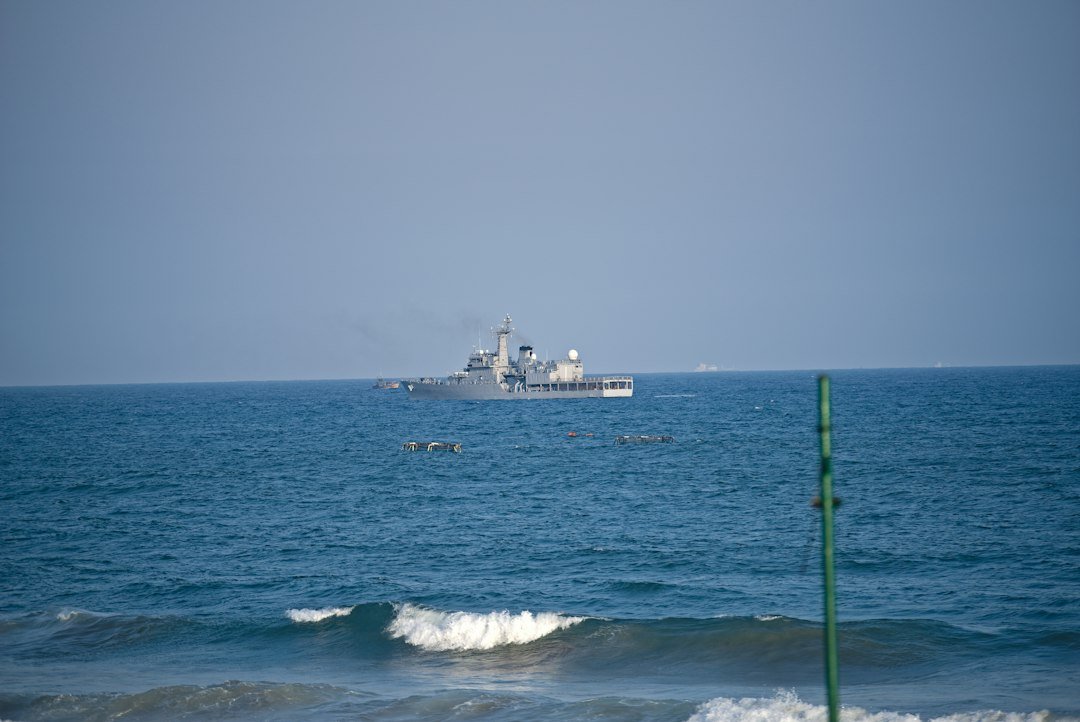
Illustrative stock photograph; this is not a photograph of Shreyas. The official release describes the vessel as launched, not commissioned or inducted into active service.
Daily Current Affairs — 11 October 2026 brings together official developments in infrastructure, defence, biodiversity, science and economic policy. The aim is not just to list announcements, but to explain their figures, institutional context and likely relevance for SSC, Banking, Railways, UPSC and state-level examinations.
At a glance: The Prime Minister’s Office announced a Chennai programme involving projects worth more than ₹13,000 crore; the Poonamallee–Vadapalani stretch of Chennai Metro Phase II is valued at about ₹4,900 crore and includes a 3.7-km double-decker structure. The National Biodiversity Authority distributed ₹2.02 crore in access-and-benefit-sharing funds among 27 States and 3 Union Territories. India’s reported quantum-secure communication network has reached 1,000 km against a target of 2,000 km, while the bioeconomy is reported above US$195 billion, with a target of US$300 billion by 2030.
1. Chennai development projects: transport, ports and petroleum infrastructure
What happened?
In a release dated 10 October, the Prime Minister’s Office said Prime Minister Narendra Modi would visit Chennai on 11 October to lay foundation stones, inaugurate and dedicate projects worth more than ₹13,000 crore. The proposed programme covers metro rail, national highways, railways, ports, petroleum infrastructure and education. The official announcement describes the programme and scope; readers should check subsequent official releases for confirmation of which individual events were completed.
Key figures and projects
- Chennai Metro Phase II: The Poonamallee–Vadapalani stretch is valued at about ₹4,900 crore. The corridor includes a 3.7-km double-decker structure and signalling designed to support driverless operations.
- National highways: Projects worth around ₹3,700 crore are listed. These include the 36-km four-laned Vadugapatti–Therkuvenganallur section of NH-744, a 30-km four-laned Madurai Ring Road section of NH-744A and the proposed four-lane Thiruvarur Bypass on NH-83.
- Railways: Works worth more than ₹750 crore include the Karaikal–Peralam railway line and three rail flyovers in and around Coimbatore.
- Amrit Bharat Station Scheme: Five stations named in the programme are Palani, Vellore Cantonment, Ambasamudram, Paramakkudi and Namakkal.
- Ports: The package includes works at Chennai Port, Kamarajar Port and V.O. Chidambaranar Port, including storage and EXIM warehousing, cruise-terminal improvements, cargo capacity and dredging.
- Petroleum: The Group II/III Lube Oil Base Stocks project at Chennai Petroleum Corporation Limited’s Manali refinery is valued at around ₹1,620 crore and has a stated capacity of 270,000 metric tonnes per annum.
Why it matters
These projects are relevant because urban mobility, road links, rail freight and port capacity operate as parts of a connected logistics system. Metro investment can improve urban connectivity; highway and rail works can reduce bottlenecks for passengers and freight; ports handle goods moving through maritime trade. An exam answer should distinguish the aggregate project package from each individual project cost, and an announcement from completed work.
The 3.7-km double-decker Metro structure is a notable infrastructure fact. The reference to driverless signalling points to automation in mass transit, while the petroleum project links industrial infrastructure with specialty products used in manufacturing. For transport questions, remember the named stations and highway numbers exactly as stated in the official release.
2. IIT Madras Brain Centre: cellular-level brain mapping
The Chennai programme also includes dedication of the Sudha Gopalakrishnan Brain Centre at IIT Madras. The PMO announcement describes a mission to map more than 100 human brains into three-dimensional atlases at cellular resolution across different life stages, from the foetal stage to old age. It also refers to C-STROKE, a human ischaemic-stroke atlas containing more than 1,000 annotated microscopic sections from a stroke-affected brain.
A brain atlas is a structured reference map used to understand the organisation of brain tissue. Cellular-resolution mapping aims to describe features at a finer level than an ordinary clinical scan. A curated stroke atlas can provide researchers with consistent material for studying tissue changes. The announcement concerns research infrastructure and datasets; it should not be interpreted as a claim that the project has already produced a cure for stroke.
Exam connection: revise IIT Madras as an institution of national importance, the difference between ischaemic stroke (associated with blocked blood supply) and haemorrhagic stroke (associated with bleeding), and how research datasets support scientific discovery.
3. Indian Navy’s next-generation offshore patrol vessel Shreyas launched
The Ministry of Defence reported that Yard 3040, named Shreyas, was launched at Garden Reach Shipbuilders & Engineers (GRSE) in Kolkata on 10 October 2026. Mrs Reyman Kochhar launched the vessel in the presence of Vice Admiral Ajay Kochhar, Vice Chief of the Naval Staff. The Sanskrit name Shreyas means “best” or “most excellent.”
The vessel belongs to the Next Generation Offshore Patrol Vessel (NGOPV) programme. Construction is being undertaken at two shipyards: GRSE in Kolkata and Goa Shipyard Limited (GSL) in Goa. The Ministry lists intended roles including maritime surveillance, search and rescue, protection of offshore assets, humanitarian assistance and disaster relief (HADR), and anti-piracy operations.
The word “launched” matters. It is a construction milestone and is not synonymous with a ship being commissioned into active service. Launch, fitting-out, sea trials, delivery and commissioning are distinct stages. In an exam response, connect this development with indigenous shipbuilding, maritime domain awareness and the Make in India and Aatmanirbhar Bharat initiatives. Static facts include GRSE’s location in Kolkata and GSL’s location in Goa.
4. National Biodiversity Authority distributes ₹2.02 crore in benefit-sharing funds
The National Biodiversity Authority (NBA) announced the distribution of ₹2.02 crore among 27 States and 3 Union Territories. The amounts represent their shares of Access and Benefit-Sharing (ABS) contributions received from seed-sector companies using agricultural biological resources. The crops listed in the official release include rice, eggplant, cauliflower, cucumber, hot pepper, bottle gourd, bitter gourd, tomato and okra.
Where a biological resource had been procured through markets or traders and individual benefit claimers could not be identified, the NBA used a distribution method recommended by an expert committee and approved by the Authority. Allocation to the relevant State Biodiversity Boards and Union Territory Biodiversity Councils was based on cultivation area reflected in agricultural statistics. The top ten States accounted for ₹1.43 crore of the total distribution, or about 70.8% of ₹2.02 crore.
Why it matters
ABS is intended to ensure that benefits arising from the use of biological resources are shared within the biodiversity-governance framework. The policy challenge is to allow research and commercial use while supporting conservation and communities connected with those resources. The fund distribution should not be confused with a conventional farm subsidy or a payment to seed companies; it is a distribution to public biodiversity bodies from contributions related to biological-resource use.
Static GK connection: the NBA operates at national level; State Biodiversity Boards and Biodiversity Management Committees perform roles at state and local levels. Questions may ask which institution is responsible for access-and-benefit-sharing or which resources are covered by biodiversity rules.
5. Quantum-secure communication and India’s bioeconomy
At the 121st annual session of the PHD Chamber of Commerce and Industry, Science and Technology Minister Dr Jitendra Singh called for closer coordination among government, industry, academia, research institutions and start-ups to turn Indian research into commercial products. The PIB account reported that India had reached 1,000 km of quantum-secure communication against an eight-year target of 2,000 km. It also reported that India’s bioeconomy exceeded US$195 billion, with a target of US$300 billion by 2030.
These are two different measures. Quantum-secure communication is a technology and infrastructure milestone associated with secure transmission of information. The bioeconomy covers economic activity built around biological resources, biotechnology and related life-science applications. They both illustrate the policy objective of turning research capability into useful, scalable technology, but they should not be treated as interchangeable indicators.
The 1,000-km figure is progress against a stated target, not proof that every Indian communications link is quantum-secure. Likewise, US$300 billion is a target for 2030, not the current size of the bioeconomy. Competitive examinations often test the distinction between a current figure and a future target.
6. Fifth Kautilya Economic Conclave: “Resilience in an Age of Flux”
The Fifth Kautilya Economic Conclave was held in New Delhi from 3 to 5 October 2026 and was reported as concluded on 10 October. Organised by the Institute of Economic Growth in partnership with the Ministry of Finance, it brought together more than 200 policymakers, economists, academics, financial experts and international thought leaders, including over 80 international participants from around 30 countries. Its theme was “Resilience in an Age of Flux.”
The conclave discussed economic and geopolitical change, global fragmentation, technology, trade, financial stability, investment, employment and climate finance. Economic resilience is the capacity to absorb shocks, adapt and maintain essential functions while continuing to develop. It is broader than reporting high GDP growth for a single quarter or year. Vice-President C. P. Radhakrishnan inaugurated the conclave on 3 October. Union Finance and Corporate Affairs Minister Nirmala Sitharaman addressed a special plenary on India’s economic priorities.
This is relevant to banking and economy examinations because it connects macroeconomic stability with inclusion, fiscal choices, trade, financial markets and technology-driven change.
How to revise these developments for exams
For SSC and state examinations, focus on the Chennai Metro’s cost and structure, the five Amrit Bharat stations, highway numbers, the meaning of HADR, GRSE’s location, the NBA’s role and the Kautilya conclave theme. Banking examinations may use the quantum-communication target, bioeconomy figures or the link between infrastructure and logistics. UPSC candidates should consider broader implications: how transport corridors influence regional growth, how benefit-sharing can support conservation, and how public research can move toward commercial application.
Possible MCQ areas
- Chennai project package value, Metro Phase II stretch cost and 3.7-km double-decker structure.
- Five Amrit Bharat stations and the NH-744, NH-744A and NH-83 references.
- Shreyas as an NGOPV, the meaning of its name and the roles of GRSE and GSL.
- ₹2.02 crore ABS distribution, 27 States, 3 Union Territories and the NBA’s mandate.
- Quantum-secure communication progress of 1,000 km against a 2,000-km target and the bioeconomy target of US$300 billion by 2030.
- Kautilya Economic Conclave’s theme, dates, organiser and partner ministry.
Official sources
- Prime Minister’s Chennai visit and development projects — PIB
- Launch of NGOPV Shreyas — Ministry of Defence / PIB
- Access and Benefit-Sharing funds — Ministry of Environment / PIB
- Quantum-secure communication and bioeconomy figures — PIB
- Fifth Kautilya Economic Conclave — Ministry of Finance / PIB
Related reading
- Daily Current Affairs 10 October 2026: Telecom Fraud, PACS, Parcel Logistics and Science
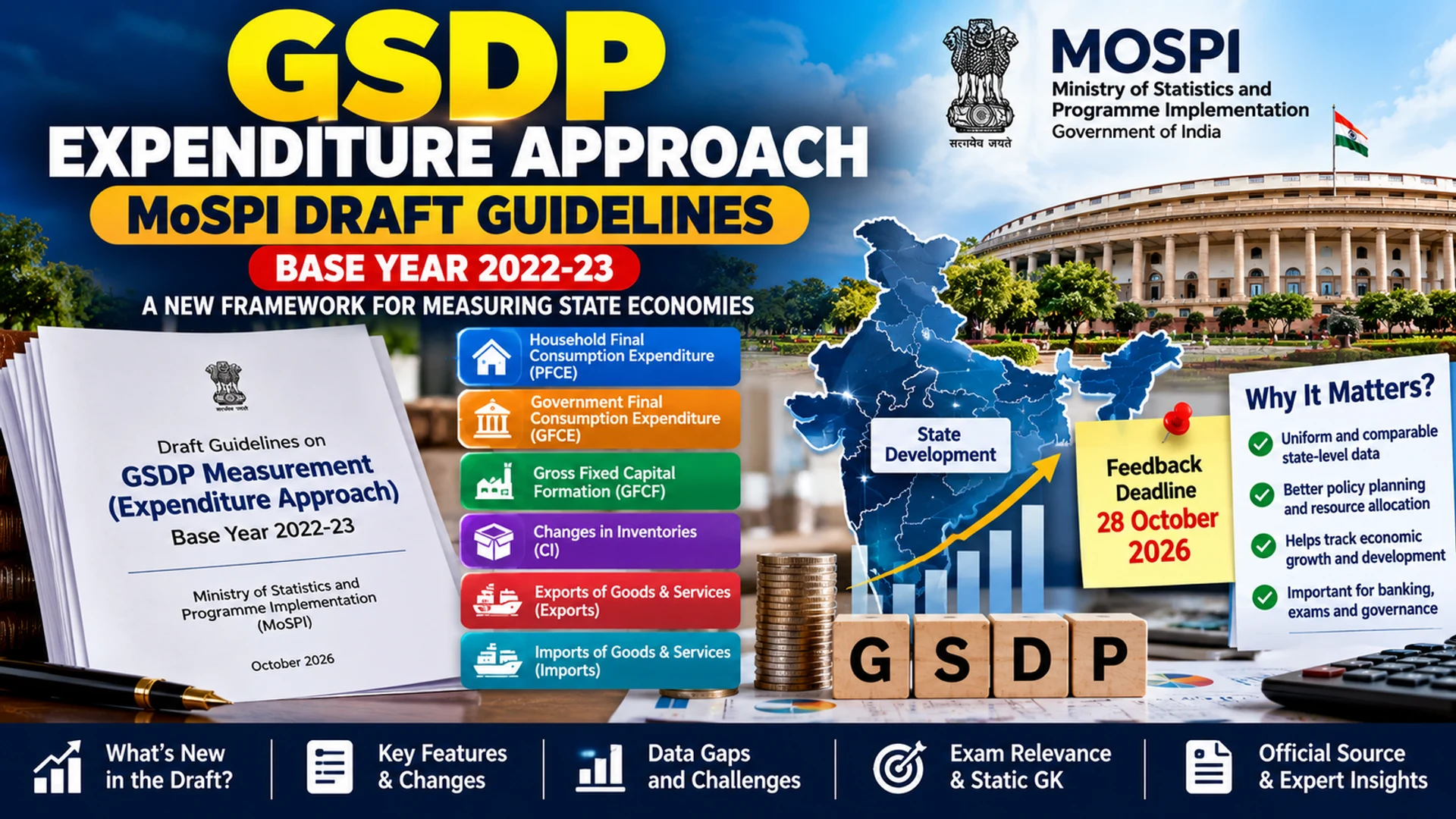
- MoSPI draft GSDP expenditure-approach guidelines: base year 2022–23
- RBI Monetary Policy October 2026: repo rate and policy stance
- Current Affairs Hub
Editorial note: Facts and figures follow the linked official releases available on 11 October 2026. The Chennai programme is described as announced or scheduled where the source is a pre-event release.