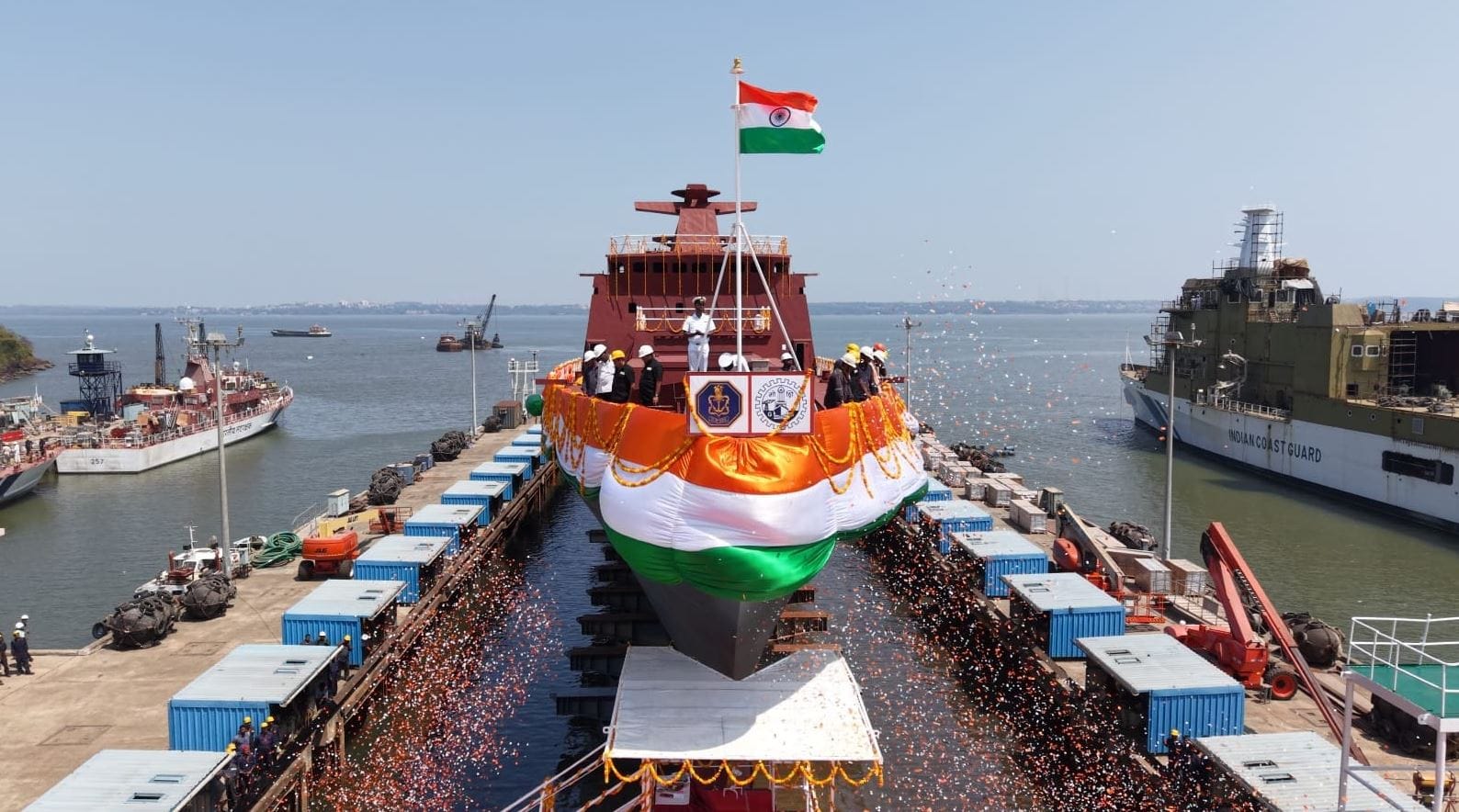
In a significant stride towards naval modernization and indigenous defense manufacturing, India launched its second stealth frigate, Tavasya, on March 22, 2025. This advanced warship, part of Project 1135.6, represents a major leap in India’s maritime defense capabilities and showcases the country’s growing self-reliance in shipbuilding.
Key Features of Tavasya
Tavasya, named after the mace of the legendary warrior Bhima from the Mahabharata, boasts impressive specifications:
Length: 124.8 meters
Beam: 15.2 meters
Draught: 4.5 meters
Displacement: Approximately 3,600 tons
Maximum speed: 28 knots
The frigate incorporates advanced stealth features, including radar-absorbing materials and a carefully shaped hull, significantly reducing its radar cross-section. This design enhances the ship’s ability to evade detection, a crucial advantage in modern naval warfare.
Advanced Weaponry and Systems
Tavasya is equipped with a formidable array of weapons and sensors:
BrahMos supersonic cruise missile system
Shtil-1 medium-range surface-to-air missiles
100 mm A-190 naval gun
Torpedo tubes and anti-submarine rocket launchers
Advanced sonar suites
Capability to operate naval helicopters like Kamov Ka-27 or Ka-31
The integration of these systems demonstrates India’s progress in localizing critical defense technologies, aligning with the government’s vision of Atmanirbhar Bharat (self-reliant India).
Significance for India’s Naval Capabilities
Enhanced Maritime Defense: Tavasya significantly boosts India’s ability to conduct offensive and defensive operations across the full spectrum of naval warfare – air, surface, and sub-surface.
Indigenous Manufacturing: The successful construction of Tavasya at Goa Shipyard Limited (GSL) marks a major advancement in India’s self-reliance in warship construction.
Stealth Technology: The incorporation of stealth features represents a technological leap for the Indian Navy, enhancing its strategic capabilities in the Indian Ocean Region.
Multi-role Operations: Designed for versatility, Tavasya can execute a wide range of missions, increasing the operational flexibility of the Indian Navy.
Export Potential: The successful indigenization of critical components opens up possibilities for India to become a global leader in warship exports.
Project 1135.6 and India’s Naval Modernization
Tavasya is the second vessel in the Project 1135.6 series, also known as the Talwar-class frigates. This project, initially a collaboration between India and Russia, has evolved to showcase India’s growing capabilities in defense production. The first ship of this new batch, named Triput, was launched in July 2024.
Implications for India’s Defense Sector
The launch of Tavasya underscores India’s commitment to:
Strengthening naval capabilities to address evolving maritime challenges
Achieving self-reliance in defense manufacturing
Developing a robust domestic shipbuilding ecosystem
Enhancing export potential in the defense sector
Defence GK: What to Remember
For competitive examinations, the Tavasya story is best revised through four connected facts: the ship class, the project number, the role of indigenous defence production, and the broader Indian naval-modernisation programme. Questions can be built from any one of these links rather than only from the vessel’s name.
Static GK Connections
Project 1135.6: Link the project with the Talwar-class frigate family.
Indian Navy: Revise its major combatant categories, including frigates, destroyers, corvettes and submarines.
Shipbuilding: Connect naval projects with the wider idea of indigenisation and domestic defence manufacturing.
Exam angle: Remember the vessel, class, shipyard/project and strategic purpose together.
Possible MCQ Areas
Likely questions include identifying Tavasya’s class, matching Project 1135.6 with its ship family, identifying the service involved, or linking the story to India’s naval-indigenisation policy. Revise these as a connected chain instead of isolated facts.
Historical Context
This article records a 2025 defence-development story. Ship names, commissioning schedules and project milestones can change with later official announcements. For current status, readers should check Ministry of Defence and Indian Navy releases.
How to Revise Naval Modernisation
For naval current affairs, study a ship through five identifiers: class, project, service, construction or shipyard context, and operational role. Then connect the development with the larger themes of indigenous design, local shipbuilding, maritime security and defence exports. This method helps in statement-based questions because one option may correctly name the vessel but incorrectly assign its class or role.
Related Defence GK
Continue with the Current Affairs Hub for newer defence developments and the Daily Quiz for practice.