Updated: 6 November 2026 | Reading time: 8–9 minutes
India’s metro story is no longer confined to a handful of large cities. A figure highlighted by the Prime Minister on 5 November puts the country’s operational network at nearly 1,200 kilometres across 26 cities, compared with 248 km in five cities in 2014. More than one crore passengers use metro services each day. The headline numbers are useful, but the more important question for an examination candidate is what they reveal about urbanisation, public transport, infrastructure finance and sustainable mobility.
What happened?
On 5 November 2026, Prime Minister Narendra Modi referred to the expansion of India’s metro network while discussing the transformation of urban India. The comparison was between 248 km of metro lines operating in five cities in 2014 and nearly 1,200 km spread across 26 cities today. He also cited daily ridership of over one crore.
The figures describe a shift in scale: metro rail has become a multi-city public transport system rather than a service restricted to a few metropolitan centres. The expansion includes new corridors, extensions to existing systems and the emergence of metro connectivity in cities that previously depended mainly on road transport.
Why the expansion matters
Travel time and productivity: A high-capacity rail corridor can move large passenger volumes through congested urban areas with more predictable journey times. Reliability matters as much as speed: commuters can plan work, education and appointments around a regular service.
Urban form: Metro stations influence where housing, offices, retail and public facilities locate. When land-use planning is coordinated with transit, cities can support compact development and reduce dependence on private vehicles. Poorly coordinated development, however, can leave stations inaccessible or encourage costly sprawl.
Public transport integration: A metro line is not a complete door-to-door solution. Its effectiveness depends on feeder buses, walking routes, cycling facilities, interchange design, last-mile connectivity and common passenger information. The station-to-destination leg often determines whether a commuter chooses public transport.
Environmental benefits: Moving passengers in electric rail vehicles can reduce local tailpipe emissions and road congestion, particularly when services attract users away from private cars. The net climate benefit also depends on electricity generation, construction emissions, occupancy and whether the system actually replaces motorised trips.
Background: from five cities to a national network
Metro rail in India developed initially in a small number of urban centres. Delhi’s system became a major reference point for planning, operations and multimodal integration. Subsequent projects in cities such as Bengaluru, Chennai, Hyderabad, Kolkata, Mumbai, Kochi, Lucknow, Ahmedabad, Nagpur and Pune widened the geography of urban rail. The policy framework has also diversified: conventional underground/elevated metro, regional rapid transit and water-based urban transport address different travel markets and urban conditions.
Government background material published by PIB in March 2026 recorded over 1,155 km of metro network across 26 cities, daily ridership above 1.15 crore, and an annual metro budget rising from ₹5,798 crore in 2013–14 to ₹29,550 crore in 2025–26. The November 5 statement used the rounded figure of nearly 1,200 km and more than one crore daily passengers. These are not necessarily contradictory: they are rounded figures and may use slightly different reporting dates or network definitions. In exam answers, state the source and date alongside the number.
Key facts at a glance
- 2014 baseline: 248 km across five cities.
- November 2026 headline: nearly 1,200 km across 26 cities.
- Daily use: more than one crore passengers, according to the PMO statement.
- PIB March 2026 backgrounder: 1,155 km, 26 cities and more than 1.15 crore daily ridership.
- Budget comparison: ₹5,798 crore (2013–14) to ₹29,550 crore (2025–26), as reported by PIB.
- Not the same as RRTS: Metro and regional rapid transit serve related but distinct travel needs; statistics may explicitly include or exclude RRTS.
Challenges that numbers alone do not answer
Construction is capital-intensive and requires coordination among Union, state and urban agencies. Projects face land acquisition, utility shifting, tunnelling risks, cost escalation and long gestation periods. Once operational, systems must cover electricity, staff, maintenance, safety, rolling stock and station management. Fare revenue rarely tells the whole financial story; ridership, non-fare revenue, public support and wider economic benefits are relevant to appraisal.
Equity is another test. A network can be impressive on a map while remaining difficult to use for people living far from stations, persons with disabilities, low-income commuters or those who cannot afford feeder transport. Accessibility, affordable fares, safe station approaches and reliable interchange should therefore be treated as performance measures, not optional additions.
Exam relevance
UPSC/State PSC: Urbanisation, sustainable cities, transport planning, public investment, urban governance, climate co-benefits and inclusive infrastructure (GS-I, GS-II and GS-III). A balanced mains answer should discuss both network growth and integration, affordability, financing and environmental assessment.
Railway/engineering exams: Distinguish metro rail from suburban rail and regional rapid transit; understand traction, signalling, station accessibility, corridor planning and passenger capacity at a conceptual level.
SSC, banking and other exams: Memorise the comparison (248 km/5 cities in 2014; nearly 1,200 km/26 cities in 2026), daily ridership above one crore, and the source/date caveat. Infrastructure figures can appear in data interpretation and current-affairs questions.
Static GK connection
- Kolkata: India’s first metro system began operations in 1984.
- Kochi: known for India’s Water Metro initiative, integrating water transport with urban mobility.
- Kolkata underwater metro: a notable river-crossing tunnel innovation.
- Delhi–Meerut: associated with the Namo Bharat regional rapid transit system, not simply interchangeable with conventional metro statistics.
- Policy vocabulary: Transit-Oriented Development (TOD), multimodal integration, last-mile connectivity, modal shift and urban local bodies.
Possible MCQ areas
For general competitive examinations, questions may test the 2014 and 2026 network figures, the number of cities, daily ridership, Kolkata’s first metro milestone, Kochi Water Metro, and the difference between metro and regional rapid transit. Mains questions are more likely to ask whether metro expansion alone can solve urban congestion or how transport should be integrated with land-use planning.
Official sources
- PIB/Prime Minister’s Office: Metro network expansion statement, 5 November 2026
- PIB backgrounder: Metro Rail—A Catalyst for Sustainable Urban Growth and Financial Resilience, 15 March 2026
Related reading on DailyGKUpdate
Continue with the Current Affairs Hub, Competitive Exams Preparation Hub, and Railway Exams Preparation Hub for transport, infrastructure and exam-specific preparation.
Editorial note: figures are attributed to official releases and rounded as published; network definitions and reporting dates should be checked when comparing datasets.
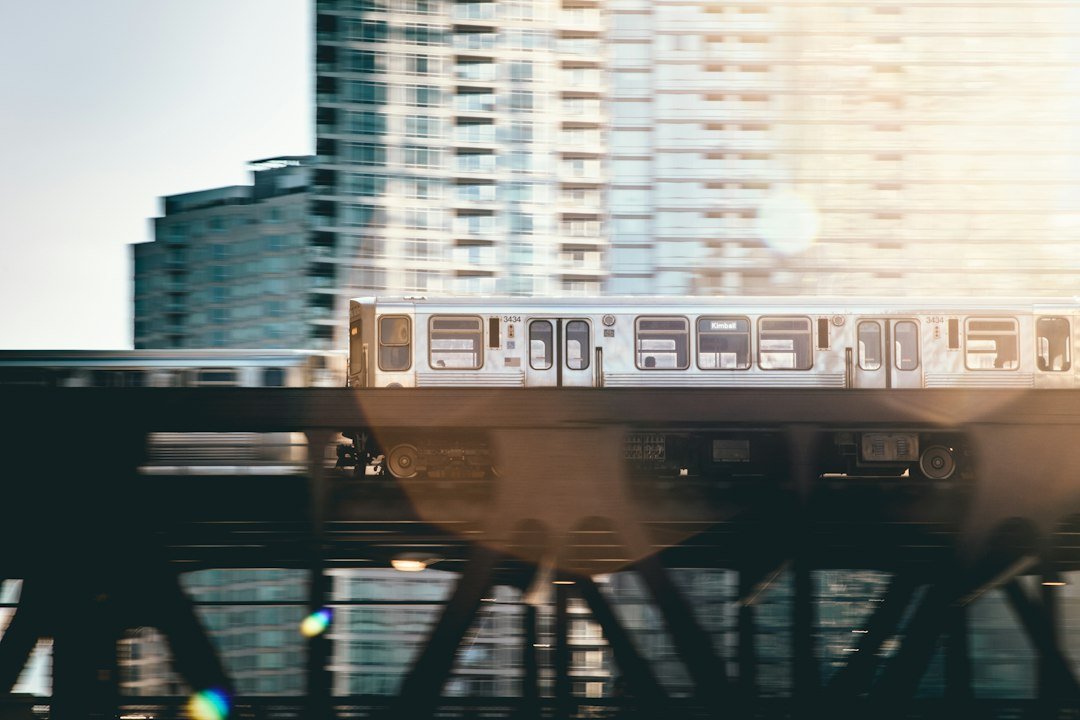
Featured image: Sawyer Bengtson via Unsplash (Unsplash licence).