India’s Aditya-L1 solar observatory has helped researchers reconstruct a coronal mass ejection (CME) in three dimensions and show that the eruption expanded asymmetrically rather than like a uniform bubble. The Department of Science and Technology/PIB reported the finding on 3 November 2026. Scientists combined the Visible Emission Line Coronagraph (VELC) on Aditya-L1, NASA’s Solar Dynamics Observatory (SDO) images and a three-dimensional geometric-kinematic model. The research was published in Astrophysical Journal Letters.
The result matters because the shape and expansion of a CME influence how it moves through the heliosphere, interacts with the solar wind and may affect the timing and intensity of space-weather disturbances near Earth. It is a research advance in observation and modelling—not a forecast that a particular solar eruption will damage India or its satellites.
Research facts at a glance
- Official announcement: 3 November 2026, Department of Science and Technology/PIB
- Event studied: CME observed on 5 August 2024, from an active region near the Sun’s western limb
- Instrument: VELC aboard Aditya-L1; complementary NASA SDO/AIA imaging
- Spectral line: 530.3 nm green emission from highly ionised iron in the corona
- Coronal plasma temperature cited: about 1.8 million kelvin
- Result: non-uniform, asymmetric expansion; an inclined CME axis and uneven lateral expansion reproduced the observed spectral pattern
What is a coronal mass ejection?
A coronal mass ejection is a large release of magnetised plasma and magnetic field from the Sun’s corona into interplanetary space. It can carry billions of tonnes of material and travel at a wide range of speeds. A CME is not the same thing as a solar flare: a flare is a sudden release of electromagnetic energy, while a CME is an ejection of plasma and magnetic field. They may occur together, but neither term should be used as a synonym for the other.
When a CME is directed towards Earth and its magnetic field interacts strongly with Earth’s magnetosphere, it can contribute to a geomagnetic storm. Depending on severity and location, space-weather events may disturb satellite operations, radio communication, navigation signals, spacecraft charging, high-frequency communications and power-grid systems. Many CMEs do not produce major effects at Earth; direction, speed, magnetic orientation and interaction with the solar wind matter.
Why observing the lower corona is difficult
The solar corona is much fainter than the bright solar disc. A coronagraph creates an artificial eclipse by blocking direct light from the disc, allowing instruments to observe the surrounding atmosphere. VELC is an internally occulted coronagraph designed to image and study the corona close to the solar limb through imaging, spectroscopy and spectropolarimetry.
Aditya-L1 is India’s first space-based observatory dedicated to studying the Sun. Launched on 2 September 2023 by PSLV-C57, it was inserted into a halo orbit around the Sun–Earth Lagrange Point 1 (L1) on 6 January 2024. L1 is about 1.5 million kilometres from Earth towards the Sun. The location allows a nearly continuous view of the Sun without the regular Earth-orbit occultations that interrupt observations from some other vantage points. It also enables in-situ measurements of particles and magnetic fields before solar disturbances reach Earth’s environment.
Aditya-L1 carries seven payloads: four remote-sensing instruments that observe the Sun and three instruments that measure particles and fields near L1. VELC is the primary coronagraph payload; the others include SUIT, SoLEXS, HEL1OS, ASPEX, PAPA and the magnetometer. Together they cover different layers, wavelengths and physical quantities, rather than duplicating one instrument’s function.
How VELC revealed an asymmetric eruption
The event analysed by the researchers occurred on 5 August 2024 near an active region at the western limb of the Sun. The team used VELC spectroscopy alongside the Atmospheric Imaging Assembly (AIA) on NASA’s Solar Dynamics Observatory. AIA images showed how the CME propagated across the plane of the sky; VELC supplied information about motion towards and away from the observer along the line of sight.
VELC measured the corona in the 530.3-nanometre emission line produced by highly ionised iron. The hot coronal plasma associated with this line is around 1.8 million K. The Doppler effect changes the observed wavelength when emitting plasma moves relative to the observer: a shift towards shorter wavelengths (blueward) indicates motion towards the observer, while a shift towards longer wavelengths (redward) indicates motion away. These two branches in the spectrum were a key clue to the eruption’s three-dimensional motion.
The researchers found that the CME did not expand uniformly. A simple symmetric-bubble model could not reproduce the observed spectral structure and its evolution. A model with an inclined CME axis and asymmetric lateral expansion produced a much closer match. Combining imaging, spectroscopy and modelling therefore helped recover geometry that a single image alone could not fully reveal.
Why three-dimensional reconstruction matters
Solar eruptions are three-dimensional, but an image records a projection onto a detector. A structure can move partly across the image and partly along the line of sight; the latter component is difficult to infer from a photograph alone. Spectroscopy adds a velocity dimension, and a physically tested model can connect the two observations.
Knowing whether a CME expands symmetrically or preferentially in one direction can improve estimates of its speed and evolution. The asymmetry affects how the eruption experiences drag and interacts with the solar wind during its journey through the heliosphere. Those processes can influence the eventual arrival time of a CME at Earth. Better constraints on early motion are therefore useful for space-weather research and, over time, for forecasting models.
The study’s method is especially valuable in the lower corona, where CMEs evolve rapidly and line-of-sight motion cannot be obtained from imaging alone. The researchers plan to apply the approach to other eruptions. It is a complementary technique, not a replacement for multi-viewpoint observations or the full set of space-weather measurements.
Who carried out the research?
The work involved scientists from the Indian Institute of Astrophysics (IIA), an autonomous institution under the Department of Science and Technology. Saurabh Tripathi, an IIA PhD student, was the lead author; Tanmoy Samanta, a solar astronomer at IIA, was the corresponding author; and Jayant Joshi contributed to the three-dimensional geometric-kinematic modelling. VELC was designed and fabricated by IIA at its MGK Menon Laboratory for Space Sciences on the CREST campus at Hosakote, with substantial support from ISRO.
The paper is available through the DOI 10.3847/2041-8213/aea295. The PIB release summarises the instrument combination and the main scientific result; the journal paper is the primary research publication for technical details and methods.
Aditya-L1: static GK and science-exam facts
- Mission: India’s first space-based solar observatory; launched 2 September 2023 by PSLV-C57 from Sriharikota.
- Orbit: halo orbit around Sun–Earth L1, approximately 1.5 million km from Earth towards the Sun; insertion on 6 January 2024.
- L1: a Lagrange point where gravitational and orbital effects permit a spacecraft to maintain a relatively stable position in the Sun–Earth system; it is not a point on the Sun or a location where the spacecraft lands.
- VELC: Visible Emission Line Coronagraph; primary Aditya-L1 payload for coronal imaging/spectroscopy.
- Other payloads: SUIT, SoLEXS, HEL1OS, ASPEX, PAPA and MAG (magnetometer).
- CME: coronal mass ejection; flare: electromagnetic energy release; geomagnetic storm: disturbance in Earth’s magnetosphere. These are related but distinct terms.
- Doppler shift: wavelength change caused by relative motion; blue shift indicates approaching motion and red shift indicates receding motion in the line of sight.
UPSC, State PSC, SSC and science exam relevance
For UPSC and State PSC General Studies, the topic connects space technology, India’s scientific institutions, solar-terrestrial physics, disaster/technology resilience and space-weather applications. SSC, Railways, teaching and other general-science papers may test mission names, launch vehicle, L1 location, payload full forms, the distinction between CME and solar flare, or the Doppler principle. Banking and defence exams can connect space-weather risk to satellite navigation and communication infrastructure.
Possible MCQ areas
- Aditya-L1 launch vehicle/date and Sun–Earth L1 distance.
- VELC’s full form and its purpose as a coronagraph.
- Which payloads are remote sensing and which are in-situ instruments?
- What is a CME, and how does it differ from a solar flare?
- What do blueward and redward Doppler shifts indicate?
- Why combine imaging, spectroscopy and three-dimensional modelling?
- Which institution developed VELC and which ministry oversees IIA?
Official sources and related reading
- PIB/DST release, 3 November 2026: VELC and asymmetric CME expansion
- ISRO Aditya-L1 mission page — orbit, payloads and science objectives
- ISRO Aditya-L1 mission details
- Indian Institute of Astrophysics: VELC instrument
- Original research paper — Astrophysical Journal Letters
- Daily Current Affairs 4 November 2026 · Competitive Exams Preparation Hub · UPSC & State PSC Preparation Hub
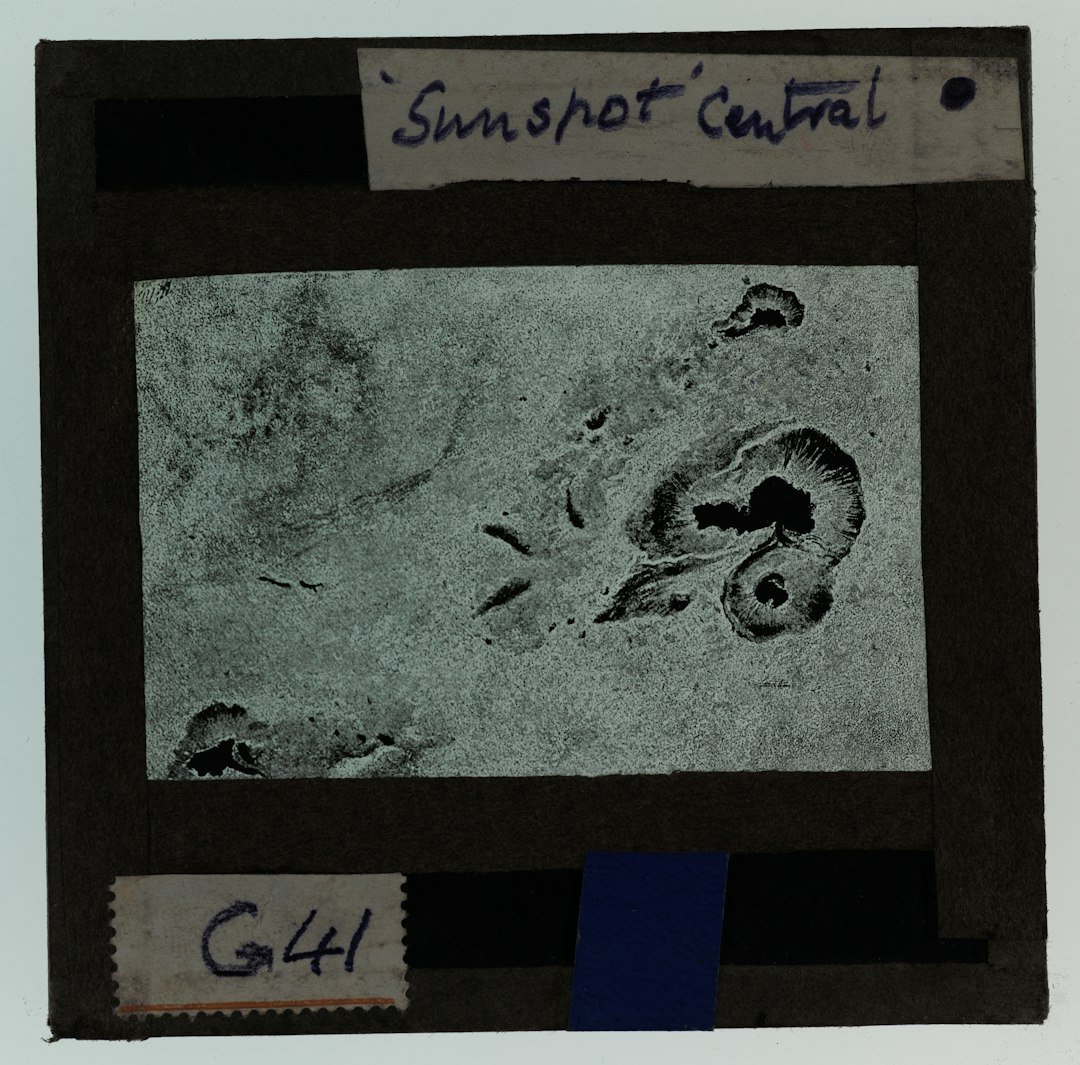
Image note: The featured Unsplash solar-surface image is illustrative and is not the VELC observation or the figure from the scientific paper. Scientific conclusions above are attributed to the PIB/DST summary and original journal publication.


One thought on “Aditya-L1 VELC Discovers Asymmetric CME Expansion: Solar Eruption and Space Weather Explained”
Comments are closed.