Daily Current Affairs for 12 October 2026 brings together verified developments in science and technology, energy security, infrastructure and defence. The edition focuses on the figures and institutional details most likely to matter in competitive examinations, while distinguishing announcements from outcomes that will take time to materialise.
In this edition: ₹86 crore support for AI-led drug discovery; coal stocks at thermal power plants remain above 18 million tonnes; Chennai receives a package of infrastructure projects worth over ₹13,000 crore; and Indian Navy ships prepare for the INDRA and KONKAN bilateral exercises. A separate recruitment guide already covers the 3,548 RRB NTPC Graduate vacancies announced this week.
1. Government backs AI-driven drug discovery with ₹86 crore RDI support
The Technology Development Board (TDB), under the Department of Science and Technology (DST), has signed an agreement with Bengaluru-based Peptris Technologies Private Limited for ₹86 crore in support from the Research Development and Innovation (RDI) Fund. The announcement was published by the Press Information Bureau on 12 October 2026.
The project is titled VIGOR: Advancing AI-Discovered Molecules from Bench to Clinic. Its total project cost is ₹172 crore, so the TDB support represents half of the stated project cost. The funding is structured as optionally convertible debt, rather than being described as a conventional grant.
The programme aims to advance four drug candidates from Technology Readiness Level (TRL)-4 to TRL-6 through preclinical development, validation and preparation for clinical trials. The candidates are PEPR111, aimed at neuromuscular disorders and oncology; PEPRX101, focused on alopecia; PEPR202, targeting neuropathy; and PEPR112, focused on Duchenne muscular dystrophy (DMD). The programme envisages a three-year development pathway, subject to scientific and regulatory requirements.
Why it matters
Artificial intelligence can help researchers screen molecules and identify promising candidates, but an algorithmic prediction is not an approved medicine. Experimental validation, preclinical safety work and clinical development remain essential. The programme addresses the gap between computational discovery and a candidate that can progress towards clinical evaluation. For India, the strategic question is whether domestic research can translate into therapies, intellectual property and stronger pharmaceutical innovation capacity.
Background and exam relevance
The Technology Development Board is associated with the Department of Science and Technology and supports the development and commercialisation of indigenous technology. DST is part of the Union Government’s science and technology framework. The RDI Fund is relevant to questions on public support for research, innovation financing and technology commercialisation. Remember the distinction between drug discovery, preclinical development and clinical trials: they are different stages, and the announcement does not mean the four candidates are approved for public use.
2. Coal stocks at power plants remain above 18 million tonnes
The Ministry of Coal reported on 12 October that coal stocks at domestic coal-based power plants had remained above 18 million tonnes (MT) since 29 September. Stocks stood at 18.932 MT on 29 September and 18.205 MT on 10 October 2026.
The Ministry said the rate of depletion slowed substantially in early October. During September, stocks declined by about 7.28 MT over the month, an average fall of approximately 0.24 MT a day. In the first ten days of October, the total decline was about 0.56 MT, or around 0.06 MT a day.
Logistics and supply figures help explain the change. Power-sector rake loading averaged 469 rakes per day from 1–10 October, compared with 426 per day in September—an increase of about 10%. Actual coal supply to the power sector averaged 2.49 MT per day in early October, compared with 2.21 MT per day in September. The October average was above the stated supply plan of 2.37 MT per day, and supply exceeded that plan on nine of the first ten days.
Why it matters
Coal inventory is a practical indicator of thermal-power fuel availability, but a stock figure should not be read in isolation. Daily consumption, transport capacity, plant location and the distribution of stocks across stations also matter. The Ministry said supplies to plants with critical stocks were being monitored and coal was being redistributed according to need, in coordination with Coal India Limited, Singareni Collieries Company Limited, Indian Railways and power utilities.
Static GK connection
Coal is a fossil fuel and remains an important input for India’s electricity system. Coal India Limited (CIL) is a major public-sector coal producer; SCCL is another key coal-mining company. In exam answers, distinguish coal production, coal dispatch/supply and coal stock at power plants. They measure different points in the supply chain. The 18.205 MT figure refers to reported stock at domestic coal-based power plants on 10 October, not total coal reserves or annual production.
3. Chennai infrastructure package crosses ₹13,000 crore
Prime Minister Narendra Modi’s Chennai programme on 11 October involved projects worth over ₹13,000 crore across metro rail, highways, railways, ports, petroleum and education-related research infrastructure. The Prime Minister’s Office and PIB published details around the programme.
A major component was the Poonamallee–Vadapalani stretch of Phase II of the Chennai Metro Rail project, built at a reported cost of around ₹4,900 crore. The corridor includes a 3.7-km double-decker structure and signalling designed to support driverless operations. The package also includes national highway works worth around ₹3,700 crore, including sections of NH-744 and NH-744A, and the Thiruvarur Bypass on NH-83.
Rail-related projects include the Karaikal–Peralam railway line, three rail flyovers in and around Coimbatore, and the inauguration of five redeveloped Amrit stations: Palani, Vellore Cantonment, Ambasamudram, Paramakkudi and Namakkal. Port projects cover Chennai Port, Kamarajar Port and V.O. Chidambaranar Port, with the stated aims of improving cargo handling, storage, passenger facilities and maritime logistics.
The programme also included the foundation stone for a Group II/III Lube Oil Base Stocks project at Chennai Petroleum Corporation Limited’s Manali refinery. The project has a stated cost of around ₹1,620 crore and a capacity of 270 thousand metric tonnes per annum. At IIT Madras, the Sudha Gopalakrishnan Brain Centre was dedicated to the nation; the related scientific mission aims to map more than 100 human brains into three-dimensional atlases at cellular resolution. The C-STROKE atlas, based on more than 1,000 annotated microscopic sections from a stroke-affected brain, was also highlighted.
Why it matters
The package illustrates how transport, ports, industrial inputs and research infrastructure can complement one another. Metro rail can improve urban mobility; roads and railways support movement of people and goods; ports influence trade logistics; and research facilities can expand scientific capacity. The ₹13,000 crore figure is the combined value cited for the programme, not the cost of a single project.
Exam relevance and static GK
Chennai is the capital of Tamil Nadu, a state on India’s southeastern coast along the Bay of Bengal. Revise the differences between a metro corridor, national highway, railway line, port infrastructure and an industrial refinery project. For questions on Amrit Bharat Station Scheme, remember that it concerns the redevelopment and modernisation of railway stations; the five stations named above are the ones included in this Chennai programme announcement.
4. Indian Navy’s bilateral engagements: INDRA-2026 and KONKAN-26
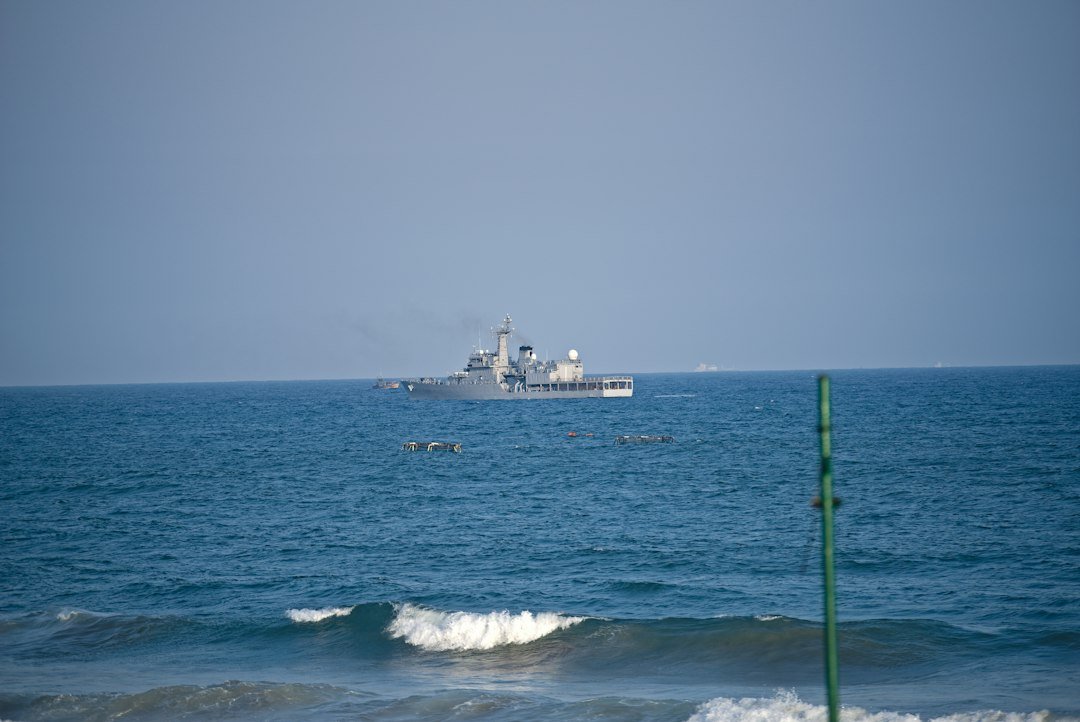
Two Indian Navy deployments reported by the Ministry of Defence are relevant for defence and international-relations revision. INS Sahyadri arrived at Vladivostok, Russia, on 10 October to take part in Exercise INDRA 2026, scheduled from 13 to 18 October. The exercise is bilateral, involving the Indian Navy and the Russian Federation Navy. The programme is to include harbour-phase engagements followed by coordinated activities at sea.
Separately, guided-missile stealth frigate INS Trishul arrived at Plymouth in the United Kingdom for Exercise KONKAN-26 with the Royal Navy. The Ministry’s release describes KONKAN as an annual India–UK bilateral maritime exercise, conducted off Plymouth in two phases from 8 to 15 October. The harbour phase includes professional interactions, cross-deck visits and other exchanges.
Why it matters
Such exercises are intended to build operational understanding, communication and interoperability between partner navies. They are also opportunities for professional engagement and maritime cooperation. For exam preparation, do not interchange the exercise names or host locations: INDRA is with Russia at Vladivostok; KONKAN is with the United Kingdom at Plymouth.
5. Recruitment update to track separately
Indian Railways has announced 3,548 graduate-level Non-Technical Popular Categories (NTPC–Graduate) vacancies through RRB Centralised Employment Notification CEN 06/2026. This is a recruitment item, so its detailed eligibility, post-wise vacancies, dates and application instructions belong in a dedicated recruitment guide rather than being repeated here. The online application deadline reported by PIB is 6 November 2026.
Read the existing guide: RRB NTPC Graduate Recruitment 2026: 3,548 Vacancies, Eligibility, Dates and Selection Process. Applicants should confirm the notification and application status on official RRB platforms before acting.
Quick revision: key facts
- AI drug discovery: TDB–DST support of ₹86 crore to Peptris under the RDI Fund; total project cost ₹172 crore; four drug candidates; target progression TRL-4 to TRL-6.
- Coal stocks: 18.205 MT at domestic coal-based power plants on 10 October 2026; early-October supply averaged 2.49 MT/day.
- Chennai projects: More than ₹13,000 crore across metro, highways, railways, ports, petroleum and research infrastructure; Chennai Metro Phase II stretch cost around ₹4,900 crore.
- Naval exercises: INDRA-2026—India and Russia, Vladivostok, 13–18 October; KONKAN-26—India and UK, Plymouth, 8–15 October.
- Recruitment: RRB NTPC Graduate CEN 06/2026—3,548 vacancies; application deadline reported as 6 November 2026.
Possible MCQ areas
- Which department is associated with the Technology Development Board? Department of Science and Technology.
- What was the coal stock reported at domestic coal-based power plants on 10 October 2026? 18.205 MT.
- Which Chennai Metro Phase II stretch was inaugurated in the programme? Poonamallee–Vadapalani.
- INDRA-2026 is a bilateral naval exercise between India and which country? Russia.
- Exercise KONKAN-26 is conducted with which navy? Royal Navy of the United Kingdom.
- What is the total project cost of the VIGOR programme? ₹172 crore.
Official sources
- PIB: TDB–DST agreement for ₹86 crore AI-driven drug-discovery support (12 October 2026)
- PIB, Ministry of Coal: Coal stocks and supply data (12 October 2026)
- Prime Minister’s Office: Chennai development projects worth over ₹13,000 crore
- PIB, Ministry of Defence: INS Sahyadri and Exercise INDRA-2026
- PIB, Ministry of Defence: INS Trishul and Exercise KONKAN-26
- PIB, Ministry of Railways: RRB NTPC Graduate recruitment announcement
Related reading on Daily GK Update
- Daily Current Affairs 11 October 2026
- Daily Current Affairs 10 October 2026
- RRB NTPC Graduate Recruitment 2026
- Current Affairs Hub: Daily News and Exam Revision
Editorial note: This edition uses official government releases for the stated figures and programme details. Announced targets and project plans should not be read as proof that future milestones have already been completed.