Daily Current Affairs 2 October 2026 brings together the developments that carry the highest value for SSC, Banking, UPSC, Railways, Defence and state-level examinations. Instead of treating each item as a headline, this edition explains the underlying scheme, institution, number and policy mechanism so that the information can be revised later without returning to the news cycle.
1. GOBARdhan Scheme gets a unified national framework
The Ministry of Petroleum and Natural Gas launched the GOBARdhan Scheme on 1 October 2026 after the Union Cabinet approved it on 6 August 2026. The scheme has a total outlay of ₹23,731 crore and a ten-year implementation framework covering FY 2026-27 to FY 2035-36. Its central objective is to accelerate India’s compressed biogas (CBG) ecosystem by combining offtake assurance, pricing support, capital assistance, pipeline connectivity and credit support under one framework.
The scheme targets an almost ten-fold increase in domestic CBG production to around 5 MMSCMD. CBG is produced by processing organic feedstock such as cattle dung, agricultural residue and other biodegradable waste. This makes the scheme relevant not only to energy security, but also to waste management, rural income and circular-economy questions.
Key data to remember
| Parameter | Figure / detail |
|---|---|
| Total outlay | ₹23,731 crore |
| Framework period | FY 2026-27 to FY 2035-36 |
| CBG production target | About 5 MMSCMD |
| CBG Obligation | 3% in FY27; 4% in FY28; 5% from FY29 for specified CNG/PNG segments |
| Administered CBG price | ₹2,110/MMBtu |
| Greenfield capital assistance | Up to ₹2 crore per TPD installed CBG capacity |
| Credit guarantee | Up to 85% of outstanding at default |
Union Minister Hardeep Singh Puri launched the scheme, while Petroleum Secretary Dr Neeraj Mittal has been associated with its policy implementation framework. The official release also states that more than 217 CBG plants had been commissioned by August 2026, with installed capacity above 1,700 TPD.
The larger economic estimates are equally important: the framework is expected to support more than ₹40,000 crore in foreign-exchange savings, over ₹75,000 crore in GDP contribution, more than 1.5 lakh jobs, replacement of about 10 million tonnes of fossil fuel, reduction of more than 40 million tonnes of CO2 and production of up to 250 million tonnes of organic manure over the longer implementation horizon.
Static GK connection
Remember the distinction between biogas and compressed biogas. Biogas is generated through anaerobic digestion of organic matter, while CBG is purified and compressed so that it can be used as a gaseous transport or domestic fuel. Questions may also connect GOBARdhan with the ideas of waste-to-wealth, circular economy, bioenergy and energy security.
2. Special Campaign 6 begins on 2 October
Special Campaign 6.0 enters its implementation phase on 2 October 2026. The campaign focuses on cleanliness, reducing pendency, record management, better use of government office space and, with particular emphasis this year, the collection, segregation and scientific disposal of e-waste.
The preparatory phase ran during September. The implementation phase runs from 2 to 31 October 2026, followed by an evaluation phase from 16 to 30 November 2026. The programme is coordinated through the Department of Administrative Reforms and Public Grievances (DARPG).
The numbers show why this is more than a cleanliness slogan. Across earlier Special Campaigns and related monthly reforms monitoring up to July 2026, the government reported more than 24.20 lakh sites covered, over 180.48 lakh files weeded out or closed, and more than ₹5,102.91 crore generated through scrap disposal.
In Special Campaign 5 alone, nearly 11.6 lakh sites were covered, 29.52 lakh files were weeded out, 233.75 lakh sq. ft. of office space was freed, and approximately ₹833.92 crore was earned from scrap disposal.
Exam angle: Link Special Campaign 6 with good governance, e-governance, record management, pendency reduction and e-waste management. These are administrative concepts that can appear in descriptive papers as well as objective questions.
3. FASTag rules revised for exempted vehicles of Divyangjan and PwD users
The government has revised the process for issuance of exempted FASTags for eligible vehicles of persons with disabilities. The new guidelines take effect from 2 October 2026 and replace the earlier annual-renewal approach with a validity period linked to the percentage of disability recorded in valid official documentation.
| Recorded disability | FASTag validity under revised guideline |
|---|---|
| 70% to 100% | 5 years |
| 40% to below 70% | 3 years |
The process is tied to recognised disability documentation such as the Disability Certificate and UDID records. The eligibility remains subject to the applicable highway fee rules. This is a useful policy example of using a digital tolling platform with identity and entitlement verification.
4. NHAI expands Multi-Lane Free Flow tolling
The National Highways Authority of India has rolled out Multi-Lane Free Flow (MLFF) tolling at Paranur Toll Plaza in Tamil Nadu. It is the state’s first MLFF location and is situated on the Tambaram–Tindivanam section of NH-179B.
Unlike a conventional toll plaza, MLFF is designed to allow vehicles to pass without stopping at a physical barrier. The system combines Automatic Number Plate Recognition (ANPR) with FASTag based transaction mechanisms. The operational logic is important: less stopping can reduce queue formation, fuel consumption and time lost at plazas.
Other MLFF locations identified by the government include Chorayasi on NH-48 in Gujarat, Mundka-Bakkarwala on UER-II in the Delhi-NCR region, multiple plazas on the Delhi–Jaipur NH-48 corridor in Rajasthan, and Gharaunda on NH-44 in Haryana.
Static GK: ANPR identifies vehicles through number-plate recognition, while FASTag is an RFID-based electronic toll collection system. The exam-ready connection is therefore transport infrastructure + digital technology + electronic toll collection.
5. Asian Games 2026: India reaches 62 medals and enters two major finals
At the Aichi-Nagoya 2026 Asian Games, India’s medal tally stood at 62 medals as of 1 October: 10 gold, 22 silver and 30 bronze. This is a live competition, so the date attached to the figure matters.
In men’s hockey, India defeated Pakistan 4-3 in the semifinal on 1 October. Captain Harmanpreet Singh scored twice from penalty corners, and Abhishek scored the decisive late goal with 49 seconds remaining. India advanced to the final against Malaysia.
In men’s T20 cricket, India defeated Sri Lanka by 124 runs. India made 169/7 in 20 overs; Sri Lanka were dismissed for 45. Ishan Kishan scored an unbeaten 80 from 46 balls, while Jasprit Bumrah took two wickets in the opening over. India qualified for the final against Pakistan.
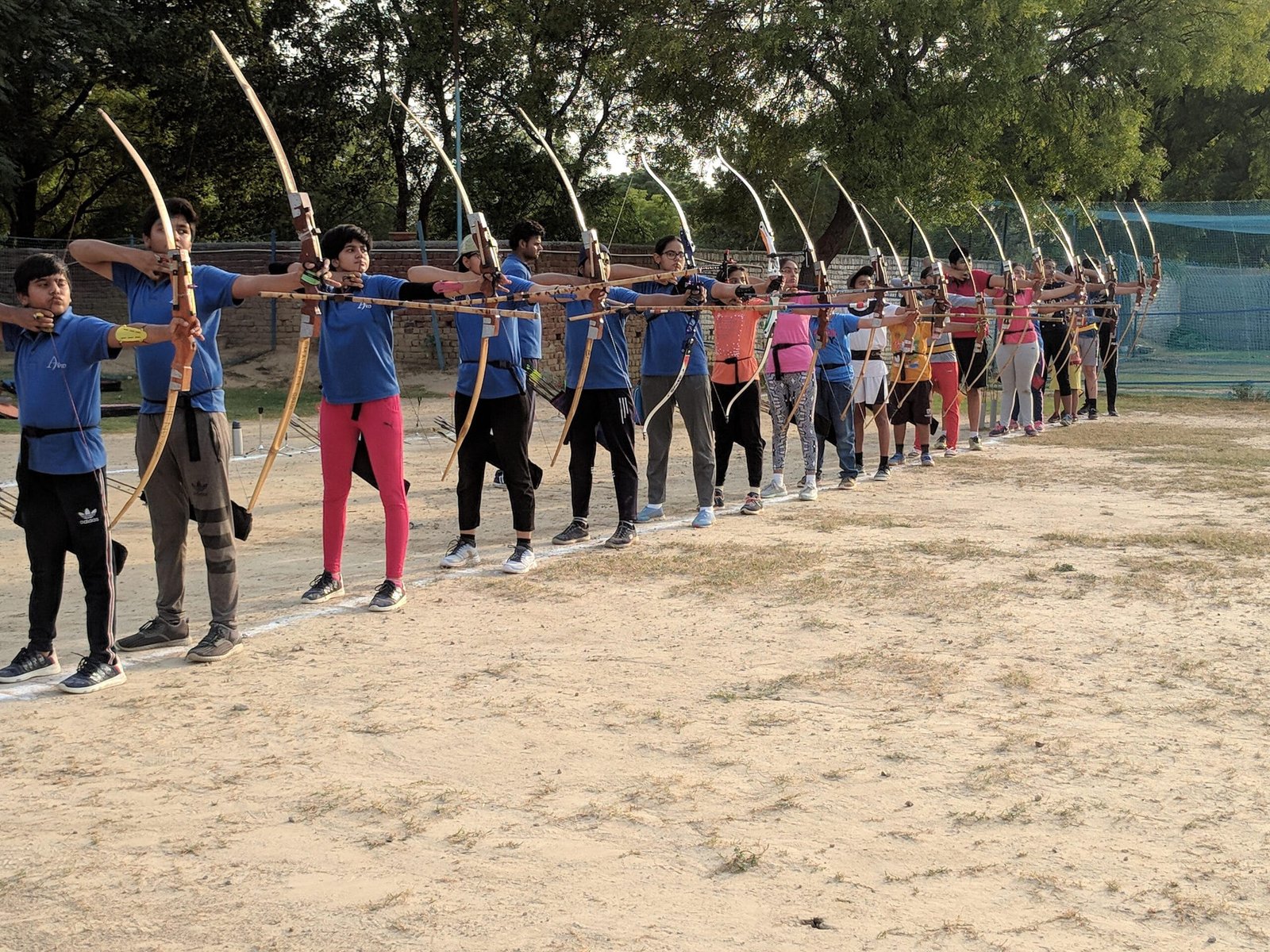
Other Indian medal highlights on 1 October included a silver in the men’s skiff won by Prince Noble and Manu Francis, a bronze by Ganesh Mani Ratnam Thirumuru in men’s compound archery, and a bronze for the Indian women’s squash team.
Japan static GK
The Games are hosted in Aichi-Nagoya, Japan. Japan’s capital is Tokyo, its currency is the yen, and its Prime Minister is Sanae Takaichi. The Asian Games are organised under the Olympic Council of Asia (OCA).
Exam relevance: what should be memorised?
For Banking and SSC, the high-yield items are the GOBARdhan outlay, production target, Special Campaign phases, FASTag validity periods, MLFF technology, Asian Games medal composition and final-match pairings. UPSC and state PCS candidates should go one layer deeper into circular bioenergy, governance reform, digital tolling and the role of international sports bodies.
Possible MCQ areas
- GOBARdhan’s ₹23,731 crore outlay and FY 2026-27 to FY 2035-36 framework.
- CBG production target of around 5 MMSCMD.
- Special Campaign 6 implementation and evaluation phases.
- FASTag validity under the revised Divyangjan/PwD guideline.
- MLFF components: ANPR and FASTag.
- India’s 62-medal composition as of 1 October 2026.
- Harmanpreet Singh and Ishan Kishan’s performances at the Asian Games.
- Aichi-Nagoya, Japan, OCA and Japan’s capital/currency.
Official sources
PIB — GOBARdhan Scheme launch · PIB — Special Campaign 6 and FASTag releases · NHAI · Olympic Council of Asia