The Indian Navy received Vindhyagiri (Yard 3024), the seventh and final ship of the Nilgiri-class Project 17A indigenous advanced stealth frigate programme, from Garden Reach Shipbuilders and Engineers Limited (GRSE) at Kolkata on 27 November 2026. The delivery completes the planned series of seven Project 17A frigates and marks a major milestone in India’s effort to design and build complex warships domestically.
Vindhyagiri is the third Project 17A ship built by GRSE and the final vessel of the class to be delivered. The Ministry of Defence said all seven frigates were delivered to the Navy within 23 months of the first-of-class INS Nilgiri’s delivery on 20 December 2024. The final ship’s build period was compressed to 68 months, compared with 84 months for the first-of-class.
Vindhyagiri delivery: key facts
| Particular | Verified details |
|---|---|
| Ship | Vindhyagiri, Yard 3024 |
| Project | Project 17A / Nilgiri class |
| Type | Indigenous advanced stealth guided-missile frigate |
| Delivery date | 27 November 2026 |
| Shipyard | Garden Reach Shipbuilders and Engineers Ltd, Kolkata |
| Class position | Seventh and final ship; third Project 17A ship built by GRSE |
| Indigenisation content | 75% |
| Industrial participation | Over 200 MSMEs |
| Employment linked to project | About 4,000 direct and more than 10,000 indirect jobs |
What is Project 17A?
Project 17A is the Indian Navy’s programme to build seven next-generation stealth frigates. The ships are designed as multi-mission platforms for operations across the air, surface and sub-surface domains. They are intended to perform tasks such as protecting maritime approaches, escorting high-value naval units, supporting sea-control operations and responding to different threats in the maritime domain.
The class is a follow-on to the earlier Project 17 (Shivalik-class) frigates. Project 17A incorporates improvements in stealth, weapons and sensors, automation, survivability and platform management. The ships are designed by the Navy’s Warship Design Bureau (WDB). The construction programme is overseen by the Warship Overseeing Team at Kolkata, while the ships are built at two public-sector shipyards: Mazagon Dock Shipbuilders Limited (MDL), Mumbai, and GRSE, Kolkata.
Four of the seven ships are built by MDL and three by GRSE. The programme combines design work by the Navy with industrial execution by Indian shipyards and a broad supplier base. The delivery of Vindhyagiri therefore marks not only the completion of one vessel but also the completion of the seven-ship Project 17A delivery series.
Why is Vindhyagiri important?
1. Completion of the seven-ship programme
Vindhyagiri is the final ship of the seven-vessel series. The first-of-class INS Nilgiri was delivered on 20 December 2024. By 27 November 2026, all seven Project 17A ships had been delivered within a span of 23 months from that first delivery. The delivery sequence demonstrates the ability of Indian shipyards to build complex warships in a serial production programme.
2. Higher indigenisation and industrial participation
The Ministry of Defence reported an indigenisation content of 75% for Project 17A. More than 200 micro, small and medium enterprises participated in the programme. It generated approximately 4,000 direct jobs and more than 10,000 indirect jobs. These figures connect defence procurement with manufacturing, skilled employment, engineering supply chains and the wider goal of Aatmanirbhar Bharat.
Indigenisation does not mean that every component is necessarily manufactured in India. It refers to the share of indigenous content reported for the project. Candidates should avoid converting the 75% figure into a claim that the entire ship or every system is locally produced.
3. Faster construction through learning and standardisation
The construction time for Vindhyagiri was 68 months, compared with 84 months for INS Nilgiri, the first-of-class. The difference is 16 months. The Ministry attributed the reduction to institutional experience gained while building the preceding six ships. This is an example of learning-curve effects in complex manufacturing: design maturity, supplier coordination, modular construction and repeat production can shorten later build cycles.
Propulsion, sensors and combat capability
Project 17A frigates use a Combined Diesel or Gas (CODOG) propulsion arrangement. It combines diesel engines and gas turbines, which drive controllable-pitch propellers. In broad terms, diesel propulsion is efficient for economical cruising, while gas turbines provide higher power when greater speed is required. The propulsion arrangement is supported by a modern Integrated Platform Management System (IPMS), which monitors and controls major ship systems.
The ships carry an advanced suite of weapons and sensors compared with the earlier Project 17 class. The Ministry of Defence describes their capabilities across three main warfare domains:
- Anti-surface warfare: detecting and engaging hostile surface vessels.
- Anti-air warfare: detecting and responding to aircraft, missiles and other aerial threats.
- Anti-submarine warfare: locating and countering submarines and other underwater threats.
Project 17A class-level specifications published by GRSE describe a ship approximately 149 metres long, with a displacement of about 6,670 tonnes and a maximum speed of around 28 knots. These are class-level reference figures, not a separate technical measurement for Vindhyagiri on its delivery day. A knot is one nautical mile per hour, approximately 1.852 kilometres per hour.
The name Vindhyagiri and its naval history
The new frigate is named after the Vindhyagiri mountain range in Karnataka. It is also a successor in name to the earlier INS Vindhyagiri, a Leander-class frigate that served in the Indian Navy from 8 July 1981 to 11 June 2012 — a period of 31 years. The earlier ship and the new Project 17A frigate are different vessels from different generations of naval design. The shared name recognises continuity in the Navy’s ship-naming tradition.
Delivery is not the same as commissioning
A useful examination distinction is the difference between launch, sea trials, delivery and commissioning. Launch is the stage when a ship is floated for the first time. Sea trials test the vessel’s performance and systems. Delivery is the formal transfer of the completed ship from the shipbuilder to the Navy. Commissioning is the later formal induction of the vessel into operational service. The 27 November 2026 announcement was a delivery announcement; it should not be described as the commissioning of Vindhyagiri unless the Navy separately announces that event.
Project 17A and India’s maritime strategy
Indigenous frigates strengthen the Navy’s ability to maintain a sustained presence in the Indian Ocean Region and protect sea lines of communication. The Indian Ocean carries important flows of energy, containerised goods and bulk cargo. A capable surface fleet supports maritime surveillance, escort operations, deterrence and response to crises, while also contributing to humanitarian assistance and disaster relief when required.
Project 17A is part of a wider naval modernisation effort that includes aircraft carriers, submarines, destroyers, corvettes, survey vessels and anti-submarine warfare shallow-water craft. The recent delivery of INS Ashank, an indigenous anti-submarine warfare shallow-water craft, is a different project and vessel category. The distinction matters: a frigate is a larger multi-mission surface combatant, while an ASW shallow-water craft is designed primarily for anti-submarine operations in coastal and littoral waters.
India’s regional maritime engagement also has a diplomatic dimension. The 25th IORA Council of Ministers meeting and MAHASAGAR vision provide the wider context of cooperation with Indian Ocean countries on maritime safety, trade, fisheries, disaster risk and the Blue Economy.
Exam relevance: facts to remember
- Vindhyagiri (Yard 3024) was delivered to the Indian Navy on 27 November 2026.
- It is the seventh and final Project 17A Nilgiri-class frigate.
- It is the third Project 17A ship built by GRSE, Kolkata.
- Project 17A has seven ships: four built by MDL and three by GRSE.
- All seven ships were delivered within 23 months of INS Nilgiri’s delivery on 20 December 2024.
- Vindhyagiri’s build period was 68 months, compared with 84 months for INS Nilgiri.
- Project 17A has 75% reported indigenous content and involved over 200 MSMEs.
- Its propulsion system is CODOG; the ship also has an Integrated Platform Management System.
- Its warfare capabilities cover anti-surface, anti-air and anti-submarine operations.
Possible MCQ areas include the Project 17A/Nilgiri-class name, the shipyard that built Vindhyagiri, the CODOG acronym, the difference between delivery and commissioning, the 75% indigenisation figure and the three warfare domains. For Mains, link the programme with defence indigenisation, public-sector shipyards, MSME participation, maritime security and the Indian Ocean Region.
Official sources
- Ministry of Defence / PIB: Delivery of Vindhyagiri, 27 November 2026
- PIB backgrounder: Project 17A and Nilgiri-class frigate specifications
- GRSE official press releases: Project 17A class specifications
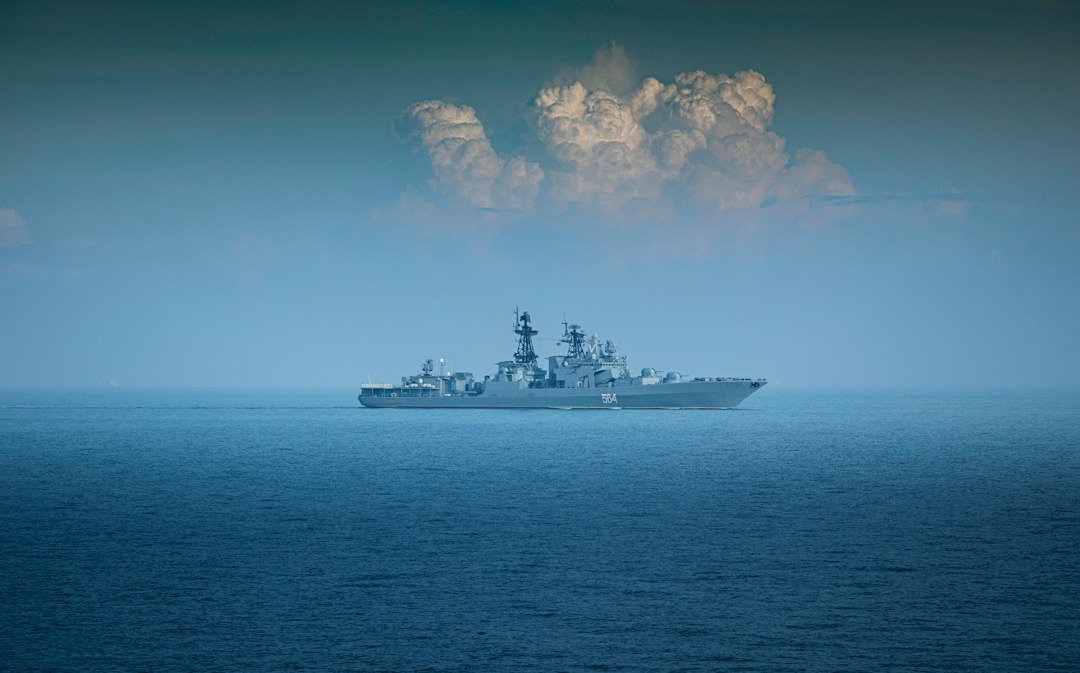
The featured image is illustrative and is not a photograph of Vindhyagiri. Delivery figures and programme data are based on the Ministry of Defence release available on 27 November 2026.

One thought on “Vindhyagiri Delivered: Project 17A’s Seventh and Final Indigenous Stealth Frigate”
Comments are closed.