Current-affairs explainer | Updated 23 October 2026 | Based on the Ministry of Education’s 18 October PIB release.
India’s Department of School Education and Literacy is using Special Campaign 6 to combine administrative clean-up with cleaner school campuses and responsible electronic-waste management. In a release dated 18 October 2026, the Department said a nationwide e-waste awareness and collection drive would be organised on 28 October 2026. The broader campaign runs from 2 to 31 October 2026.
The announcement is relevant beyond schools. It connects public administration, the circular economy, pollution prevention and digital consumption—topics that can appear in UPSC, State PSC, teaching, environment and general-awareness examinations. For schools, the challenge is practical: electronic equipment becomes waste when it is discarded, but it can contain both recoverable materials and substances that require controlled handling.
What happened?
The Department of School Education and Literacy, under the Union Ministry of Education, outlined its participation in Special Campaign 6, which is being implemented from 2 to 31 October 2026. The stated priorities include reducing pendency in official work, improving record management, cleaner school campuses and responsible electronic-waste management. The release also announced a nationwide awareness and collection drive for 28 October.
The key distinction is between a one-day collection drive and the wider month-long campaign. The drive is a specific activity within the broader effort; it should not be described as the entire campaign. Nor does the announcement, by itself, establish a collection target or prove that every school has a collection facility. Schools and communities should follow the instructions issued by their local education authorities and authorised waste handlers.
Why it matters for schools and communities
Schools increasingly rely on computers, printers, routers, projectors, displays, batteries and other electronic equipment. Devices can become unusable because of age, damage, changing software requirements or the cost of repair. When equipment is stored indefinitely in cupboards or mixed with ordinary rubbish, schools lose the opportunity to reuse functioning devices and to route end-of-life equipment into safer recovery systems.
Electronic waste is not a single uniform material. A discarded computer may contain plastics, glass, copper, aluminium and other recoverable materials, alongside components that require careful handling. Informal dismantling, open burning or uncontrolled treatment can expose people and the environment to hazardous substances. Responsible collection allows equipment to be directed to authorised channels for reuse, refurbishment or recycling where appropriate.
Schools also have an educational role. Students can learn that buying, using, repairing and disposing of electronic products are linked decisions. The campaign can make abstract ideas such as resource efficiency and pollution prevention tangible: inventory old equipment, identify items that can be repaired, keep data secure and ensure that waste is transferred through appropriate channels.
Background: what counts as e-waste?
Electronic waste, often called e-waste, refers broadly to discarded electrical and electronic equipment and its components. Examples include computers, monitors, printers, keyboards, networking equipment and certain household electronic devices. Whether an item qualifies under a particular legal category and which rules apply depends on the relevant regulations and product type.
E-waste presents two connected challenges. First, equipment contains valuable materials that can be recovered, reducing demand for some virgin resources. Second, products may contain substances that can create environmental or health risks if they are broken, burned or processed without suitable safeguards. The answer is not simply to collect everything in one pile; it is to segregate, store and channel equipment to appropriate authorised operators.
Recycling is also not the first step for every device. If a computer or projector is safe and functional, repair, refurbishment or reuse may extend its useful life. Before any device leaves an institution, however, data protection matters: storage media may contain student records, staff information, credentials or confidential documents. Data should be handled under the institution’s IT and records policies before equipment is transferred.
How a school can prepare for an e-waste collection drive
- Make an inventory. List obsolete, damaged and surplus electronic items by type, quantity and condition. Keep the inventory separate from personal or confidential data.
- Separate repairable equipment. Identify devices that may be reused or refurbished safely. Do not label working equipment as waste merely because it is older.
- Protect data. Follow the school or department’s approved process for backing up required records, removing accounts and securely erasing storage devices where appropriate.
- Store items safely. Keep equipment dry and secure. Do not dismantle devices, break screens, burn wires or mix batteries with ordinary rubbish.
- Use authorised channels. Follow the instructions of the education department or local authority and hand over e-waste to authorised collection or recycling arrangements. Ask for a receipt or transfer record where applicable.
- Document the activity. Record what was collected and transferred, the date and the receiving authorised operator. Avoid claiming a recycling outcome before it is confirmed.
- Teach the lesson. Use the activity to discuss repair, reuse, responsible purchasing, data security and safe disposal with students and staff.
How e-waste links to the circular economy
A linear model follows a simple pattern: extract resources, manufacture a product, use it and discard it. A circular approach tries to retain the value of products and materials for longer through durable design, maintenance, repair, reuse, refurbishment and recycling. E-waste collection is one part of this system, not a substitute for reducing unnecessary purchases or extending product life.
For an institution, circular thinking can begin before disposal. Buying equipment that is repairable, maintaining an asset register, extending device life where safe, planning secure data removal and using authorised recyclers can reduce waste and improve accountability. The right choice depends on safety, functionality, cost, data sensitivity and the applicable rules.
Governance and the role of public institutions
The Department of School Education and Literacy’s announcement places e-waste within a wider public-sector improvement campaign. That matters because institutions generate records and equipment as part of routine administration. Cleaner campuses and better waste handling are easier to sustain when responsibilities, inventories, collection arrangements and documentation are clearly assigned.
The PIB release is an announcement of campaign priorities and a planned drive. It should not be read as evidence that all schools have already completed collection or that a particular volume of waste has been recovered. Any numerical outcome should be taken from a subsequent official report, not estimated from the announcement.
Exam relevance and static GK
- Environment: e-waste, resource recovery, pollution prevention and safe waste management.
- Governance: Special Campaign 6, public-sector record management and implementation through institutions.
- Economy: circular economy, reuse, repair, refurbishment and material recovery.
- Education: school-level environmental awareness and practical sustainability activities.
- Data protection: secure handling of electronic storage before reuse or recycling.
For static GK, remember the institutional connection: the Department of School Education and Literacy functions under the Ministry of Education. The 28 October activity is the announced nationwide e-waste awareness and collection drive; 2–31 October is the broader Special Campaign 6 period. These dates describe the 2026 campaign and should not be memorised as permanent annual dates.
Possible MCQ areas
- Which department announced the school-focused Special Campaign 6 activities? Department of School Education and Literacy.
- On what date was the nationwide e-waste awareness and collection drive announced for 2026? 28 October 2026.
- What is the broader campaign period stated in the release? 2 to 31 October 2026.
- Which approach prioritises keeping products and materials in use for longer? The circular economy.
- Why should data be handled before a school computer is transferred for reuse or recycling? To protect confidential and personal information.
Related Daily GK Update resources
- Daily Current Affairs 23 October 2026
- Current Affairs Hub
- Competitive Exams Preparation Hub
- Latest Articles and Exam Updates
Official source and editorial note
This explainer is based on the Ministry of Education release published by PIB on 18 October 2026. The release sets out the campaign focus and the planned 28 October drive; it does not provide a final collection total. Any school-specific arrangements, collection locations or authorised-operator instructions should be confirmed with the relevant education authority. This article is an independent educational resource and is not an official government notice.
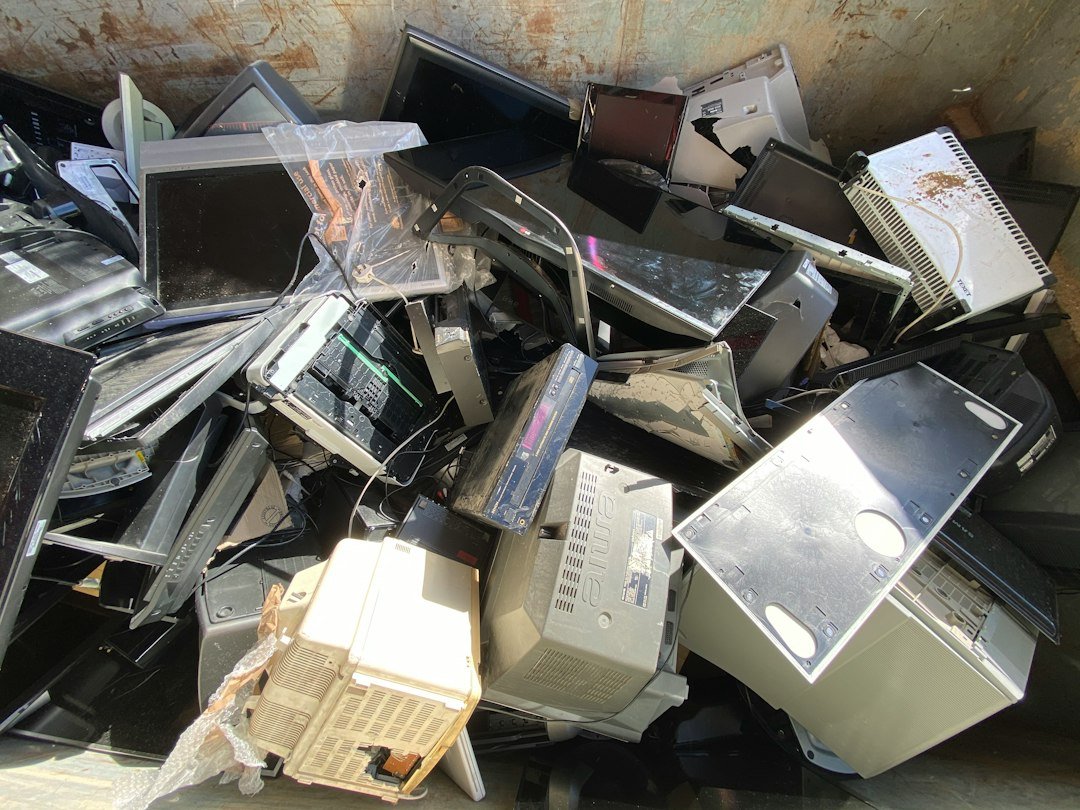
Illustrative photograph by John Cameron via Unsplash, used under the Unsplash licence. It is not a photograph of a government collection drive.