Social Justice and Governance Explainer | 1 November 2026 | Reading time: 8–10 minutes
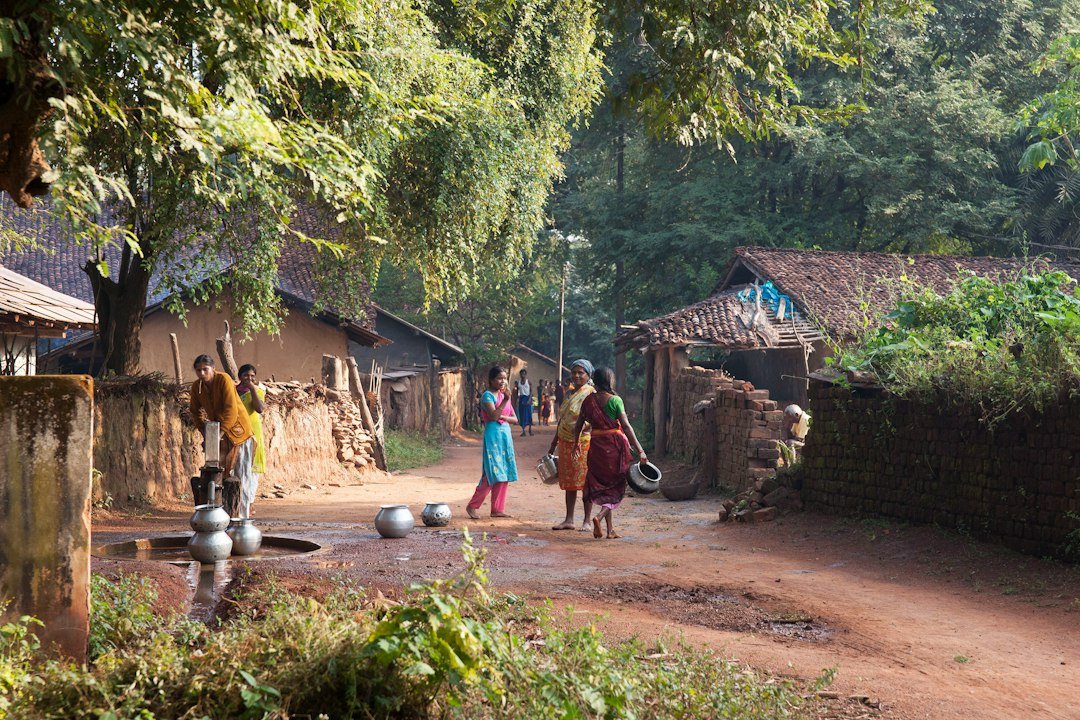
India’s annual observance of Janjatiya Gaurav Diwas has become an occasion to examine tribal contributions to the freedom struggle and the continuing policy questions around land, forests, health, education and livelihoods. In 2026, the Ministry of Tribal Affairs is observing Janjatiya Gaurav Pakhwada from 1 to 15 November, culminating in Janjatiya Gaurav Diwas on 15 November, the birth anniversary of Bhagwan Birsa Munda.
The announced programme is substantial: more than 300 projects are planned across States, two national digital initiatives are to be launched, and more than 160 State- and Union Territory-level activities are scheduled in 19 States/UTs. These figures matter, but the larger issue is whether recognition of tribal history is matched by secure rights, accessible public services and community participation in development decisions.
What is being observed in November 2026?
The fortnight runs from 1 to 15 November. The Government of India designated 15 November as Janjatiya Gaurav Diwas in 2021 to recognise tribal freedom fighters and the contribution of tribal communities to India’s history and cultural life. For 2026, the ministry has listed 228 projects for inauguration and 74 for foundation-stone laying. The projects include a new Tribal Research Institute building in Itanagar, Arunachal Pradesh, and the Ropuiliani Tribal Freedom Fighter Museum at Kelsih, Mizoram.
More than 160 activities are planned through Tribal Research Institutes and state institutions in 19 States/UTs, with an expected footfall of over one lakh people. National events include a Tribal Literary Festival in New Delhi on 12–13 November, an interaction between around 200 Eklavya Model Residential School students and the President on 12 November, and the Rani Durgavati Adivasi Mahila Sammelan on 14 November. The latter is expected to bring together 500 tribal women entrepreneurs from 30 States/UTs to strengthen market linkages.
Who was Bhagwan Birsa Munda?
Birsa Munda was born on 15 November 1875 in the region of present-day Jharkhand and emerged as a major Adivasi leader among the Munda community during the late nineteenth century. His movement challenged colonial authority, exploitative land relations and the erosion of customary rights. The Ulgulan, often translated as the Great Tumult, is closely associated with his leadership. He died in Ranchi jail in 1900, aged 25.
Birsa’s movement arose in a setting where colonial revenue arrangements, land alienation, moneylending, forced labour and restrictions on customary practices placed pressure on tribal communities. His legacy is therefore not just a biographical fact for an examination: it connects to the history of land rights, community autonomy and resistance to colonial rule.
For static GK, distinguish the Munda movement associated with Birsa Munda from the Santhal rebellion of 1855–56 led by Sidhu and Kanhu Murmu. Rani Gaidinliu belongs to a later phase of resistance in the Northeast. Questions may ask the leader, community, region, movement and period together.
Why was 15 November selected?
The date marks Birsa Munda’s birth anniversary and gives national recognition to tribal contributions that have often received less attention in conventional accounts of the freedom struggle. Tribal resistance took different forms across regions: protests against exploitative revenue systems, defence of customary land, opposition to forest restrictions, religious and social reform movements, and participation in broader anti-colonial struggles.
Commemoration is only one part of the policy rationale. Tribal communities continue to experience uneven access to healthcare, education, transport, communications, formal credit and reliable livelihood opportunities. Development initiatives must account for geography, language, customary institutions and the specific circumstances of Particularly Vulnerable Tribal Groups (PVTGs). A uniform delivery model can fail when it does not reflect local realities.
Two digital initiatives announced for 2026
Jan-HIT: Janjatiya Health Intelligence and Technology Portal
Developed with the Indian Council of Medical Research (ICMR), Jan-HIT is described by the Ministry as India’s first platform for tribe-disaggregated health data, covering 20 States. Disaggregated data can help identify differences in disease burden, nutrition, healthcare access and service outcomes between communities and locations. Better evidence can guide mobile health services, nutrition interventions and health infrastructure.
Data collection, however, must be accompanied by privacy safeguards, sound definitions, appropriate consent and protections against misuse or stereotyping. A portal alone does not improve health; it must inform trained personnel, accessible facilities, medicines, referral systems and community trust.
National Forest Rights Act Digital Platform
The second initiative is a national digital platform intended to bring the Forest Rights Act (FRA), 2006 claims process—from Gram Sabha submission to digitally signed titles—onto a single system. The Gram Sabha has a central role in initiating and verifying claims. Sub-Divisional Level Committees and District Level Committees form part of the statutory decision-making structure.
Digitisation may improve traceability, status tracking and record management, but it must not replace statutory scrutiny, local evidence or the participation of rights-holders. A digital platform is an administrative tool; it does not itself grant a forest right.
Forest Rights Act, 2006: the legal foundation
The Scheduled Tribes and Other Traditional Forest Dwellers (Recognition of Forest Rights) Act, 2006 recognises and vests forest rights and occupation in eligible forest-dwelling Scheduled Tribes and other traditional forest dwellers. It addresses historical injustice by recognising individual and community rights, subject to the Act’s definitions and procedures.
Recognised rights can include self-cultivation and habitation, community rights such as nistar, rights over minor forest produce, grazing and seasonal access, and community forest resource rights. The precise category depends on statutory provisions and evidence. The Act also places responsibilities on rights-holders and institutions for conservation and sustainable use. It is therefore inaccurate to describe it only as a land-distribution law or only as a conservation measure.
PM-JANMAN and Dharti Aaba Janjatiya Gram Utkarsh Abhiyan
The Ministry links the observance to two major initiatives. PM-JANMAN focuses on the development of PVTGs through a saturation approach to essential services and infrastructure, including housing, drinking water, education, health, nutrition, roads, telecommunications and livelihood support. PVTGs are a sub-category of Scheduled Tribes identified on the basis of specific vulnerability criteria.
The Dharti Aaba Janjatiya Gram Utkarsh Abhiyan seeks to address gaps in basic services and socio-economic infrastructure in tribal-majority villages. Its convergence approach brings together different ministries and schemes. For exams, remember the distinction: PM-JANMAN is specifically focused on PVTGs, while the Gram Utkarsh Abhiyan has a wider tribal-village development focus.
Women’s livelihoods, education and traditional knowledge
The planned women’s enterprise gathering, scholarship-access camps and traditional-healer training are connected to practical development barriers. Women-led enterprises need market information, product standards, transport, storage, digital payments and buyer networks—not only access to credit. Scholarship camps in 73 districts are intended to assist students with applications and Aadhaar seeding, while the programme also highlights residential schooling through Eklavya Model Residential Schools.
The ministry has announced training for around 1,500 traditional healers from nine States/UTs on 1–2 November, within a stated plan to train and certify one lakh healers. It has also announced a programme with CSIR-NBRI to conserve 200–300 medicinal plant species in Koraput, Odisha. Documentation of traditional knowledge should involve communities and safeguards for knowledge ownership and benefit-sharing.
Key figures at a glance
| Indicator | 2026 announcement |
|---|---|
| Pakhwada | 1–15 November |
| Projects | 300+ (228 inaugurations; 74 foundation stones) |
| State/UT activities | 160+ in 19 States/UTs |
| Jan-HIT coverage | 20 States |
| Scholarship camps | 73 districts |
| Women entrepreneurs at Sammelan | 500 from 30 States/UTs |
| Traditional healers in first training batch | About 1,500 from 9 States/UTs |
Key office-holders and institutions
Droupadi Murmu is the President of India and is scheduled to interact with Eklavya Model Residential School students during the programme. Narendra Modi is the Prime Minister. The Ministry of Tribal Affairs is the nodal Union ministry. ICMR is the research partner identified for Jan-HIT, while CSIR-NBRI is named in the medicinal-plant conservation initiative.
Exam relevance and static GK
- UPSC GS I: tribal movements, regional history and contributions to the freedom struggle.
- GS II: constitutional safeguards, welfare schemes, vulnerable sections and implementation.
- GS III: forest resources, biodiversity, conservation and sustainable livelihoods.
- State PSC: state-specific tribal communities, freedom fighters and Tribal Research Institutes.
- Static facts: Birsa Munda was born on 15 November 1875; Janjatiya Gaurav Diwas was designated in 2021; FRA was enacted in 2006; CSIR-NBRI is based in Lucknow.
Possible MCQ areas
- Birsa Munda’s birth date, community, region and Ulgulan.
- Year of designation of Janjatiya Gaurav Diwas.
- Difference between PM-JANMAN and Dharti Aaba Janjatiya Gram Utkarsh Abhiyan.
- Gram Sabha’s role under the Forest Rights Act.
- Purpose and coverage of Jan-HIT.
- Key project and activity figures announced for 2026.
Official sources
Primary source: Ministry of Tribal Affairs/PIB release dated 27 October 2026. For legal details, consult the Ministry of Tribal Affairs Forest Rights Act resources.
Related reading
Daily Current Affairs 1 November 2026 · UPSC & State PSC Preparation Hub · Competitive Exams Preparation Hub · Current Affairs Hub.