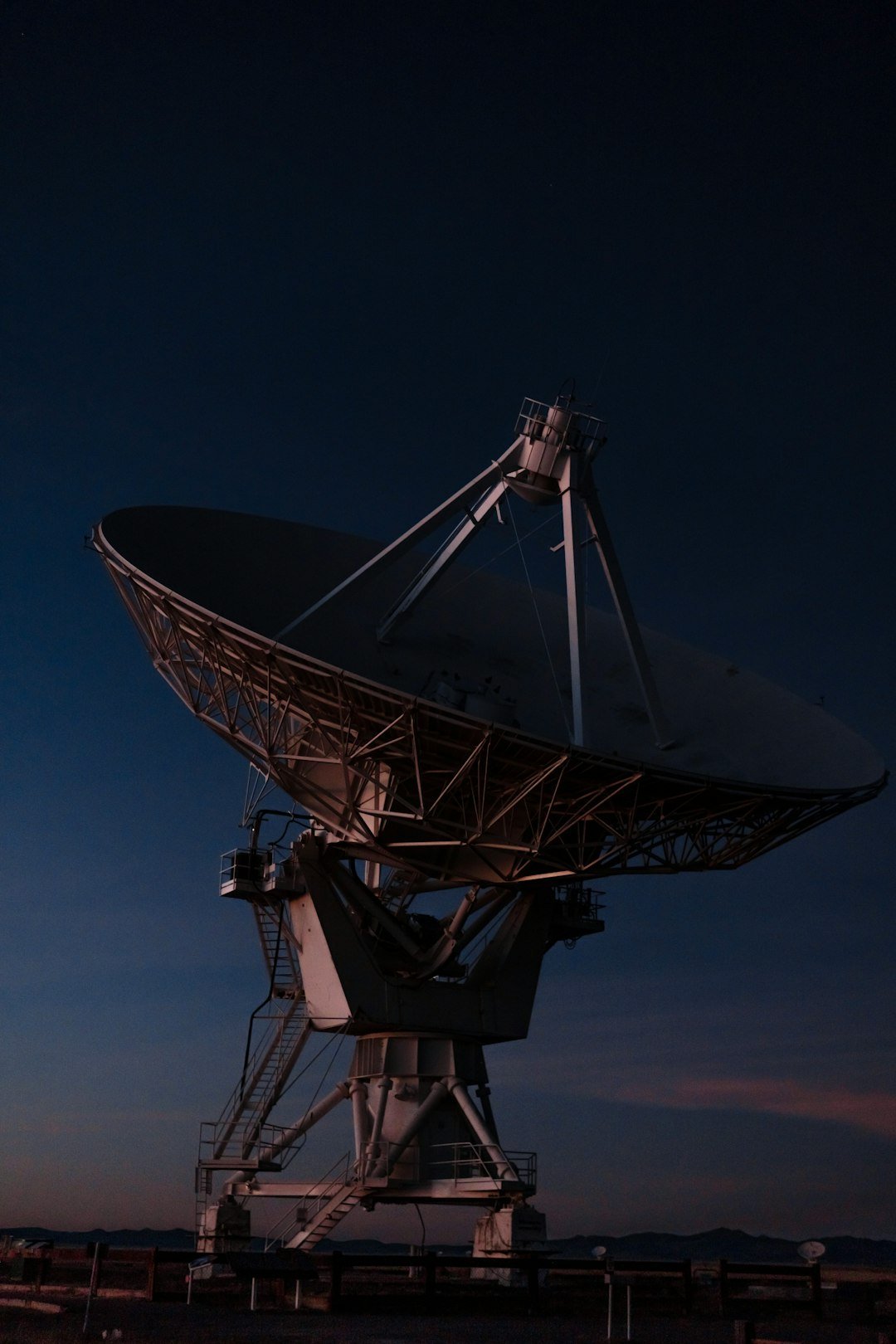
Published: 25 November 2026 | Reading time: 8–10 minutes
India’s space programme is entering a different phase: the question is no longer only whether the country can design and launch complex missions, but whether its industrial ecosystem can finance, manufacture and operate space infrastructure at scale. A report launched in New Delhi on 24 November 2026, Space Economy 2036: The India Blueprint, puts that financing question at the centre of the next decade.
The report was prepared by Starfleet India Capital Advisors, with the Indian Space Association (ISpA) as an industry partner and Outerisk Launchspan as knowledge partner. Its launch at the International Indian Space Conclave brought together space, finance and policy stakeholders. The report was launched by Lt Gen Anil Kumar Bhatt and Group Captain Shubhanshu Shukla, Ashok Chakra. Its recommendations are an industry study, not a government-approved scheme or a fresh Union Budget allocation.
What is the new report saying?
The report uses a US$44 billion space-economy ambition by 2033 as its planning reference and examines how India can finance the assets required over 2026–2036. It estimates that the sector may need ₹3.2–3.5 lakh crore of capital investment over the decade. Public budgets could carry around ₹1.35–1.45 lakh crore, leaving approximately ₹1.8–2.0 lakh crore to be financed through private balance sheets, banks, insurers, pension funds and capital markets.
That distinction matters. The projected size of the space economy is not the same as the amount that companies can borrow. The economy-wide figure includes downstream services and applications; lenders need predictable cash flows, contracts, collateral, insurance and a clear allocation of risk. The report estimates a private-capital requirement of about ₹19,400 crore a year, or roughly US$2 billion, through 2036. It compares this with a much smaller current start-up equity flow of approximately ₹1,900–2,400 crore a year.
How large is India’s space sector today?
A Press Information Bureau backgrounder issued by the Department of Space on 15 November 2026 estimated India’s space economy at about US$9 billion in August 2026, compared with about US$8.4 billion in 2023, when India accounted for roughly 2% of the global space economy. The Department of Space’s 15 November 2026 backgrounder states that the Government projects the space economy to reach about US$44 billion by 2033 and US$100 billion by 2040.
| Indicator | Official figure | Reference date |
|---|---|---|
| Estimated space-economy size | About US$9 billion | August 2026 |
| Registered space start-ups | About 440, up from 1 in 2014 | August 2026 |
| Cumulative investment in space start-ups | US$618.5 million, from US$100.5 million in 2021–22 | 31 March 2026 |
| Foreign satellites launched by ISRO | 399 during 2014–January 2026, compared with 35 during 1990–2014 | January 2026 |
| Space-sector FDI proposals received | 11 proposals worth ₹1,745.40 crore | Mid-2026 |
The Department of Space also reported more than 300 international space-cooperation agreements involving 61 countries and five multilateral organisations as of June 2026. These indicators show that the sector is not limited to launch vehicles. It includes satellite manufacturing, Earth observation, communications, navigation, ground infrastructure, data analytics and services for government, industry and overseas customers.
Who does what in India’s space ecosystem?
The institutional structure is important for both policy and examinations:
- ISRO — Indian Space Research Organisation: the Department of Space’s research and mission agency, responsible for advanced technologies and national space missions.
- IN-SPACe — Indian National Space Promotion and Authorisation Centre: an autonomous single-window interface that authorises and facilitates private-sector space activity.
- NSIL — NewSpace India Limited: established in March 2019 as the Department of Space’s commercial arm for Indian space products and services.
- ISpA — Indian Space Association: an industry body representing private space and satellite companies.
As reported in August 2026, IN-SPACe had granted 113 authorisations to 52 non-government entities, including 18 start-ups. The Department of Space also reported 71 technology transfers facilitated by IN-SPACe up to 31 January 2026. NSIL had signed 118 technology-transfer agreements covering 83 ISRO technologies, while its revenue rose from ₹321.77 crore in FY 2021–22 to more than ₹3,000 crore in FY 2024–25.
What changed in foreign investment rules?
The Union Cabinet approved changes to the space-sector FDI policy on 21 February 2024, and the revised provisions took effect on 16 April 2024. Under the automatic route, foreign investment is permitted up to 74% in satellite manufacturing and operation, satellite data products, and ground and user segments; up to 49% in launch vehicles and spaceports; and up to 100% in components and subsystems. Investment beyond the specified automatic-route limits requires government approval.
The Indian Space Policy 2023 and IN-SPACe’s authorisation norms, released on 3 May 2024, provide the wider framework. Private activity remains subject to authorisation, mission safety, orbital and frequency coordination, registration and security requirements.
How is the Government helping companies move beyond the prototype stage?
India has several funding and facilitation instruments. The IN-SPACe Seed Fund Scheme can provide a selected early-stage start-up a milestone-linked grant of up to ₹1 crore. The Pre-incubation Entrepreneurship programme is a 21-month pathway covering ideation, innovation and prototype demonstration. The Technology Adoption Fund, established in February 2025 with an outlay of ₹500 crore, supports commercialisation of advanced space technologies; the official backgrounder states that start-ups and MSMEs may receive up to 60% of project cost and large industries up to 40%, subject to a cap of ₹25 crore per project. A ₹1,000-crore venture-capital fund under IN-SPACe is intended to support companies at later stages of growth.
Grants can validate a prototype but cannot finance a constellation, launch facility or factory. The report therefore recommends bankable procurement, public-private partnership contracts, credit guarantees, space insurance, export finance and eventual capital-market refinancing. These are proposals, not approved government commitments.
Why does the financing question matter?
Space assets have long development cycles, high upfront costs and mission-specific risks. A successful payload demonstration does not automatically finance serial production, launch capacity, ground stations or recurring services. Uncertain cash flows and specialised assets also make conventional lending difficult.
The sector is strategically important: Earth-observation data supports agriculture, weather forecasting, disaster response and border management; satellite communications extend connectivity; and navigation services have civilian and defence uses. A stronger domestic supply chain can improve resilience, create skilled jobs and expand exports.
Exam relevance
UPSC and State PCS: connect the topic with science and technology, industrial policy, strategic autonomy, FDI, public-private partnerships, disaster management and the space economy. A mains answer should distinguish the roles of ISRO, IN-SPACe and NSIL and explain why a technology demonstration is not the same as commercial viability.
SSC, banking and insurance: remember the headline figures, FDI caps, funding instruments and the difference between equity, debt, grants, guarantees and insurance. Engineering and research examinations: revise satellite subsystems, launch vehicles, Earth observation, communication payloads, orbital coordination and technology transfer.
Static GK connection
- INCOSPAR, the Indian National Committee for Space Research, was established in 1962.
- ISRO was established in August 1969, replacing INCOSPAR.
- The Space Commission and Department of Space were established in June 1972; ISRO came under the Department of Space in September 1972.
- NSIL was established in March 2019; the Union Cabinet approved major private-participation reforms on 24 June 2020.
- The Indian Space Policy was issued in 2023; the revised space-sector FDI provisions took effect on 16 April 2024.
Possible MCQ areas
- Which agency is the single-window authorisation interface for private space entities? IN-SPACe.
- What is the commercial arm of the Department of Space? NSIL.
- What is the automatic-route FDI ceiling for satellite manufacturing and operation? 74%.
- What is the automatic-route ceiling for launch vehicles and spaceports? 49%.
- How many registered space start-ups were reported in August 2026? About 440.
- When did ISRO replace INCOSPAR? August 1969.
Official sources and further reading
- PIB / Department of Space: Opening Up India’s Space Economy, 15 November 2026 (official backgrounder PDF).
- Space Economy 2036: The India Blueprint — executive summary and recommendations.
- Department of Space: Support to Space Start-ups, 13 August 2026.
- IN-SPACe official portal and ISRO official portal.
Related reading on DailyGKUpdate
- India’s Debris-Free Space Mission 2030 — orbital sustainability and space robotics.
- COSMOS-Mysuru Planetarium 2026 — astronomy and science outreach.
- Daily Current Affairs 24 November 2026 and the Current Affairs Hub.
- Competitive Exams Preparation Hub.
Editorial note: the US$44 billion by 2033 figure and the ₹3.2–3.5 lakh crore capital estimate are report projections. Official Department of Space figures are identified separately above; neither should be treated as a guaranteed outcome.


One thought on “India Space Economy 2036 Blueprint: $44 Billion Target and the ₹3.5 Lakh Crore Financing Challenge”
Comments are closed.