Science & Technology Explainer | 14 November 2026
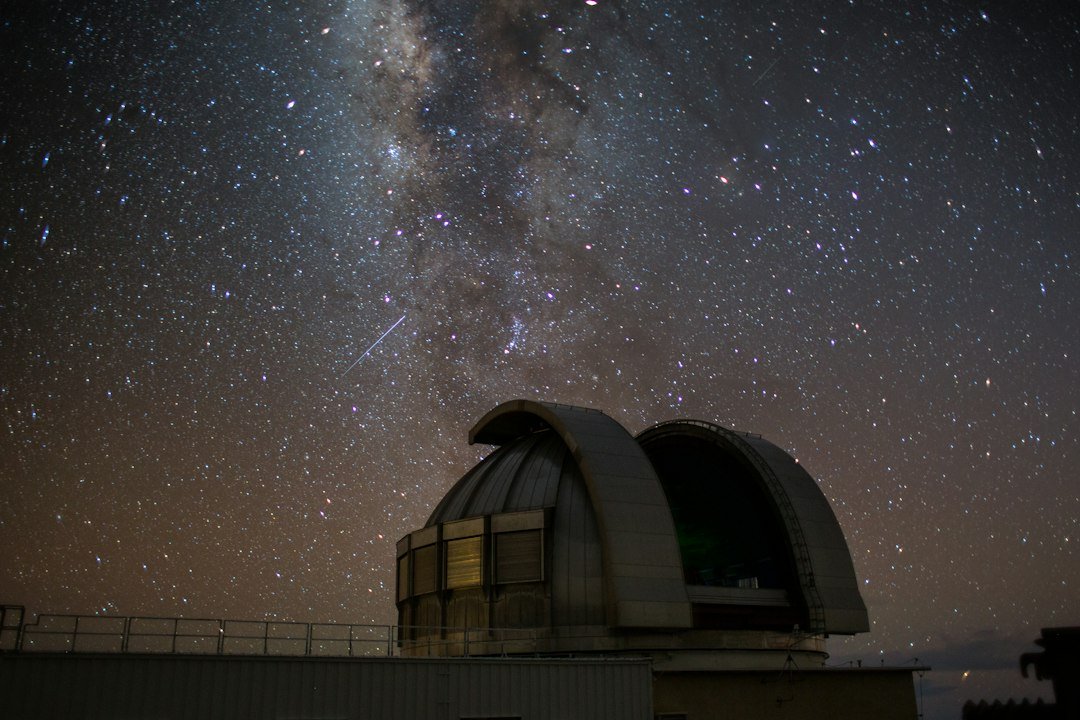
The inauguration of COSMOS-Mysuru Planetarium on 13 November 2026 has brought a new science-education landmark into the current-affairs cycle. The Prime Minister’s Office and Press Information Bureau describe it as India’s first LED dome planetarium. The designation matters: a planetarium is not simply a telescope or an observatory, but a controlled visual environment designed to explain the sky, celestial motion and astronomical concepts to audiences.
The official inauguration connected the facility to Mysuru’s cultural and educational landscape and to India’s long tradition of mathematical astronomy. For competitive examinations, the development bridges current affairs, basic astronomy, Indian knowledge traditions, science communication and Karnataka geography. This explainer describes the technology without adding unverified specifications such as seating capacity, screen resolution or show schedules.
What is a planetarium?
A planetarium is an educational facility in which a dome or large display surface presents an artificial sky. It can reproduce the apparent positions and movements of stars, planets, the Sun and the Moon, demonstrate seasonal changes, explain constellations and visualise phenomena that are difficult to observe directly in a classroom. Modern digital planetariums can also display astronomical simulations, planetary surfaces, spacecraft journeys and data-based visualisations.
The educational advantage is scale and perspective. Learners can see how the celestial sphere appears to rotate because of Earth’s rotation, why the Sun’s apparent path changes through the year, how lunar phases arise and how planets move against background stars. Such presentations complement textbooks and observational astronomy; they do not replace scientific evidence or actual observation.
What does “LED dome planetarium” mean?
In a conventional projection planetarium, one or more projectors cast images onto a curved dome. A digital LED dome instead uses an array of light-emitting diode display modules across the dome surface. Each display element generates light directly, allowing the system to render images and video on the curved surface. The audience sees content across a wide field of view, creating an immersive experience.
LED displays and projection systems differ in how they generate and deliver light, how pixels or projected images are arranged, and how the display is maintained. LED systems can offer high brightness and strong contrast, but performance depends on design, calibration, content, viewing geometry and technical configuration. It would be inaccurate to infer a planetarium’s exact resolution, refresh rate, number of LEDs or image quality from the term “LED dome” alone.
PIB’s official description identifies COSMOS-Mysuru as India’s first LED dome planetarium. That is the fact to retain for a prelims question. It does not mean India’s first planetarium, India’s first observatory or the world’s first LED planetarium.
Why is this important for science education?
Astronomy involves distances, time scales and motions that are counter-intuitive. The Earth–Moon system, planetary orbits, eclipses, the Milky Way and the observable universe cannot be understood solely through everyday visual experience. Immersive visualisation can help students develop spatial understanding and ask better questions. It can also make science more accessible to younger learners, families and visitors who may not have specialised laboratories.
Planetariums can support school topics such as the Solar System, stars, galaxies, gravity, light, seasons and eclipses. They can host public lectures, teacher workshops, science festivals and outreach programmes. Their educational value is strongest when shows are age-appropriate, scientifically reviewed, linked to curriculum and accompanied by discussion or learning material. Inauguration establishes the facility; long-term impact depends on programming, access, trained educators and sustained use.
India’s astronomy tradition: names to remember
The PM’s address mentioned four major Indian astronomers and mathematicians. Their names are frequently tested in history-of-science and static-GK questions:
- Aryabhata: associated with the Aryabhatiya (499 CE), mathematical astronomy, explanations of eclipses and the rotation of Earth in his astronomical framework.
- Varahamihira: sixth-century scholar associated with Pancha-Siddhantika, which summarised five astronomical traditions, and Brihat-Samhita.
- Bhaskaracharya/Bhaskara II: twelfth-century mathematician and astronomer; Siddhanta Shiromani includes Lilavati, Bijaganita, Grahaganita and Goladhyaya.
- Nilakantha Somayaji: Kerala-school mathematician and astronomer (1444–1544), associated with Tantrasangraha and refined planetary models.
These figures lived in different periods and worked with different mathematical methods. Do not confuse Aryabhata with Bhaskara II, or Varahamihira with the later Kerala school. Their contribution is that careful observation, mathematical reasoning and systematic models enabled important discoveries in their own contexts.
Planetarium, observatory and telescope: a useful distinction
| Institution/tool | Main purpose |
|---|---|
| Planetarium | Simulates the sky and explains astronomy through immersive presentations |
| Observatory | Facility for systematic observation of celestial objects using instruments |
| Telescope | Instrument that collects electromagnetic radiation and helps resolve distant objects |
| Space telescope | Observes from space, avoiding or reducing atmospheric effects for selected wavelengths |
| Satellite | Spacecraft placed in orbit for communication, navigation, Earth observation, science or other missions |
A planetarium’s simulated sky is based on astronomical models and data; it is not itself collecting photons from stars. An observatory, by contrast, uses instruments to acquire observations. Both can complement one another in science communication and research.
Science outreach and India’s changing space ecosystem
The inauguration comes amid the expansion of India’s space ecosystem. The government has opened greater participation to private companies and start-ups, while institutions such as ISRO, IN-SPACe and NSIL have distinct roles in national space activity. A planetarium is not a launch facility or satellite operator, but it can help cultivate public understanding of astronomy, space science and the technologies used to study the universe.
Science outreach matters because the space sector requires not only engineers and scientists but also informed citizens, teachers, communicators and students who understand evidence and scientific methods. A public science institution can turn an abstract topic into a shared learning experience. Its contribution should be measured through educational access and learning outcomes rather than the novelty of display technology alone.
Location and institutional context
COSMOS-Mysuru is in Mysuru, Karnataka. Mysuru is known for heritage, educational institutions and cultural landmarks. Karnataka’s capital is Bengaluru; its official language is Kannada. Mysuru was historically associated with the Kingdom of Mysore and is a major cultural centre in southern Karnataka. The planetarium adds a science-learning dimension to this regional identity.
For State PSC preparation, map Mysuru in Karnataka and remember the distinction between Mysuru city/district and Bengaluru, the state capital. For UPSC, the development can be used in essays on science popularisation, scientific temper, education and the relationship between technology and public institutions.
What candidates should not claim
- Do not say COSMOS is India’s first planetarium; the official claim is India’s first LED dome planetarium.
- Do not label a planetarium an astronomical observatory or telescope.
- Do not invent visitor capacity, ticket prices, show timings, technical resolution or operating statistics.
- Do not treat inauguration as proof of measured learning outcomes or nationwide access.
- Keep historical astronomers in correct chronology and distinguish their works.
Exam relevance
UPSC GS III: science and technology developments, space science and scientific temper. GS I: history of science in India. State PSC: Karnataka geography, Mysuru and regional institutions. SSC/Banking: basic astronomy terms, Solar System, stars, galaxies, light and instruments.
Possible MCQ areas
- COSMOS-Mysuru’s official distinction and location.
- Difference between planetarium, observatory, telescope and satellite.
- LED display versus conventional dome projection (basic principle).
- Aryabhata, Varahamihira, Bhaskara II and Nilakantha Somayaji: works and chronology.
- Scientific temper and science communication.
Official sources
PIB: COSMOS-Mysuru Planetarium inaugurated, 13 November 2026 · PIB: PM’s address at inauguration · ISRO · IN-SPACe.
Related reading
India’s Debris-Free Space Mission 2030 · Aditya-L1 and space-weather science · India Science & Technology Scoreboard 2026 · Competitive Exams Hub.

One thought on “COSMOS-Mysuru Planetarium 2026: India’s First LED Dome, Technology and Astronomy GK”
Comments are closed.