Updated: 13 November 2026 | Social justice, public health and governance
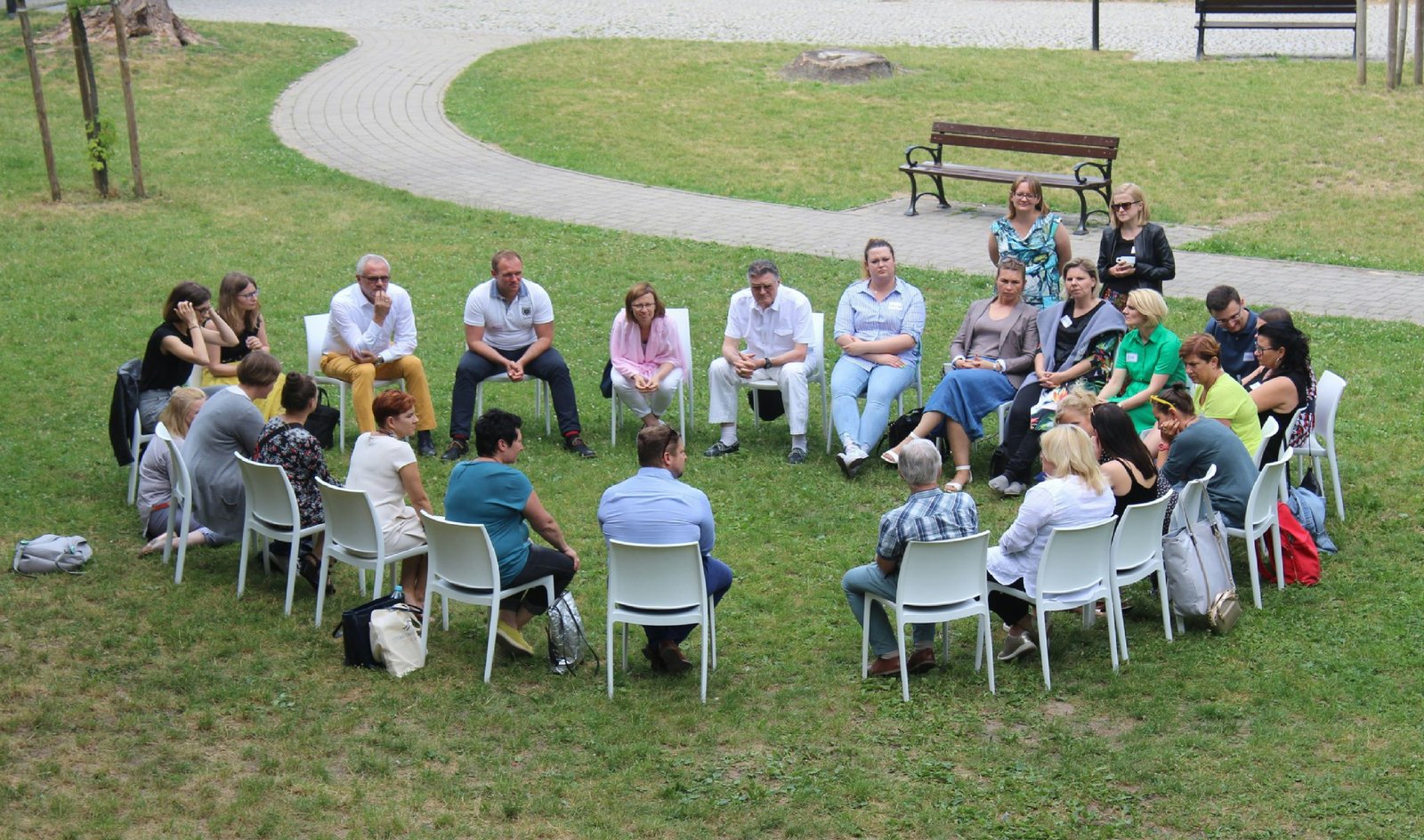
The Ministry of Social Justice and Empowerment reported on 12 November 2026 that the Nasha Mukt Bharat Abhiyaan (NMBA) had reached more than 35.88 crore people since its launch, including over 14.35 crore youth and 11.33 crore women. More than two lakh citizens had enrolled as Nasha Mukti Mitr. The same release recorded over 34.07 lakh awareness activities in educational institutions, an increase in people seeking treatment and counselling from 2.08 lakh in 2020–21 to more than 9.11 lakh in 2025–26, and 198 District De-Addiction Centres in the country.
These figures describe different kinds of programme activity. People reached through awareness campaigns are not the same as people diagnosed with substance-use disorders, receiving treatment, completing rehabilitation or remaining in recovery. The distinction is essential when assessing a public-health programme and when using the numbers in competitive-exam answers.
1. What is Nasha Mukt Bharat Abhiyaan?
NMBA was launched by the Ministry of Social Justice and Empowerment on 15 August 2020 as a flagship awareness and demand-reduction initiative under the National Action Plan for Drug Demand Reduction (NAPDDR). It began in 272 districts identified as particularly vulnerable to substance use, expanded to 372 districts in August 2022 and was extended to all districts from 15 August 2023.
The campaign seeks to prevent substance use, build awareness, encourage informed choices and reduce stigma around dependence. It mobilises educational institutions, youth groups, civil society organisations, local administration, community leaders and volunteers. The nationwide extension means the campaign’s geographic coverage is all districts; it does not mean that every district has identical risk levels or service capacity.
2. Reading the November 2026 figures correctly
| Indicator reported by MoSJE | As of / period |
|---|---|
| People reached through NMBA | 35.88 crore, as of 12 Nov 2026 |
| Youth reached | 14.35 crore |
| Women reached | 11.33 crore |
| Nasha Mukti Mitr enrolled | More than 2 lakh |
| Awareness activities in educational institutions | More than 34.07 lakh |
| People seeking treatment/counselling | 2.08 lakh in 2020–21; over 9.11 lakh in 2025–26 |
| District De-Addiction Centres | 198 |
“Reached” generally reflects awareness and mobilisation activity recorded by the programme; it is not a prevalence estimate. The rise in treatment and counselling seekers can reflect improved awareness, referral, service availability or willingness to seek help, and should not automatically be interpreted as a rise in the number of people dependent on substances. The 198 centres are a service-network count reported by the Ministry; the figure does not by itself establish equal geographic access, staffing or capacity at every centre.
3. NAPDDR: awareness, treatment and rehabilitation
The National Action Plan for Drug Demand Reduction provides the broader framework for prevention, treatment, rehabilitation, capacity-building and related support. NMBA is the campaign component that mobilises awareness and community participation. The treatment and counselling ecosystem is a separate but connected part of the response: people who need clinical support must be able to access appropriate services rather than being left with a pledge or awareness message alone.
Substance dependence is a complex medical and psychosocial condition. It can affect health, family relationships, education, employment and community life. A public-health response therefore combines prevention with early identification, counselling, evidence-based treatment, rehabilitation and social reintegration. Stigma can deter people from seeking help; respectful language and confidentiality are important to effective service delivery.
The Ministry’s reported rise in treatment/counselling utilisation—from 2.08 lakh in 2020–21 to over 9.11 lakh in 2025–26—shows a larger recorded use of support services. It is a service-utilisation measure, not a count of all people affected by substance use and not a guarantee that every person completed treatment or achieved long-term recovery.
4. Nasha Mukti Mitr: community participation
Nasha Mukti Mitr encourages citizens to participate in awareness, community outreach and referral support. More than two lakh volunteers were enrolled by 12 November 2026, according to the Ministry. Volunteers can help disseminate accurate information, challenge stigma, identify where support is available and encourage people to approach appropriate services.
A volunteer is not a substitute for a trained counsellor, doctor or rehabilitation professional. Responsible community work should avoid diagnosing individuals, promising cures, publicly identifying people seeking help or using punitive language. Referral should respect privacy and connect a person with qualified services. Schools and community groups also need clear boundaries so that awareness activities do not become intrusive or discriminatory.
5. District De-Addiction Centres and access to care
The Ministry reported 198 District De-Addiction Centres. These centres are part of the treatment-support landscape associated with demand-reduction programmes. Their purpose is to improve access to counselling, treatment and related services closer to communities. District-level provision is important because travel, cost, stigma and lack of information can prevent people from seeking care.
Counting facilities is only one measure of access. A fuller assessment would consider location, operating hours, qualified staff, referral pathways, medicines and treatment protocols where applicable, follow-up, patient privacy, family support and continuity of care. The official November release provides the number of centres; it does not publish a complete centre-wise capacity or outcome dataset. Those details should not be invented.
6. Constitutional and legal context: Article 47 and the NDPS Act
Article 47 of the Constitution is a Directive Principle of State Policy. It directs the State to endeavour to prohibit consumption, except for medicinal purposes, of intoxicating drinks and drugs that are injurious to health. Directive Principles guide governance and policy; they are not directly enforceable in the same manner as Fundamental Rights.
The Narcotic Drugs and Psychotropic Substances (NDPS) Act, 1985 is a separate legal framework dealing with narcotic drugs and psychotropic substances, including control, regulation and penalties for specified activities. NMBA is not an enforcement law and does not replace the NDPS Act. Supply-side enforcement, demand-reduction awareness and treatment/rehabilitation are complementary but institutionally distinct functions.
For exam answers, identify the institution and instrument correctly: the Ministry of Social Justice and Empowerment leads NMBA; NAPDDR provides the broader demand-reduction framework; health and treatment agencies provide clinical services; and law-enforcement agencies address illicit supply under applicable laws.
7. Why awareness must be linked to health and social support
Prevention is more effective when information is accurate, age-appropriate and connected to real support. Schools and colleges can help students understand risks, recognise warning signs and know where to seek confidential help. Families and community organisations can provide supportive environments, while health services assess and treat dependence. Rehabilitation may also require education, skills, employment support and reintegration.
Campaign reach is a useful indicator of mobilisation, but public policy should also ask whether people can access treatment without stigma, whether services are available in underserved areas, whether relapse is addressed compassionately and whether outcomes are followed over time. A person seeking help should not be reduced to a statistic or treated as a moral failure. The goal is prevention, health, dignity and recovery.
8. Static GK and examination relevance
- NMBA: Nasha Mukt Bharat Abhiyaan, launched 15 August 2020 by the Ministry of Social Justice and Empowerment.
- NAPDDR: National Action Plan for Drug Demand Reduction—the broader prevention, treatment, rehabilitation and capacity-building framework.
- Coverage: 272 initial high-risk districts; 372 districts from August 2022; all districts from 15 August 2023.
- Article 47: Directive Principle concerning public health and prohibition of intoxicating substances injurious to health, except medicinal use.
- NDPS Act: Narcotic Drugs and Psychotropic Substances Act, 1985; distinct from awareness and treatment programmes.
- Nasha Mukti Mitr: community volunteer network; not a professional treatment designation.
UPSC/State PCS GS-II: health, social justice, vulnerable groups, welfare implementation, civil society and community participation. GS-III: public-health challenges and institutional coordination. Essay/interview: prevention versus punishment, stigma-free treatment, youth resilience and the role of community institutions.
Official sources and related reading
PIB/Ministry of Social Justice & Empowerment: NMBA reaches 35.88 crore, 12 November 2026
Ministry of Social Justice and Empowerment
Daily Current Affairs 13 November 2026 · UPSC & State PSC Preparation Hub · Competitive Exams Preparation Hub
Data note: all campaign and service figures are as reported by the Ministry on 12 November 2026. Awareness reach, treatment utilisation and facility counts are distinct indicators.


One thought on “Nasha Mukt Bharat Abhiyaan 2026: 35.88 Crore Reach, Treatment Services and Article 47”
Comments are closed.