Reading time: 8–10 minutes
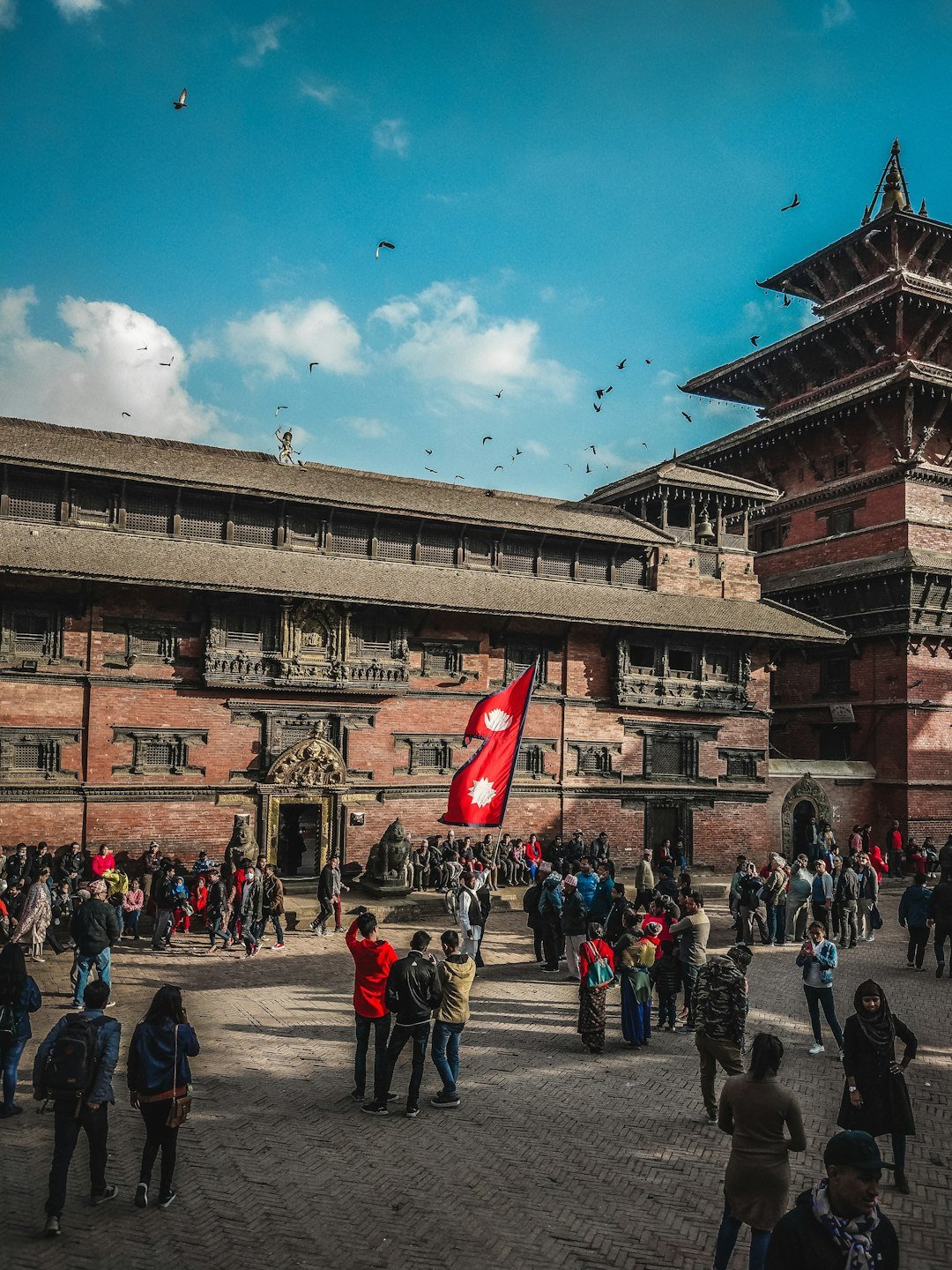
Featured image: Photo by binaya_photography on Unsplash. The image is illustrative.
Today’s developments span international relations, economic data, public health, disaster management, defence and social policy. Together, they show how official statistics shape policy and why India needs stronger regional, coastal and mountain resilience.
1. India and Nepal set out a wider development partnership
India and Nepal adopted a Joint Vision for “Viksit Bharat and Samunnat Nepal”, expanding cooperation in economic development, connectivity, energy and water resources, climate resilience, disaster management, sports, start-ups, digital services, space and innovation. India announced ₹15,000 crore in development assistance: ₹3,500 crore as grant assistance for post-disaster reconstruction and infrastructure, and a ₹11,500-crore rupee-denominated line of credit for energy projects.
Prime Minister Narendra Modi hosted Nepal’s Prime Minister Balendra Shah during his 22–23 November 2026 state visit. Nepal’s President is Ramchandra Paudel; its capital is Kathmandu and its currency is the Nepalese rupee. Key outcomes included the 669 MW Lower Arun hydroelectric project, the Sarayu–Kamala Express between Ayodhya and Janakpur, finalisation of the field-location survey for the Raxaul–Kathmandu railway, a new Dharchula–Darchula motorable bridge and the dedication of Phase II of the Motihari–Amlekhgunj petroleum pipeline.
Why it matters: Nepal is central to India’s Himalayan neighbourhood, hydropower cooperation, cross-border trade and regional connectivity.
2. QBUSE gives a fresh picture of small enterprises
MoSPI’s July–September 2026 Quarterly Bulletin on Unincorporated Sector Enterprises estimates 9.47 crore establishments and 15.03 crore workers. Establishments grew 18.81% year-on-year and employment 16.86%. Around 84% of establishments reported internet use for business, about 80% reported cashless transactions and 43.28% reported registration with at least one authority.
QBUSE covers unincorporated manufacturing, trade and other services; it is a sample survey, not a census or the Udyam registration count. Compare it with annual ASUSE for economics and banking examinations. Read the QBUSE explainer.
3. SAMPADA survey adds detail to India’s nutrition picture
The ICMR’s SAMPADA survey for 2023–25 covered more than 2 lakh people, around 81,000 households, 183 districts and 35 States and Union Territories. It reported anaemia in 41.8% of children aged 12–59 months, 46.3% of adolescent girls and 55.9% of women of reproductive age. The survey also measured iron, vitamin B12 and folate, showing why low haemoglobin should not automatically be treated as an iron-only problem.
The findings are relevant to nutrition policy, maternal and child health, human development and the Anaemia Mukt Bharat programme. The State-level estimates also underline why national averages need to be read with local data and confidence intervals. See the SAMPADA survey analysis.
4. India expands landslide mapping and forecasting
India has mapped landslide susceptibility across about 4.3 lakh square kilometres and compiled nearly 91,000 historical landslide records. The National Landslide Forecasting Centre was established in Kolkata in 2024, and forecasting activities have expanded to 20 districts. A ₹1,000-crore National Landslide Mitigation Project is intended for 15 vulnerable States.
For disaster management, distinguish three terms: susceptibility mapping identifies terrain that is more prone to failure; an inventory records past events; forecasting combines background risk with changing conditions such as rainfall, soil moisture and slope movement. The 7th World Landslide Forum is being held in Faridabad from 22 to 27 November. Our landslide forecasting explainer covers the data and policy framework.
5. INS Ashank delivered to the Indian Navy
GRSE-built Ashank, Yard 3036, was delivered to the Indian Navy at Visakhapatnam on 23 November. It is an Anti-Submarine Warfare Shallow Water Craft with more than 80% indigenous content. The platform uses waterjet propulsion and carries advanced sonar, lightweight torpedoes and indigenous rocket launchers. Its role is to support anti-submarine operations, coastal surveillance and mine-laying in littoral waters.
Delivery is a construction and transfer milestone, not the same as a commissioning ceremony. The development matters because shallow-water anti-submarine warfare requires specialised detection and response in acoustically complex coastal conditions. Read the INS Ashank defence explainer.
6. Nayi Chetna 5.0 to begin on 25 November
The Ministry of Rural Development’s Nayi Chetna 5.0 campaign will run from 25 November to 23 December under DAY-NRLM. Its theme is “From Access to Agency: Empowering Women through Livelihoods and Equal Opportunities for a Viksit Bharat.” Fifteen ministries and departments are involved, with focus on women’s economic contribution, access to assets, safe mobility and sharing unpaid care work. Rural Development Minister Shivraj Singh Chouhan will launch the campaign with Women and Child Development Minister Annapurna Devi; Minister of State Kamlesh Paswan will also be present. The start date coincides with the International Day for the Elimination of Violence Against Women; the UN’s 16 Days of Activism run from 25 November to 10 December.
7. Marine conservation: 92nd Standing Committee meeting
Environment Minister Bhupender Yadav chaired the 92nd meeting of the Standing Committee of the National Board for Wildlife, which considered 133 proposals. The update cited 108 coastal and marine protected areas, about 1,300 km of protected coastline, 360 beach stretches, four marine turtle species, an estimated 270 ± 16 dugongs and seven humpback-whale hotspots. Nameri Tiger Reserve in Assam received CA|TS accreditation. The 133 proposals were considered, not all approved.
8. New base years for key economic statistics
MoSPI’s data-users consultation highlighted a base year of 2022–23 for GDP and the Index of Industrial Production, and 2024=100 for the Consumer Price Index. Base-year revisions help official statistics reflect changing consumption patterns and industrial structure. Remember the distinction: CPI tracks consumer prices, IIP tracks industrial output, and GDP measures the value of final goods and services produced within the economy.
9. Science and technology: metabolism and astronomy
A Human Metabolic Chamber at Christian Medical College, Vellore, will allow controlled measurement of energy expenditure and metabolic responses, supporting research into nutrition, obesity and diabetes. Separately, Indian astronomers reported a rare, extremely metal-poor star with iron abundance around one-thousandth that of the Sun. Such stars preserve chemical clues about the universe’s earliest stellar generations.
10. Tolling update: Multi-Lane Free Flow
NHAI reported that seven plazas with comparable pre-MLFF data generated ₹538.95 crore against a pre-MLFF benchmark of ₹449.72 crore—an additional ₹89.23 crore and a combined weighted revenue increase of 19.84%. Two newer plazas, Nemili and Chenasamudram, went live on 12 and 21 November and were excluded from the comparison. The update also notes e-notice recovery and vehicle-fingerprinting/VAHAN enforcement. Read the MLFF background and NHAI’s official 23 November release.
More detailed reads already published today
Today’s other explainers cover UPSC and State PSC recruitment reforms, agricultural exports and Indo-Gangetic air pollution.
Today’s candidate action list
- UPSC Advertisement 13/2026: 13 posts; deadline 4 December, 6:00 PM.
- Delhi High Court PA: typing test on 27 November.
- SSC CHSL: Tier-I from 3 December; Own Scribe mapping by 28 November.
- UPPSC TGT: 151 candidates for document verification on 26 November.
Exam relevance
- UPSC and State PSC: Nepal relations, disaster management, gender policy, biodiversity and public health.
- Banking and SSC: QBUSE, employment, digital payments and new GDP/CPI/IIP base years.
- Defence: INS Ashank, GRSE, sonar and coastal anti-submarine operations.
- Teaching, Railways and science exams: SAMPADA, connectivity, metabolic research and astronomy.
Static GK connection
- Nepal: capital Kathmandu; currency Nepalese rupee; Prime Minister Balendra Shah; President Ramchandra Paudel.
- GRSE is headquartered in Kolkata; Visakhapatnam hosts the Navy’s Eastern Naval Command headquarters.
- MoSPI is the Ministry of Statistics and Programme Implementation; NSO functions under it.
- DAY-NRLM is the Deendayal Antyodaya Yojana–National Rural Livelihoods Mission.
Possible MCQ areas
- India–Nepal assistance, Lower Arun capacity and key connectivity projects.
- QBUSE and ASUSE: estimates, coverage and differences.
- SAMPADA survey period, coverage and anaemia prevalence.
- Landslide mapping, inventory and forecasting centre.
- INS Ashank’s builder, indigenous content and role.
- Nayi Chetna 5.0, marine conservation indicators and new statistical base years.
Official sources
- PMO: India–Nepal joint press release
- MoSPI/PIB: QBUSE July–September 2026
- ICMR: SAMPADA 2023–25 factsheet
- PIB: landslide mapping and mitigation
- PIB: INS Ashank delivery
- PIB: Nayi Chetna 5.0 launch
- PIB: 92nd Standing Committee of the National Board for Wildlife
- MoSPI e-Sankhyiki: current base years for GDP, IIP and CPI
- PIB: NHAI Multi-Lane Free Flow revenue update
- Indian Institute of Astrophysics
- Christian Medical College, Vellore

2 thoughts on “Daily Current Affairs 24 November 2026: India–Nepal, QBUSE, SAMPADA and INS Ashank”
Comments are closed.