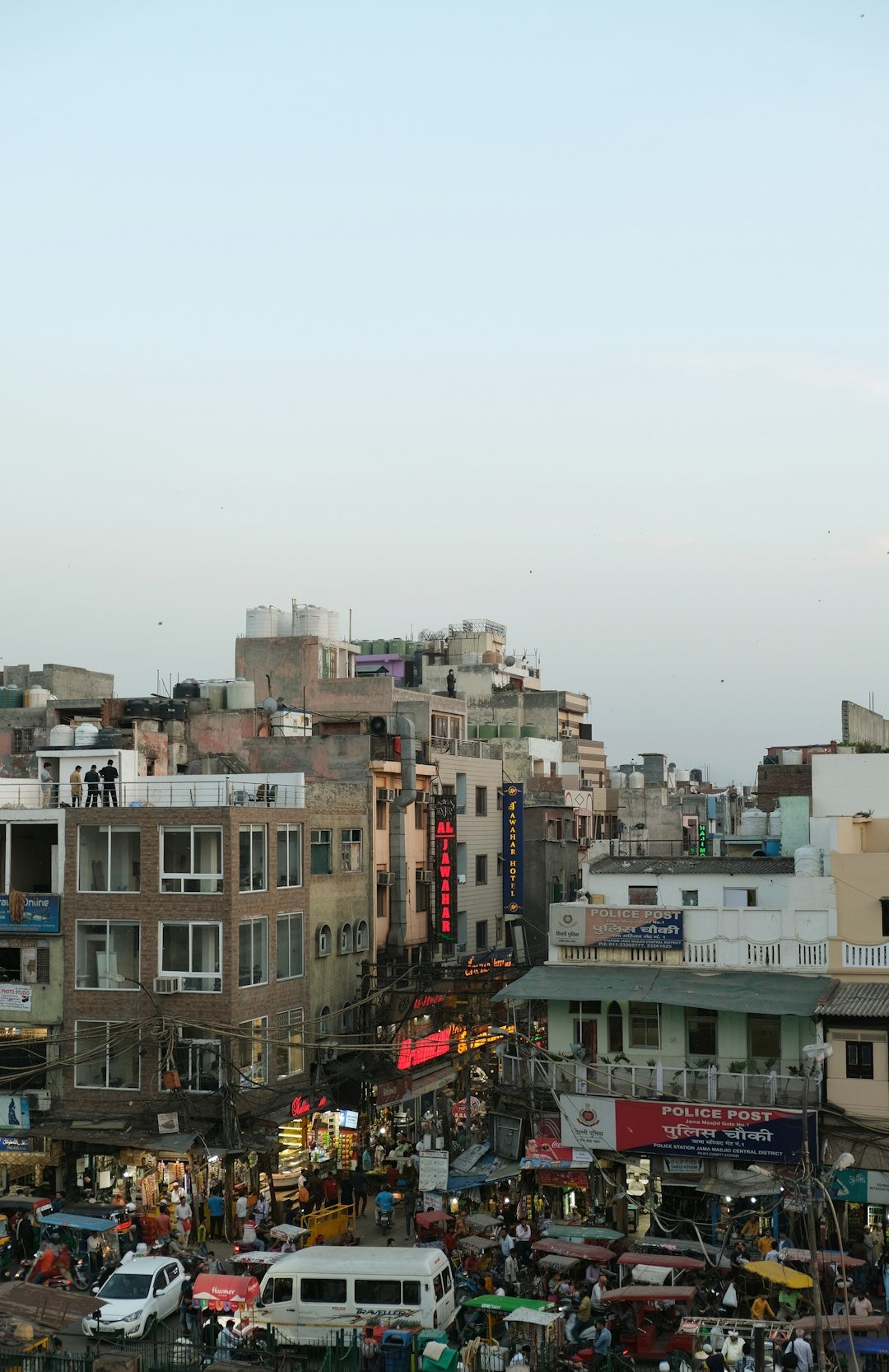
Air pollution across the Indo-Gangetic Plains (IGP) is not simply a collection of city-level problems. Pollutants move across administrative boundaries, interact with weather and geography, and affect health, agriculture and economic activity over a wide region. A workshop convened by the Council of Scientific and Industrial Research–National Environmental Engineering Research Institute (CSIR-NEERI) on 21 November 2026 has renewed attention on a coordinated, science-led response.
What happened at the CSIR-NEERI workshop?
CSIR-NEERI organised a brainstorming workshop titled “Clean Air and Climate Resilience for the Indo-Gangetic Plains (IGP-CACR)” at its Delhi Regional Centre in Naraina, New Delhi. Scientists, policymakers and technical experts from the Ministry of Environment, Forest and Climate Change (MoEFCC), Department of Science and Technology (DST), Department of Biotechnology (DBT), CSIR headquarters and several CSIR laboratories participated. The workshop was held under the leadership of CSIR-NEERI Director Dr S. Venkata Mohan.
Discussions covered airshed management, pollution sources, health impacts, climate vulnerability, pollution-control technologies, artificial-intelligence-based decision-support systems and institutional partnerships. The stated objective was to identify practical interventions that can be deployed at scale and assessed through measurable improvements in air quality.
Why an airshed approach matters
An airshed is a geographical area in which emissions and atmospheric movement influence air quality as a connected system. It is not necessarily bounded by a municipal or state border. A city may experience pollution generated by transport, construction, industry, power generation, waste burning and household fuel use within and beyond its boundaries. Seasonal crop-residue burning, dust transport and weather conditions can add to the burden.
Consequently, a city-only plan may overlook sources outside its jurisdiction. An airshed approach seeks to identify emission sources across the wider region, coordinate monitoring, prioritise interventions and assign responsibilities to the agencies best placed to act. It complements—not replaces—local pollution-control measures.
Key proposals and institutional roles
- Coordinated monitoring: Dr S.K. Goyal highlighted the need for stronger air-quality monitoring networks and coordinated airshed management across Delhi-NCR and the wider IGP.
- Technical coordination: A technical committee for the IGP was suggested to identify priority areas and develop a scientific approach for planning the Continuous Ambient Air Quality Monitoring (CAAQM) network.
- Targeted interventions: DST representatives suggested that CSIR prepare a structured list of potential interventions, locations and scales for demonstration projects.
- Health research: DBT discussions included research opportunities involving precision nutrition and the human microbiome in relation to health effects associated with air pollution.
- Technology deployment: CSIR headquarters emphasised field demonstrations and wider deployment of technologies at Technology Readiness Level (TRL) 6 and above, alongside implementation plans and measurable outcomes.
CSIR-NEERI said it would consolidate recommendations into a policy-level brief identifying priority interventions, technology readiness, demonstration opportunities and collaboration possibilities. These are proposed next steps; the workshop announcement does not mean that a new regional committee or network has already been fully established.
Understanding India’s clean-air framework
The National Clean Air Programme (NCAP), launched in 2019, provides a national framework to address particulate pollution in identified cities. The programme’s stated target was to achieve up to a 40 per cent reduction in PM10 levels or meet the national standard of 60 micrograms per cubic metre by 2025–26 in 130 identified cities. This is a programme target, not proof that every city achieved it.
India’s National Ambient Air Quality Standards (NAAQS) prescribe limits for pollutants including particulate matter. For PM2.5, the annual average standard is 40 µg/m³ and the 24-hour standard is 60 µg/m³. For PM10, the corresponding limits are 60 µg/m³ annually and 100 µg/m³ over 24 hours. These standards provide a benchmark for monitoring and regulatory action.
Why the issue matters beyond Delhi
The Indo-Gangetic Plains support dense settlements, major agricultural production, industrial clusters and transport corridors. Persistent particulate pollution can increase respiratory and cardiovascular risks, reduce visibility, affect outdoor work and impose costs on households and public health systems. Climate resilience adds another dimension: heat, changing rainfall, stagnant atmospheric conditions and other climate-related stresses can interact with pollution exposure.
For policy, the central challenge is to move from episodic emergency measures to sustained emission reduction. This requires reliable source inventories, monitoring data, enforcement, cleaner industrial processes, public transport, dust management, waste handling and coordination among states and local bodies. Technology is useful only when matched with clear institutional responsibility, finance, maintenance and transparent evaluation.
Exam relevance: facts to remember
- CSIR-NEERI is the National Environmental Engineering Research Institute under the Council of Scientific and Industrial Research (CSIR).
- The IGP-CACR workshop was held on 21 November 2026 at the CSIR-NEERI Delhi Regional Centre, Naraina, New Delhi.
- NCAP was launched in 2019; its stated PM10 reduction/standard target applied to 130 identified cities by 2025–26.
- CAAQM stands for Continuous Ambient Air Quality Monitoring.
- PM2.5 has an annual NAAQS limit of 40 µg/m³ and a 24-hour limit of 60 µg/m³; PM10 limits are 60 and 100 µg/m³ respectively.
Possible MCQ areas
- Which CSIR institute organised the IGP-CACR workshop? CSIR-NEERI.
- What does an airshed approach emphasise? Coordinated management of pollution sources across a connected atmospheric region.
- In which year was NCAP launched? 2019.
- What is the annual NAAQS limit for PM2.5? 40 µg/m³.
Official sources and further reading
- PIB: CSIR-NEERI workshop on clean air and climate resilience, 21 November 2026
- CPCB: National Ambient Air Quality Standards
- MoEFCC Annual Report 2024–25
For related exam preparation, visit the Current Affairs Hub, the UPSC & State PSC Preparation Hub and the Competitive Exams Preparation Hub.
One thought on “Indo-Gangetic Plains Air Pollution: CSIR-NEERI Workshop, Airshed Management and India’s Clean-Air Strategy”
Comments are closed.