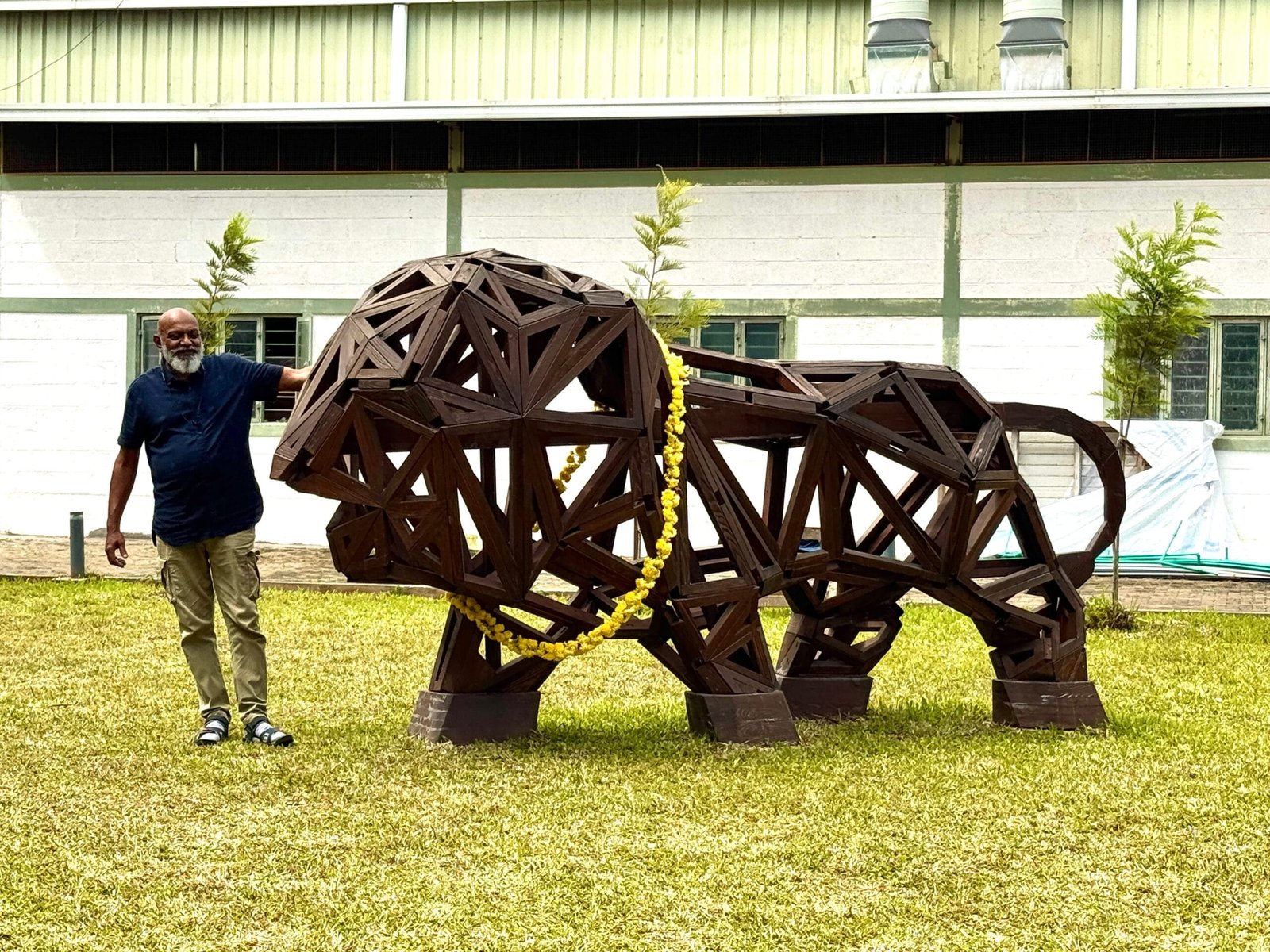
Make in India completes 12 years on 25 September 2026. The initiative was launched on 25 September 2014 and has since evolved from a manufacturing-promotion campaign into a broader policy framework covering production, investment, infrastructure, skills, innovation and export capacity. The latest Government of India assessment released in September 2026 provides a large set of measurable indicators that are particularly useful for SSC, Banking, UPSC, Railway, Defence and other competitive examinations.
What Happened?
The Government of India has released a 12-year assessment of Make in India, highlighting changes in manufacturing output, electronics, automobiles, pharmaceuticals, steel, railways, defence production, solar manufacturing, industrial approvals and Production Linked Incentive (PLI) schemes.
The initiative remains linked with Make in India 2.0, which covers 27 sectors: 15 manufacturing sectors and 12 services sectors. The 2026 assessment uses updated national accounts and sectoral data to show how production capacity and domestic industrial ecosystems have expanded since 2014.
Why It Matters for Exams
Make in India is not just a current-affairs phrase. It connects with industrial policy, GDP and GVA, PLI, exports, employment, infrastructure, defence indigenisation and renewable-energy manufacturing. A single government data release can therefore generate questions across Economy, Government Schemes, Science & Technology, Defence and Static GK.
For banking examinations, the useful angle is the relationship between investment, credit demand, manufacturing, exports and employment. For UPSC and other general-studies examinations, the larger issue is how industrial policy interacts with domestic capability and global value chains.
Background: From Campaign to Industrial Policy
Make in India was launched on 25 September 2014 with the aim of making India a more attractive destination for manufacturing and investment. The policy approach later expanded into linked programmes covering industrial corridors, ease of doing business, PLI incentives, semiconductor manufacturing, renewable-energy supply chains, defence production and startup support.
The important exam distinction is this: Make in India is an overarching initiative, while PLI is a specific incentive architecture targeting identified sectors and production outcomes.
Key Data: Manufacturing and Industrial Production
| Indicator | 2014-era benchmark | Latest figure highlighted |
|---|---|---|
| Manufacturing GVA | — | 10.88% CAGR between FY2022-23 and FY2025-26 |
| Manufacturing IIP | — | 7.0% growth during Apr–Jul 2026 over the same period of 2025 |
| Crude steel production | 81.7 million tonnes | 170.0 million tonnes in FY2025-26 |
| Vehicle production | — | 31.03 million units in 2024-25 |
These numbers should be read as separate indicators. GVA measures value added, IIP measures industrial production activity, and physical output such as steel or vehicles measures production volumes. Mixing these concepts is a common exam mistake.
Electronics and Mobile Manufacturing
Electronics is one of the clearest measurable changes highlighted in the 2026 review. Electronics production increased from roughly ₹1.9 lakh crore in 2014-15 to approximately ₹13.11 lakh crore in 2025-26. Mobile-phone production rose from around ₹18,000 crore to about ₹6.27 lakh crore over the same broad period.
Electronics production grew by 15.8% in 2025-26, according to the government release. For exam preparation, remember the connection between electronics manufacturing, component ecosystems, export capability and the newer Electronics Components Manufacturing Scheme.
Defence Production and Indigenisation
Defence manufacturing is another major exam-relevant part of the release. Indigenous defence production increased from ₹46,429 crore in 2014-15 to approximately ₹1.78 lakh crore in FY2025-26.
The point to remember is not only the value but the policy concept: indigenisation seeks to increase domestic design, manufacturing and supply-chain capability, thereby reducing dependence on imported defence equipment and components in areas where domestic capability can be developed.
Railways, Solar and Other Sectors
The review notes that Indian Railways manufactured 54,809 coaches during 2014–24 and produced 1,674 locomotives in FY2025-26, alongside 6,677 LHB coaches during that year.
Solar manufacturing also expanded sharply. Solar-module capacity rose from 2.3 GW in 2014 to about 192 GW by June 2026. Solar-cell capacity increased from roughly 1.2 GW to about 30 GW.
PLI: The Number Candidates Should Memorise
The Production Linked Incentive framework covers 14 sectors. As of June 2026, the government release reported approximately ₹2.40 lakh crore of investment, ₹22.66 lakh crore of production/sales, ₹15.20 lakh crore of exports and about 14 lakh jobs under PLI-related activity.
These figures are useful because they combine investment, output, exports and employment. In an MCQ, the figures can be mixed to create close options.
Startups and Industrial Infrastructure
Startup India had around 2.54 lakh recognised startups by September 2026. The National Single Window System had mapped 327 Central approvals and 3,452 State approvals, with 34 States/UTs participating and more than 5.69 lakh business entities using the system.
The India Industrial Land Bank had mapped about 4,220 industrial parks covering roughly 6.98 lakh hectares as of May 2026. These are important examples of industrial-policy infrastructure rather than manufacturing output itself.
Other Important 2026 Measures
- Rare-Earth Magnet Scheme: ₹7,280 crore.
- BHAVYA: ₹33,660 crore.
- Mobile Phone Manufacturing Scheme: ₹62,500 crore.
- Semicon 2.0: ₹1,27,500 crore.
- BHAVYA Rasayan: ₹3,030 crore.
These names are valuable because they link current industrial news with emerging technology, critical minerals, semiconductor capacity and chemical manufacturing.
Exam Relevance
SSC: revise the launch date, sectors, PLI, major figures and industrial-policy terminology.
Banking: connect manufacturing investment with credit, working capital, exports and economic growth.
UPSC: focus on policy design, sectoral diversification, domestic value addition and global supply chains.
Railway/Defence: remember coach/locomotive production and indigenous defence production.
Static GK Connection
GVA is the value of output after subtracting intermediate consumption. IIP tracks the volume of industrial production. PLI is an incentive framework linked to incremental production/sales outcomes in identified sectors. Indigenisation refers to increasing domestic capability in design, production and associated supply chains.
Possible MCQ Areas
- Make in India launch date: 25 September 2014.
- Make in India 2.0: 27 sectors.
- PLI: 14 sectors.
- PLI investment reported by June 2026: ₹2.40 lakh crore.
- Indigenous defence production in FY2025-26: ₹1.78 lakh crore.
- Solar module capacity by June 2026: about 192 GW.
- Startup India recognised startups by September 2026: about 2.54 lakh.
Official Source
Press Information Bureau: 12 Years of Make in India
Related Articles
Image credit: Wikimedia Commons. Make in India image used under the file’s stated Creative Commons licence; attribution is retained with the source.
One thought on “12 Years of Make in India: Manufacturing, PLI, Electronics, Defence and Key Data for Competitive Exams”
Comments are closed.