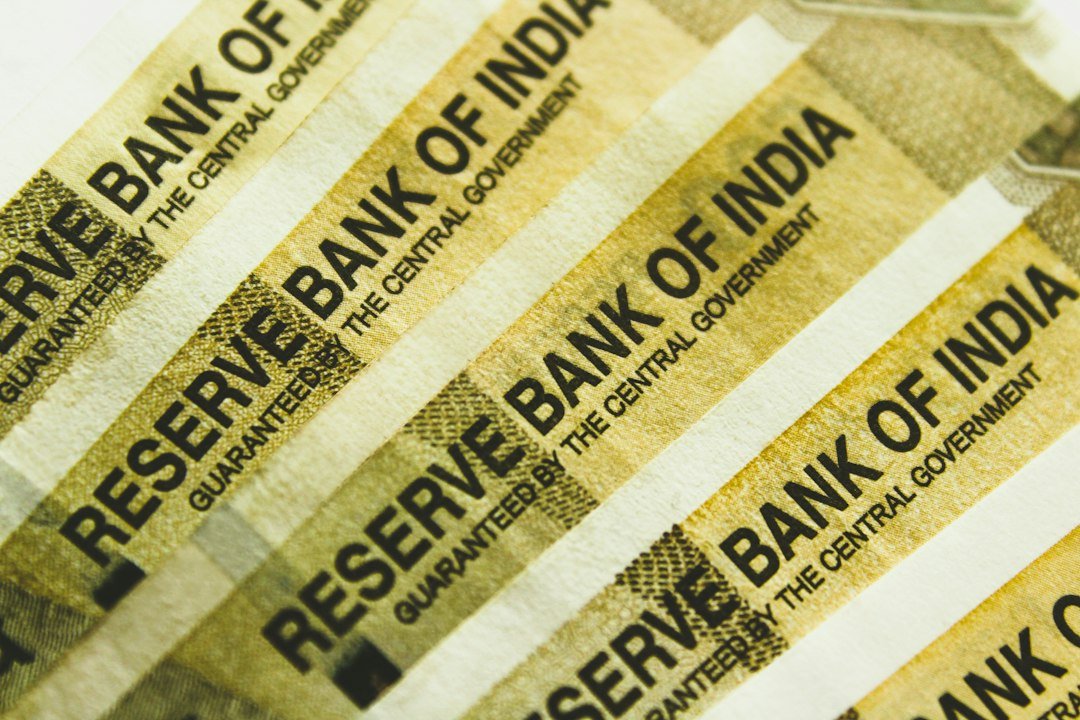
The Reserve Bank of India (RBI) has reduced the minimum daily Cash Reserve Ratio (CRR) maintenance requirement from 99% to 90% of the prescribed requirement for all scheduled banks, effective from the fortnight beginning 1 December 2026. The decision was communicated through RBI Circular RBI/2026-27/310, dated 27 November 2026, issued under Section 42(1) of the Reserve Bank of India Act, 1934.
The change is important for banking and finance examinations, but it must be read correctly: RBI has not announced a cut in the headline CRR rate. It has changed the minimum balance banks must maintain on each day of the reporting fortnight. The average daily balance over the fortnight must still meet the CRR prescribed by RBI.
What has RBI changed?
| Particular | Position before 1 December | From 1 December 2026 |
|---|---|---|
| Daily minimum maintenance | 99% of the required CRR | 90% of the required CRR |
| Average CRR obligation | Must meet the prescribed CRR over the reporting fortnight | Unchanged |
| Covered institutions | All scheduled banks | All scheduled banks |
| Effective date | Fortnight beginning 16 October 2026 | Fortnight beginning 1 December 2026 |
The November circular states that the decision follows an assessment of the current and evolving macroeconomic situation and liquidity conditions. It does not announce a change in the policy repo rate, the statutory liquidity ratio (SLR), or the prescribed CRR percentage itself.
Why did the daily minimum move from 90% to 99% and back?
RBI Circular RBI/2026-27/290 dated 9 October 2026 had raised the daily minimum from 90% to 99%, with effect from the fortnight beginning 16 October 2026. The October circular retained the rule that the average of daily CRR balances during the reporting fortnight must not fall below the CRR prescribed by RBI. The new circular of 27 November reverses that daily-floor tightening from the first fortnight of December.
The sequence is therefore:
- Before 16 October 2026: banks could maintain at least 90% of the required CRR on each day, while meeting the full prescribed CRR on average during the fortnight.
- 16 October to 30 November 2026: the daily floor was raised to 99%.
- From 1 December 2026: the daily floor returns to 90%.
The RBI’s stated reason is its assessment of evolving macroeconomic and liquidity conditions. The circular does not provide a bank-wise liquidity estimate or quantify the amount of funds that will become available. It is therefore safer to describe the measure as a relaxation in daily reserve-management flexibility, not as a quantified liquidity injection.
How CRR maintenance works
CRR is the share of a bank’s Net Demand and Time Liabilities (NDTL) that it must maintain as cash balances with the Reserve Bank of India. It is a statutory reserve requirement. The daily balance is monitored during the reporting fortnight, and the average balance maintained across that period must not be below the prescribed CRR.
The daily minimum is a separate operational floor. It prevents a bank from allowing its reserve balance to fall too far on any single day, even if it expects to compensate on another day. A lower daily floor gives the bank more room to manage temporary inflows and outflows, but it does not permit the bank to reduce the average CRR obligation.
A simple example
Assume, only for illustration, that a bank’s required CRR balance for the fortnight is ₹100 crore. Under the 99% daily floor, its balance could not fall below ₹99 crore on any day. From 1 December, the daily minimum will be ₹90 crore. However, the bank must still maintain an average daily balance of at least ₹100 crore over the fortnight. If it holds ₹90 crore on one day, it must hold correspondingly higher balances on other days so that the fortnightly average is not breached.
This example is not a bank-specific calculation. Actual requirements depend on the bank’s NDTL, the applicable CRR rate and RBI’s reporting rules. The key examination distinction is that 90% is the daily minimum as a proportion of the required CRR balance, not the new CRR rate as a percentage of NDTL.
Why the change matters for banks
Banks face uneven payment flows. Government transactions, salary credits, tax payments, corporate transfers, cash withdrawals and settlement obligations can cause reserve balances to vary during a fortnight. A 90% daily floor gives treasury teams more flexibility to manage these short-term movements while continuing to satisfy the average statutory requirement.
The relaxation may reduce the need for a bank to hold almost the entire required CRR amount every single day. It can help banks plan day-to-day liquidity more efficiently and may reduce the risk of a temporary shortfall caused by timing differences. However, it does not release the bank from the full average reserve requirement and does not automatically create an equivalent amount of lendable funds.
For customers, the circular does not directly change deposit rates, lending rates, EMI amounts or savings-account interest. Any effect on market liquidity or credit conditions would depend on how banks manage their balances and on wider monetary and financial conditions. The RBI has not linked this circular to a repo-rate decision.
CRR versus SLR: a common examination trap
| Feature | CRR | SLR |
|---|---|---|
| Full form | Cash Reserve Ratio | Statutory Liquidity Ratio |
| Where maintained | As cash balance with RBI | In prescribed liquid assets held by the bank |
| Legal framework | Section 42 of the RBI Act, 1934 for scheduled banks | Section 24 of the Banking Regulation Act, 1949 |
| Primary role | Reserve/liquidity management and monetary control | Liquidity buffer and statutory asset requirement |
CRR should also be distinguished from the policy repo rate. Repo is the rate at which RBI lends short-term funds to banks against eligible collateral under the liquidity framework. CRR is a reserve balance that banks must maintain with RBI. A change in the daily CRR maintenance floor is not a repo-rate cut.
Fortnight definition and the legal basis
The circular is issued under Section 42(1) of the RBI Act, 1934. For current CRR and SLR maintenance and reporting, the fortnight is defined as the period from the first day to the fifteenth day of a calendar month, or from the sixteenth day to the last day of the month. The first fortnight affected by the new circular begins on 1 December 2026 and runs through 15 December 2026.
The statutory framework empowers RBI to prescribe CRR for scheduled banks and to issue directions on maintenance. The daily minimum is an operational requirement within that broader statutory obligation. Candidates should remember both the Act and the distinction between the daily floor and the fortnightly average.
Exam relevance: facts to remember
- Issuing institution: Reserve Bank of India.
- Circular number: RBI/2026-27/310.
- Date of circular: 27 November 2026.
- Legal provision: Section 42(1), RBI Act, 1934.
- Institutions covered: all scheduled banks.
- Daily minimum CRR maintenance: reduced from 99% to 90% of the required CRR.
- Effective date: fortnight beginning 1 December 2026.
- Average CRR requirement: unchanged.
- Earlier tightening: RBI Circular RBI/2026-27/290 dated 9 October 2026, effective 16 October.
Possible MCQ areas include the full form of CRR and NDTL, the difference between CRR and SLR, the relevant provisions of the RBI Act and Banking Regulation Act, the meaning of a reporting fortnight, and whether the 27 November decision changed the headline CRR rate. The correct answer to the last point is no.
For a broader foundation, read RBI and Monetary Policy for Competitive Exams, the RBI functions explainer and the Banking Awareness study hub.
Official RBI circulars
- RBI/2026-27/310, dated 27 November 2026 – 90% daily minimum from 1 December
- RBI/2026-27/290, dated 9 October 2026 – earlier 99% daily minimum
- RBI Annual Report 2025–26 – chronology of CRR policy changes
This explainer is based on RBI circulars available on 28 November 2026. It describes the daily maintenance requirement only; it does not treat the change as a reduction in the prescribed CRR rate.


One thought on “RBI Cuts Daily Minimum CRR Maintenance to 90% from December 1, 2026”
Comments are closed.