
THE VEDIC PERIOD
Introduction
The period in which Aryans came to settle within the Indian subcontinent is known as Vedic period (or Vedic age). It is so because nearly all information about their lives comes from the Rig Veda. The word Arya has been used in this text 36 times. It indicates a cultural community. The Aryans were primarily distinguished for their language which is Indo-European. It is also referred to as Vedic Sanskrit. The word ‘Veda’ used in the language of Aryans is derived from the Proto Indo-European root ‘ueid’. It means ‘to know’. This chapter talks about the culture of Aryans as known from Vedas and other literature of that era.
Vedas are a collection of hymns, prayers, charms, litanies and sacrificial formulae. There are four Vedas, namely, Rig Veda, Sama Veda, Yajur Veda and Atharva Veda.
Learning Objectives
In this chapter, you will learn about the:
Rig or Early Vedic Period
Later Vedic Period
Important Terms of the Vedic Period
Vedic Literature
Other literary work related to Vedas
Indian School of Philosophy
Important Facts
Widespread controversy surrounds the theory of Aryans’ original home. According to B. G. Tilak, Aryans came from Arctic region while Max Muller believed that they came from Central Asia and Europe.
It is most widely acknowledged that they migrated in batches from Central Asia during 2000 BC to 1500 BC.
They first settled in Eastern Afghanistan, modern Pakistan, Punjab and Western U.P.
This region was more popularly known as Sapta Sindhu or the land of seven rivers.
These seven rivers were Indus and its six tributaries, namely, Vitasta, Asikani, Vipasa, Parushni, Shatudri and Sarsuti.
Division of the Vedic Period


The Vedic period can be divided into two phases:
Rig or Early Vedic Period (1500–1000 BC)
Later Vedic Period (1000–600 BC)
Rig or Early Vedic Period (1500–1000 BC)
Most of the hymns of the Rig Veda were composed in the early Vedic period.
Geographical Area
The Rig Veda mentions the migration of Aryans into the subcontinent around 1500 B.C.
They settled in the Sapta Sindhu region.
According to the Rig Veda, Sindhu was the most stated river and Sarsuti was the most pious river.
Important Rivers Mentioned in the Rig Veda
| Name in Rig Veda | Present Name |
|---|---|
| Sindhu | Indus |
| Vitasta | Jhelum |
| Asikani | Chenab |
| Parushni | Ravi |
| Vipasa | Vyas (Beas) |
| Shatudri | Sutlej |
| Gomal | Gomati |
| Krumu | Kurram |
| Drishadvati | Ghaggar |
| Naditarna | Saraswati |
| Kubha | Kabul |
Society (Rig Vedic Society)

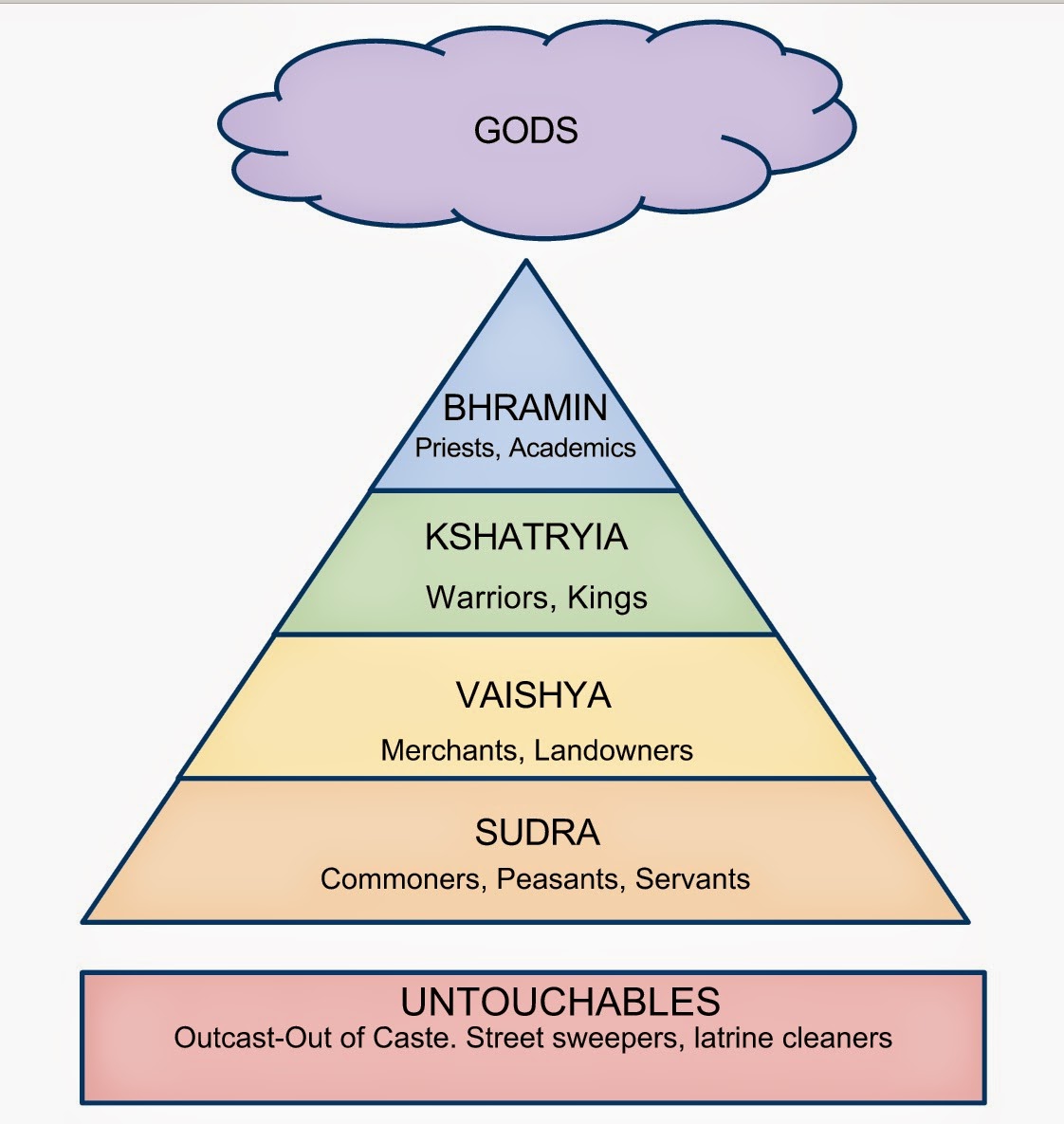
Classification based on individuals’ professions or occupations
Kinship based Patriarchal family structure
Tribes known as Jana or Vis
Divided into Grama
Four Social Groups
Brahmins: Teachers and Priests
Kshatriyas: Rulers & Administrators
Vaishyas: Farmers, Merchants & Bankers
Shudras: Artisans & Labourers
Key Features of Society
The term Kula or family was seldom used.
The Aryans organised themselves primarily as a tribe. Their fighting units were known as Grama.
They identified with a clan which was known as Jana. The commoners within the tribe primarily vaishyas were together known as Vis.
Gramas also meant villages.
Occupations were not hereditary as they were according to individuals’ skill and liking.
Sons were inheritors of fathers’ property. Women were respected. They were educated and had access to the tribal assemblies such as Sabha, Samiti and Gana.
Ghosha, Lopamudra, Maitreyi, Gargi and Apala were significant female figures of Rig Vedic period.
Monogamy existed, though polygamy and polyandry were also in practice.
No instance of child marriage is found.
Widows could marry younger brothers of their deceased husbands.
Important part of diet was milk and dairy products such as, curd, butter and ghee.
As Rig Vedic times had pastoral communities, Cow was deemed as Aghanya meaning, not to be killed.
Alcoholic drinks, Sura and Soma, were also consumed.
Right to property existed in case of moveable property as well as immoveable property. However, sense of private property was not well established.
Division of Society
| Unit | Head |
|---|---|
| Kula (family) | Kulapa |
| Grama (fighting hordes/village) | Gramani |
| Vis (mass clan) | Vispati |
| Jana (clan) | Gopa/Gopati |
Religion (Rig Vedic Period)
People practiced nature worship and not idol worship.
No temples were built and Yajnas were performed in open areas.
The main modes of prayer were chanting of mantras.
Sacrifices were an essential part of religion.
Sacrifice was offered for Praja, Pasu and Dhana and not for spiritual upliftment or misery.
Indra was the most prominent god and was also called Purandhar. 250 hymns are devoted to him in the Rig Veda.
God of plants was Soma, after whom an intoxicating drink is named. Also, Soma Mandala, Rig Veda’s 9th mandala, is attributed to him.
Prithvi, Aditi and Usha, signifying coming of dawn, were the female deities.
Gods of the Rig Vedic Period
| Name | Description |
|---|---|
| Indra/Purandhar | Associated with thunder and storm; intermediary between Gods and humans |
| Agni | God of fire |
| Varuna | God of water and upholder of natural order |
| Surya | God with 7 horse driven chariot |
| Savitri | God of light to whom Gayatri Mantra is addressed |
| Pushan | God of marriage; also guarded roads |
| Rudra | God of animals |
| Dyaus | God of heaven |
| Ashwin/Nastya | God of health, youth and immortality |
| Sindhu | River goddess |
| Yama | God of death |
| Marut | God of storm |
| Aditi | Goddess of eternity |
| Ila | Mother of cattle herds |
| Usha | Goddess of dawn |
Polity (Rig Vedic Period)
As the society was tribal, people’s chief loyalty belonged to their tribe.
Tribe was formed of many clans or Vis.
Vis was divided into grama.
A conflict or clash between two gramas was called Sangrama or war.
Usually the gramas fought over cattle.
Several tribal assemblies, such as Sabha, Samiti, Vidhatha and Gana existed.
A tribal assembly called Samiti elected the king.
A council of elders was called Sabha.
Government’s structure was patriarchic in nature.
Monarchy was common but some states functioned as republics.
Among the king’s ministers, highest in importance was Purohita, followed by Senani and then Gramani.
Do You Know?
A historic war, called the Dasarajna war or the battle of 10 kings is mentioned in the 7th Mandala of the Rig Veda. In this war, King Sudas, who was also the Bharatha king of Tritus family, won over an alliance of 10 tribes and killed their leader Purusukta.
Economy (Rig Vedic Period)
Cattle rearing were the main occupation during this period.
People’s wealth was estimated in terms of their cattle.
Cow was, in fact, a sort of currency.
People also practiced agriculture.
Later Vedic Period (1000–600 BC)


The later Vedic period observed several changes of comprehensive significance in the society. The three later Vedas (Yajur, Sama and Atharva) and Brahmanas and few Upanishads were composed in this period.
Geographical Area
During the later Vedic period, the Aryans moved eastwards covering the whole of Western Uttar Pradesh and the Ganga Yamuna doab. The later Vedic texts also refer to the three divisions of India – Aryavarta, Madhyadesa and Dakshinapatha.
Society (Later Vedic Period)
The four divisions of society or the Varna system was thoroughly established.
The Shudras were meant to serve the other three classes.
The caste became birth based rather than occupation based.
The institution of gotra existed and marriages between same gotra were no longer permitted.
Towards the end of the later Vedic period, the concept of four stages of life or Ashramas was established.
Ashramas or Stages of Life
| Stage of life | Description |
|---|---|
| Brahmacharya | The stage devoted to education and student life |
| Grihastha | The life of householder |
| Vanaprastha | The stage which was to be spent as a hermit |
| Sanyasa | The stage aimed at salvation and complete retirement |
The family became more patriarchal.
Women were generally given a lower position.
Child marriages had become common.
Types of Marriage in Rig Vedic Period
| Type | Description |
|---|---|
| Anuloma | Marrying a girl from a lower caste to a bridegroom from an upper caste |
| Arsa | The father of a girl received a cow or a bull as a bride price |
| Asura | The bride was purchased by the groom |
| Brahma | Marriage of a duly dowered girl by Vedic rites |
| Daiva | When a householder gives a daughter to a priest |
| Gandharva | Love marriage |
| Paishacha | Marrying a girl by consummating her in sleep |
| Prajapatya | Marriage with consent and commitment |
| Pratiloma | Reverse of Anuloma Vivaha |
| Rakshasa | Marriage by capture |
Religion (Later Vedic Period)
Indra and Agni lost their importance.
Prajapathi, Vishnu and Rudra became prominent.
Importance of prayers declined and sacrifices increased.
Priesthood became a profession and hereditary.
Polity (Later Vedic Period)
Growth of large kingdoms.
Kingship was no longer tribal.
Many Jana merged to form Janapadas or Rashtras.
Importance of Samiti and Sabha diminished.
Kuru and Panchala kingdoms flourished.
Rituals like Rajasuya, Ashvamedha and Vajpeya were performed.
The term rashtra appeared for the first time.
Economy (Later Vedic Period)
Iron was used extensively.
Forests were cleared and agriculture expanded.
Refining of iron led to wider use of steel.
Rice, barley and wheat were grown.
Craftsmanship progressed.
Trade existed with Babylon.
Important Terms of the Vedic Period
| Term | Description |
|---|---|
| Amaju | A girl who lived life long unmarried |
| Akratuh | People who had no faith in rituals |
| Apah | Water |
| Dam | House |
| Duntri | Daughter |
| Gavisti | War |
| Gomat | A wealthy person |
| Gopa | The ruler |
| Gorasa | Milk |
| Gotra | Cow pen |
| Gvyuti | Measurement of distance |
| Sadan | House |
Epics
The two epics of the later Vedic period were Mahabharata and Ramayana.
Mahabharata – written by Ved Vyasa, originally called Jaisamhita, final compilation contained 1 lakh verses.
Ramayana – written by Valmiki, finally ending at 24,000 verses.
Indian School of Philosophy
Six systems of philosophy:
Nyaya – Gautama
Purva Mimansa – Jaimini
Sankhya – Kapila
Uttar Mimansa – Vyasa
Vaisheshika – Kannada
Yoga – Patanjali

