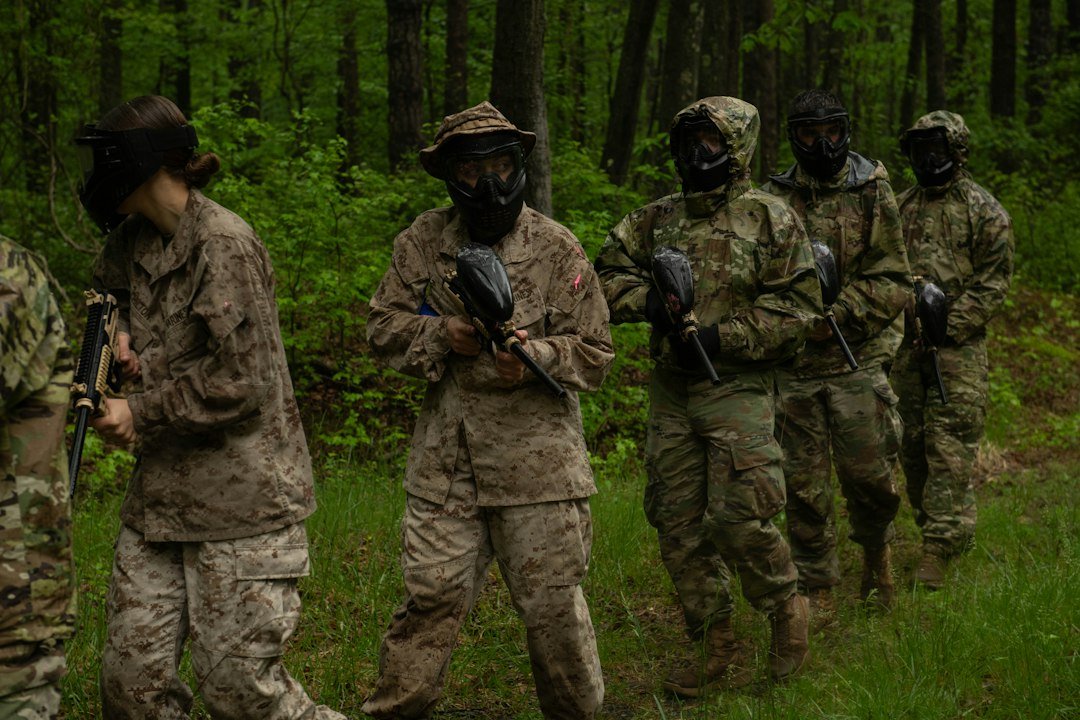
The Indian and Nepalese Armies began the 20th edition of their annual bilateral exercise, SURYAKIRAN XX, on 25 November 2026 at the Nepal Army Battle School in Saljhandi, Nepal. The exercise is scheduled to continue until 8 December. The Indian contingent has 334 personnel from the Kumaon Regiment, while Nepal has fielded an equal number from the Shri Jawla Dal Battalion. The opening ceremony was attended by Major General Purna Bahadur Khatri, General Officer Commanding of the Nepal Army’s Mid Western Division. The exercise is a planned military training activity; it is not a new defence treaty or a permanent deployment.
Exercise Suryakiran XX 2026: key facts
| Particular | Verified detail |
|---|---|
| Exercise | SURYAKIRAN XX — 20th edition |
| Commencement | 25 November 2026 |
| Scheduled end | 8 December 2026 |
| Venue | Nepal Army Battle School, Saljhandi, Nepal |
| Indian contingent | 334 personnel from the Kumaon Regiment |
| Nepalese contingent | 334 personnel from the Shri Jawla Dal Battalion |
| Combined strength | 668 personnel, based on the two announced contingent strengths |
| Opening ceremony guest | Major General Purna Bahadur Khatri, GOC, Mid Western Division, Nepal Army |
| Nature | Annual bilateral Army exercise, hosted alternately by India and Nepal |
What is the objective of the joint exercise?
The stated objective is to improve interoperability, operational coordination and mutual understanding between the two armies. The troops are training for counter-insurgency and counter-terrorism operations in challenging terrain. These tasks require soldiers to coordinate patrols, communicate across units, share situational information and apply compatible procedures while operating in difficult ground conditions.
Interoperability does not mean that the two armies become one force or surrender their separate command structures. It means that personnel can work together more effectively when a mission requires cooperation. Exercises help participants compare procedures, practise common drills and understand how the partner force plans and responds. The value is practical: familiarity developed during training can reduce confusion during a real joint response.
Training areas: tactical operations, heliborne activity and disaster response
The Ministry of Defence has identified four broad elements in the exercise programme:
- Joint tactical operations: coordinated field activity and small-unit procedures relevant to counter-insurgency and counter-terrorism tasks.
- Heliborne operations: training involving helicopter-supported movement and insertion, where terrain or operational requirements make ground movement difficult.
- Disaster response: coordination and response procedures that can be useful during emergencies affecting communities in mountainous or remote areas.
- Medical training: exchange of field medical practices and experience in supporting personnel during demanding operations.
The exercise also lets soldiers exchange experience and refine procedures. The Ministry has not published a daily timetable or aircraft count, so those details should not be inferred.
Why Suryakiran matters for India–Nepal relations
India and Nepal are neighbouring countries with close social, cultural, economic and security links. Their armies have a long history of cooperation, and military engagement is one part of a wider bilateral relationship that also includes trade, connectivity, development assistance, education and people-to-people ties.
A recurring Army exercise builds professional familiarity without changing the legal or political basis of the relationship. It allows both sides to practise working in a structured setting, understand each other’s operating methods and strengthen confidence between units. Counter-terrorism and counter-insurgency training is relevant because threats can involve difficult terrain, movement across remote areas and the need for coordinated responses. Disaster-response and medical modules broaden the exercise beyond combat drills and reflect the practical demands faced by armies during humanitarian emergencies.
The timing also follows a period of high-level diplomatic engagement. Nepal’s Prime Minister Balendra Shah undertook a state visit to India on 22–23 November 2026, his first visit to India after assuming office. The joint press release issued by the two governments described cooperation in trade, infrastructure, connectivity, culture and emerging sectors. Suryakiran is a separate military-to-military activity, but it sits within this broader pattern of bilateral engagement.
Why the Kumaon Regiment and Shri Jawla Dal Battalion matter
The Indian contingent is drawn from the Kumaon Regiment, an infantry regiment of the Indian Army. The Nepalese contingent is represented by the Shri Jawla Dal Battalion of the Nepal Army. Naming the participating units is important for examination preparation: the official announcement identifies these formations specifically, so they should not be confused with the regiments or battalions that took part in earlier editions.
The two contingents have equal announced strengths of 334 personnel each. This equal-sized composition gives the exercise a clear bilateral character. It does not mean that every activity will involve an identical number of soldiers at every stage; the official figure refers to the contingents announced for the exercise.
Venue and country facts for static GK
The exercise is taking place at the Nepal Army Battle School, Saljhandi, in Nepal. Nepal’s capital is Kathmandu and its currency is the Nepalese rupee (NPR). As of November 2026, the President of Nepal is Ram Chandra Paudel and the Prime Minister is Balendra Shah. The Nepalese Office of the Prime Minister and Council of Ministers confirms that Shah assumed office on 27 March 2026; the Office of the President identifies Paudel as the country’s President.
For India–Nepal questions, remember that the exercise is bilateral and alternates between the two countries. It is an Army exercise, not a naval exercise or an air force exercise. The venue for this edition is in Nepal, not India.
Relevance for UPSC, CAPF, CDS, NDA and other exams
UPSC and State PSC: Link the exercise with India’s neighbourhood policy, bilateral defence cooperation, border-region security, disaster management and India–Nepal relations. In a mains answer, explain how military exercises build interoperability and confidence, while noting that they are only one component of a wider diplomatic relationship.
CAPF, CDS and NDA: Focus on the edition number, dates, venue, participating units, contingent strengths and the training areas. Defence-awareness questions often test the country hosting an exercise and the service or arm of the forces involved.
SSC and other objective examinations: Revise the country facts, capital, currency, current leadership and the distinction between bilateral and multilateral exercises. Do not mix Suryakiran with India’s exercises involving other neighbouring countries.
Possible MCQ areas
- Which two countries participate in Exercise Suryakiran? India and Nepal.
- Which edition began on 25 November 2026? The 20th edition, SURYAKIRAN XX.
- Where is the 2026 exercise being held? Nepal Army Battle School, Saljhandi, Nepal.
- Which Indian regiment is represented? Kumaon Regiment.
- Which Nepal Army battalion is represented? Shri Jawla Dal Battalion.
- What is the announced strength of each contingent? 334 personnel.
- Which areas are included? Joint tactical operations, heliborne operations, disaster response and medical training.
- Who are Nepal’s President and Prime Minister as of November 2026? Ram Chandra Paudel and Balendra Shah.
Official sources and further reading
- Ministry of Defence / PIB: SURYAKIRAN XX commenced in Nepal, 25 November 2026.
- PMO India: Joint press release on Nepal Prime Minister’s state visit, 22–23 November 2026.
- Office of the Prime Minister and Council of Ministers, Nepal: Prime Minister Balendra Shah.
- Office of the President of Nepal.
- Nepal Rastra Bank: Currency Management Department.
For connected revision, read the Daily Current Affairs 24 November 2026 update, visit the Defence and Police Exams Preparation Hub, and use the Current Affairs Hub for daily updates.