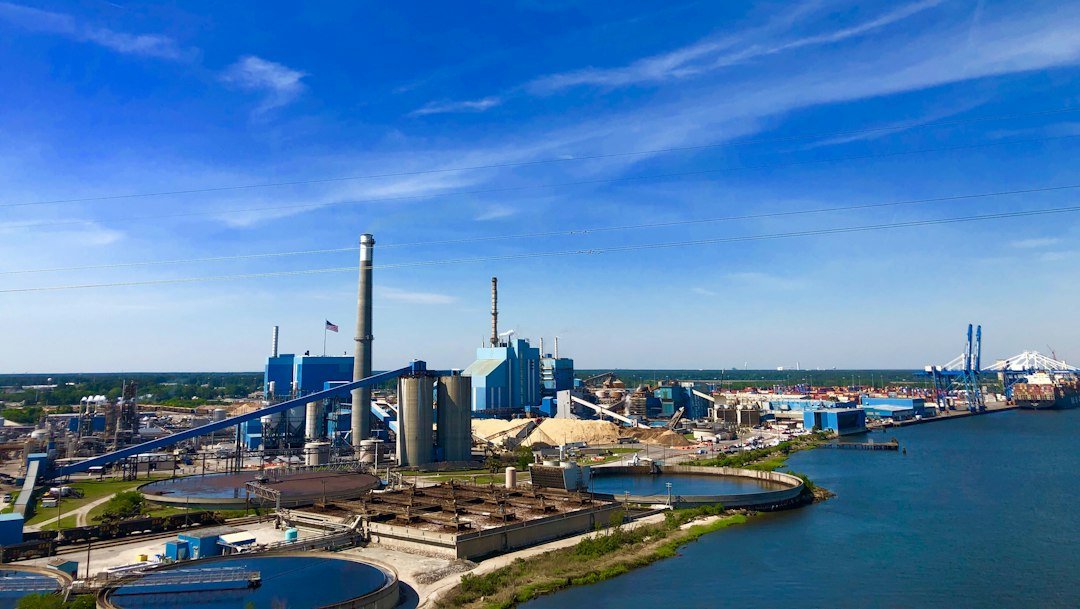
The Government of India has moved ahead with six brownfield urea projects under the National Investment Policy for Urea (NIPU)-2026, with an estimated investment of about ₹54,000 crore. The announcement, issued by the Department of Fertilizers on 25 November 2026, is aimed at strengthening domestic urea manufacturing, improving fertilizer security and reducing reliance on imported supplies. The projects span public-sector, private-sector and cooperative enterprises across six locations in five states.
NIPU-2026: the key announcement
| Particular | Officially reported detail |
|---|---|
| Policy | National Investment Policy for Urea (NIPU)-2026 |
| Projects advanced | Six brownfield urea projects |
| Estimated investment | Approximately ₹54,000 crore |
| Indicative project cost | About ₹9,000 crore per project |
| Planned installed capacity | 12.7 lakh metric tonnes per annum for each listed project |
| Return on equity framework | 12–16% band, with a 12% floor and 16% ceiling |
| Estimated brownfield savings | About ₹225 crore annually, or around ₹1,800 crore over eight years |
The announcement is an investment and manufacturing-policy development. It is not a direct cash transfer to farmers and does not mean that the new capacity is already producing urea. Project implementation, construction and commissioning will determine when the additional or replacement capacity becomes operational.
Where will the six urea projects be located?
Brownfield projects reuse existing industrial sites, utilities, logistics and skilled staff rather than starting on undeveloped land.
| Project | Location | Project character |
|---|---|---|
| MFL–Madras | Chennai, Tamil Nadu | Public-sector replacement of an older unit; planned installed capacity 12.7 LMT per year |
| NFL–Nangal | Nangal, Punjab | Public-sector replacement of a legacy unit; planned installed capacity 12.7 LMT per year |
| KFL–Shahjahanpur | Shahjahanpur, Uttar Pradesh | Cooperative brownfield expansion associated with KRIBHCO; 12.7 LMT per year |
| Matix–Panagarh | Panagarh, West Bengal | Private-sector project at an existing complex; 12.7 LMT per year |
| CFCL–Gadepan | Gadepan, Kota, Rajasthan | Private-sector expansion of an existing complex; 12.7 LMT per year |
| IIPL–Jagdishpur | Jagdishpur, Uttar Pradesh | Private-sector capacity addition at an existing plant; 12.7 LMT per year |
Two details are important for accurate interpretation. First, the MFL–Madras and NFL–Nangal projects are replacements of old units, not simply additions on top of the entire existing capacity. Second, although each project is associated with a 12.7 LMT annual installed-capacity figure, the arithmetic sum of six project capacities should not automatically be described as 76.2 LMT of net additional production. The official release does not provide a single net-new-capacity figure after accounting for replacement of existing units.
Why India is focusing on domestic urea production
Urea is a major nitrogenous fertilizer used in Indian agriculture. Its timely availability is important for crop nutrition and farm operations. The Department of Fertilizers describes the objectives of the urea subsidy framework as ensuring adequate supply at the statutory controlled price, optimising indigenous production and rationalising the Government’s subsidy expenditure. The difference between the delivered cost of fertilizer and the price paid by farmers is addressed through the subsidy mechanism.
The 25 November 2026 PIB release places annual urea demand or consumption at around 400 lakh metric tonnes (LMT). It reports that domestic production increased from 225 LMT in 2014–15 to a record 314.07 LMT in 2023–24, and stood at 293.30 LMT in 2025–26. The same release says total indigenous Reassessed Capacity rose from 207.54 lakh metric tonnes per annum (LMTPA) in 2014–15 to 269.42 LMTPA in 2026–27.
These figures describe different measures and periods. Production is the quantity actually produced during a year; installed or reassessed capacity is the rated capacity available for production. They should not be treated as interchangeable. The demand figure of around 400 LMT also explains why domestic production, imports, logistics and fertilizer stocks remain important parts of agricultural planning.
How the ₹54,000-crore investment framework is structured
The six projects are estimated at around ₹9,000 crore each. The policy framework includes a return-on-equity band of 12–16%, anchored by a 12% floor and 16% ceiling. The release also refers to a foreign-exchange-rate mitigation mechanism designed to normalise exchange-rate effects and convert the relevant amount into Indian rupees after four years using prevailing rates.
The Government estimates that the brownfield approach could generate savings of approximately ₹225 crore per year, or about ₹1,800 crore over eight years. The rationale is that an existing site can provide land, utilities, logistics and technical staff, reducing the time and cost associated with building a completely new industrial complex. These are policy estimates, not a guarantee that every project will achieve identical savings.
How NIPU-2026 connects with earlier urea policies
Earlier expansion efforts included the New Investment Policy, 2012 and New Urea Policy, 2015. The 2012 framework supported units at Ramagundam, Gorakhpur, Sindri, Barauni, Panagarh and Gadepan.
NIPU-2026 is a new investment framework and should not be confused with the older NIP-2012 or NUP-2015. For examinations, learn the full name and year of the 2026 policy separately from the earlier initiatives. The six locations announced in November 2026 are also not the same list as the six units associated with the 2012 policy.
Why the announcement matters for agriculture and the economy
Fertilizer security: More reliable domestic manufacturing can reduce exposure to international supply disruptions and price volatility. Urea imports may still be needed, but higher domestic capability can improve the balance between local production and imported supply.
Farm input availability: Fertilizer supply must be coordinated with seasonal demand, transport and distribution. Manufacturing capacity alone does not ensure that every district or retail outlet has adequate stocks; logistics and timely movement remain essential.
Industrial modernisation: Replacement of ageing units can improve energy efficiency, process safety and operational reliability. The PIB release specifically notes that the older MFL–Madras and NFL–Nangal units face higher production costs and energy consumption.
Investment and employment: The projects involve public, private and cooperative enterprises. The estimated ₹54,000-crore investment is relevant to industrial policy, capital formation and the role of different ownership models in strategic input manufacturing.
External-sector impact: If domestic production rises and projects are commissioned successfully, the need for imported urea could decline over time. The actual effect on the import bill will depend on commissioning schedules, plant performance, demand and global prices.
What candidates should not assume
- The six projects have been advanced under the policy; the announcement is not proof that all plants have been commissioned.
- The ₹54,000 crore is an estimated investment figure, not a direct subsidy paid to farmers.
- The 12.7 LMT figure is the stated installed capacity for each listed project; it should not be reported as net new output without considering the two replacement projects.
- The production figure for 2025–26 and reassessed capacity figure for 2026–27 refer to different measures and years.
- The official release does not give a commissioning deadline for all six projects. Do not invent one.
Exam relevance: UPSC, State PSC, SSC, banking and agriculture exams
UPSC and State PSC: Link NIPU-2026 with food security, agricultural productivity, fertilizer subsidy, import dependence, industrial policy, energy efficiency and Atmanirbhar Bharat. A mains answer should distinguish domestic production from installed capacity and explain why brownfield investment can be faster than greenfield construction.
SSC and other objective exams: Revise the six project locations, policy name, investment amount, annual capacity per project and the 12–16% return-on-equity band.
Banking and insurance exams: Focus on capital investment, public-private-cooperative participation, subsidy expenditure, import substitution and the external-sector implications of fertilizer imports.
Possible MCQ areas and static-GK revision
- What is the full form of NIPU-2026? National Investment Policy for Urea.
- How many brownfield projects were advanced? Six.
- What is the estimated investment? Approximately ₹54,000 crore.
- What is the planned installed capacity figure for each listed project? 12.7 LMT per annum.
- Which two projects are described as replacements of older units? MFL–Madras and NFL–Nangal.
- Where are the Matix–Panagarh and CFCL–Gadepan projects located? West Bengal and Rajasthan, respectively.
- What does LMT mean? Lakh metric tonnes. LMTPA means lakh metric tonnes per annum.
- Which earlier policies are mentioned as predecessors? New Investment Policy, 2012 and New Urea Policy, 2015.
Official sources and related reading
- Department of Fertilizers / PIB: Six urea plants under NIPU-2026, 25 November 2026.
- Department of Fertilizers: Annual Report 2023–24 — urea subsidy framework and fertilizer policy background.
For related exam preparation, read the India’s Agricultural Exports 2026–27 explainer, the National Milk Day 2026 article, and the Current Affairs Hub. These provide complementary coverage of agriculture, rural economy and food systems.