Updated: 13 November 2026 | Economy, manufacturing and industrial policy
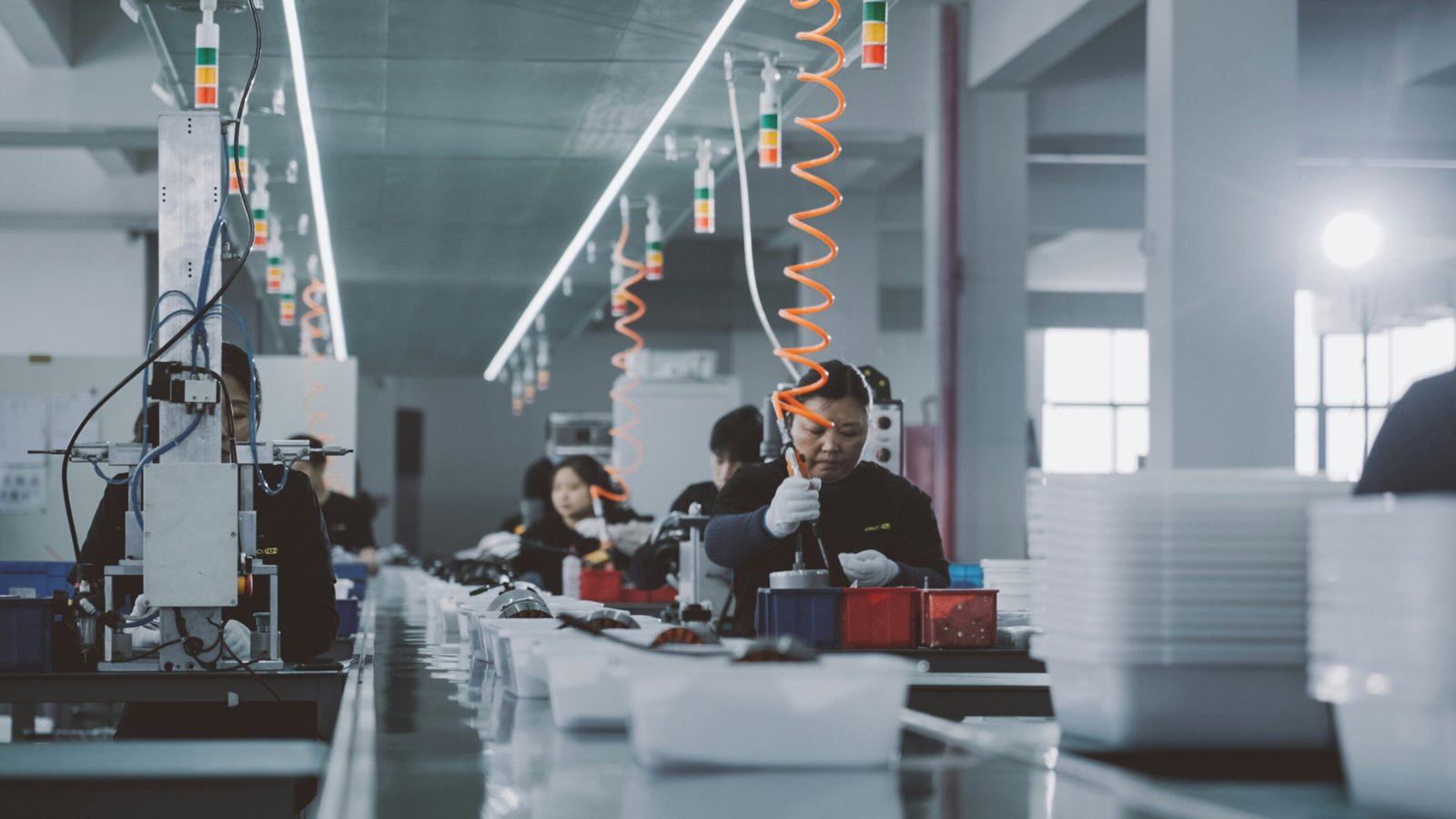
NITI Aayog released its Impact Assessment of PLI Schemes on 12 November 2026 with IIM Ahmedabad as knowledge partner. It assesses 14 sectors through investment, production, exports and employment. Findings vary by sector maturity, technology, commissioning cycle and data quality; the report is a mid-course assessment, not a verdict that every scheme has succeeded or failed.
By March 2026, reported cumulative investment was ₹2,40,138 crore, production/sales ₹22,66,412 crore, employment 8,49,069 and incentives ₹35,354 crore. Nearly 70% of targeted segments were broadly on track, particularly electronics, telecom and pharmaceutical drugs. These are cumulative portfolio figures—not annual additions or proof that every rupee of output was caused by PLI.
1. What is the Production Linked Incentive scheme?
PLI is a targeted manufacturing policy that rewards eligible firms for specified incremental production or sales after they meet scheme conditions. Unlike an unconditional grant paid upfront, the incentive is linked to performance and is released when prescribed investment, production and other eligibility requirements are satisfied. The design seeks to encourage scale, technology adoption, domestic capability, exports and participation in global value chains.
The 14 sectoral schemes cover large-scale electronics manufacturing; bulk drugs; medical devices; pharmaceuticals; IT hardware; telecom and networking products; automobiles and auto components; advanced chemistry cell (ACC) batteries; drones and drone components; textiles (man-made fibre and technical textiles); white goods; high-efficiency solar PV modules; food products; and speciality steel.
The report lists a combined financial outlay of ₹1,91,049 crore. The PLI portfolio is product- and sector-specific: some schemes target labour-intensive employment, others strengthen strategic supply chains or create capacity in sunrise technologies. Their objectives and timelines are therefore not identical.
2. Portfolio results through March 2026
| Indicator | Cumulative reported outcome |
|---|---|
| Investment | ₹2,40,138 crore |
| Production / sales | ₹22,66,412 crore |
| Employment | 8,49,069 |
| Incentives disbursed | ₹35,354 crore |
| Combined outlay | ₹1,91,049 crore |
| Disbursement as share of outlay | 18.51% |
Disbursement of 18.51% of the aggregate outlay should not automatically be interpreted as poor utilisation. PLI is performance-linked and many projects require investment, construction, commissioning, production and eligible sales before incentives can be claimed. The report shows annual disbursement rising from ₹9,721 crore against a planned ₹15,401 crore up to FY 2023–24, to ₹10,114 crore against ₹14,277 crore in FY 2024–25, and ₹15,519 crore against ₹15,472 crore in FY 2025–26.
3. How the assessment classifies results
The report uses four broad evidence categories: On-Track, Partial Impact, Insignificant Evidence of Impact and Data Unavailable. It assesses whether outcomes appear additional to the industry’s underlying or “natural” trend, rather than simply counting all growth in a beneficiary sector as caused by incentives.
A mid-course 50% threshold of full-tenure targets is used as a screening benchmark for investment, production and employment—not as the final success criterion. Full scheme targets remain the ultimate benchmark. Where a sector is still in its gestation period or data are unreliable, the assessment avoids a definitive conclusion rather than inferring impact without evidence.
4. Sectors showing relatively strong progress
Large-scale electronics and mobile manufacturing
Large Scale Electronics Manufacturing (LSEM; ₹34,193-crore outlay) is among the strongest performers, with reported growth in production, sales, exports and employment. It established scale and a platform for deeper component capability. The newer Electronics Component Manufacturing Scheme (ECMS) has a separate ₹40,000-crore outlay and should not be conflated with LSEM.
Pharmaceuticals, food processing and medical devices
Pharmaceutical Drugs shows broadly positive results across investment, production, employment and exports, although performance differs by firm size and MSME export constraints remain. Food processing has generated encouraging investment, production, exports and employment; larger firms, ready-to-eat products and processed fruits/vegetables are prominent, while millet-based products also show growth. Medical Devices PLI reported ₹1,151 crore investment, ₹14,945 crore sales and 5,268 jobs by March 2026.
Telecom, white goods, drones and solar PV
Telecom and networking products have supported domestic manufacturing capability, including indigenous 4G technology, while high-value components remain import-dependent. Drones and drone components show early momentum relative to the scheme’s small outlay. White goods (air conditioners and LED lights) show progress in investment and production. High-efficiency solar PV capacity expanded from 8 GW to nearly 116 GW; the report estimates about 24 GW, or 20.7% of the total, directly attributable to PLI-supported projects.
5. Where results are still emerging
November 2026: 22 bids for 10 GWh of grid-scale ACC storage
On 12 November, the Ministry of Heavy Industries reported that 22 bidders had submitted technical bids for the 10 GWh capacity tender earmarked for Grid-Scale Stationary Storage (GSSS) applications. The Request for Proposal was issued on 15 July 2026, bids closed on 10 November and technical bids were opened on 11 November under a two-stage Quality and Cost Based Selection (QCBS) process. This 10 GWh tender is part of the National Programme’s overall 50 GWh ACC manufacturing target; it is not 10 GWh already commissioned or awarded. The 2021 Cabinet-approved programme has an outlay of ₹18,100 crore. The official bidder list includes ACME Solar, Amara Raja, Avaada, Exide, Reliance, JSW Neo Energy, Vikram Solar and Waaree Energy Storage Solutions among 22 participants. The next step is evaluation and selection—not an announcement of final beneficiaries or operational capacity. Official MHI release, 12 November 2026.
Advanced Chemistry Cell batteries are a strategic but capital- and technology-intensive case. The scheme’s objective is 50 GWh of domestic ACC capacity plus 5 GWh of niche capacity. The assessment records 1.4 GWh developed by March 2026, with commercial production and incentive disbursement yet to begin at that point. Infrastructure, imported machinery, upstream materials, technology and skilled manpower are among the constraints. These facts describe the assessment cutoff, not the status of every project after March 2026.
IT Hardware 2.0, speciality steel and some textile segments also require careful interpretation. Capacity creation and investment can precede production and employment. In speciality steel, investment and sales had increased, but only one firm had received incentives by the report’s cutoff. In textiles, technical textiles show important import-reduction evidence, while employment and exports vary by segment.
6. What the report says about policy design
Three lessons matter for policy evaluation: investment precedes commissioning and production ramp-up; capital-intensive or automated output may not generate proportionate employment; and assembly growth is not the same as deeper domestic value addition. Sector maturity, supplier ecosystems and workforce skills therefore matter alongside headline sales.
The report recommends deeper MSME participation, harmonised data, supplier development and complementary logistics, infrastructure, skills and state-level facilitation. It also suggests demand-side support could complement supply-side incentives; this is a recommendation, not a reform already implemented across every scheme.
7. Interpreting impact responsibly
Attribution is difficult: production can rise because of demand, exchange rates, global supply chains, technology, other policies or investment that would have occurred anyway. The assessment uses ministry-supplied firm data and authenticated industry inputs, but NITI Aayog’s disclaimer says it does not independently confirm data authenticity or the knowledge partner’s methodology; alternate interpretations remain possible.
Nominal sales may rise without equivalent physical output, while export and employment data are incomplete or non-comparable in some sectors. This is a mid-course, sector-specific evidence assessment—not a final causal evaluation of every rupee spent.
8. Static GK and exam relevance
- NITI Aayog: policy think tank and government advisory institution; it is not a constitutional body or statutory commission.
- IIM Ahmedabad: knowledge partner for the November 2026 PLI impact assessment.
- PLI: incentive tied to incremental production/performance, with sector-specific scheme guidelines.
- Outlay vs disbursement: approved budget envelope is different from actual incentive paid.
- Additionality: growth attributable beyond the underlying industry trend, not merely total observed growth.
- Global Value Chain (GVC): cross-border network of stages involved in producing goods/services.
UPSC/State PCS GS-III: industrial policy, manufacturing, investment, exports, employment, self-reliance, technology and supply-chain resilience. Banking/SSC: sector names, scheme design, outlay, cumulative investment and disbursement. Essay/interview angle: “How should India evaluate production incentives—by investment alone or by value addition, productivity, exports and quality employment?”
Official source and related reading
PIB: NITI Aayog releases PLI Impact Assessment, 12 November 2026
Full NITI Aayog–IIM Ahmedabad report (PDF)
Make in India and manufacturing overview · Competitive Exams Preparation Hub
Data cutoff: March 2026 unless otherwise specified. Sector outcomes and caveats are paraphrased from the November 2026 assessment.

One thought on “NITI Aayog PLI Impact Assessment 2026: ₹2.40 Lakh Crore Investment, 14 Sectors and 70% On Track”
Comments are closed.