Friday, 6 November 2026 | Daily exam briefing | UPSC, State PSC, SSC, Railways, Defence, Teaching, Banking and other competitive exams
Today’s briefing combines two policy and infrastructure developments with a candidate-facing examination update and a recruitment deadline. The aim is to separate confirmed official information from analysis: space sustainability and urban mobility are useful for descriptive papers, while SSC response-sheet and Railway application details require candidates to act only through official portals.
1. India’s debris-free space mission target: 2030
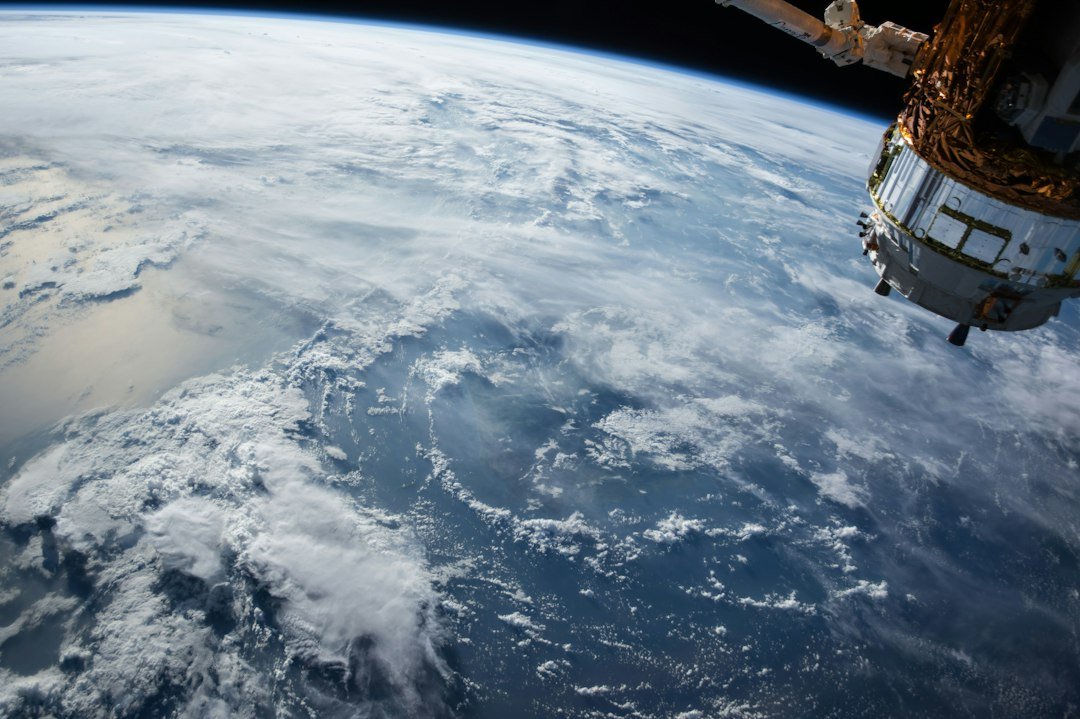
India has set a target for debris-free space missions by 2030 through ISRO’s Debris-Free Space Missions (DFSM) initiative. The objective covers Indian governmental and non-governmental space actors and places responsibility across a mission’s lifecycle—design, operations and disposal—rather than only after a satellite becomes defunct.
Space debris includes inactive satellites, spent rocket stages and fragments created by break-ups or collisions. At orbital speeds, even a small fragment can damage an operational spacecraft. Collisions can generate further debris and increase risk in crowded orbital regions, a process associated with the concept of Kessler syndrome.
India’s response has three complementary elements: mitigation (avoid creating new debris), tracking and space situational awareness (identify objects and conjunction risks), and remediation or active removal (servicing or removing selected objects). NETRA, the Network for Space Objects Tracking and Analysis, is part of India’s SSA capability. ISRO’s IS4OM—ISRO System for Safe & Sustainable Operations Management—supports safe and sustainable orbital operations.
A parliamentary reply in March 2026 counted 129 trackable debris objects originating from Indian satellite missions. This is an Indian-origin count, not the total global debris population. The distinction matters when using figures in an answer.
Why it matters: satellites underpin communication, navigation, weather forecasting, disaster management, Earth observation and defence. Space sustainability is therefore a public-infrastructure and strategic issue, not only a scientific concern. Private firms working on in-orbit servicing and robotics can contribute technology, but an announced facility is not the same as routine debris-removal capability.
Exam lens: UPSC GS-III—space technology, scientific research, private-sector participation, environmental sustainability and strategic autonomy. Revise LEO (Low Earth Orbit), GEO (Geostationary Earth Orbit), NETRA, IS4OM, DFSM and Kessler syndrome. Read the India Debris-Free Space Mission 2030 explainer.
2. Metro expansion and sustainable urban mobility
On 5 November, the Prime Minister highlighted India’s metro expansion: 248 km across five cities in 2014 compared with nearly 1,200 km across 26 cities in the 2026 headline figure. Daily use was described as more than one crore passengers. A PIB backgrounder published in March 2026 gave a detailed snapshot of 1,155 km across 26 cities and daily ridership above 1.15 crore; the difference reflects reporting date and rounding and should be stated transparently.
Metro rail can reduce congestion and make journey times more predictable, but its benefits depend on last-mile connectivity, feeder buses, walkable station access, affordable fares and integrated land-use planning. Transit-oriented development (TOD) can encourage compact growth near stations; unplanned development may instead increase sprawl and leave commuters dependent on private vehicles.
Infrastructure also brings financing and operational challenges: land acquisition, utility shifting, construction cost, safety, maintenance and long-term revenue. A strong policy assessment weighs network kilometres against passenger accessibility, service frequency, affordability, integration and actual modal shift.
Static GK: Kolkata’s metro began operations in 1984 and is India’s first metro system. Kochi is associated with the Water Metro initiative. Delhi–Meerut Namo Bharat is regional rapid transit and should not automatically be merged with conventional metro statistics.
Exam lens: urbanisation, sustainable cities, public transport, infrastructure finance and inclusive urban governance. Read the India Metro Network 2026 article.
3. SSC CGL 2026: candidate response sheets and tentative answer keys
The Staff Selection Commission notice board lists a 4 November 2026 update for the Combined Graduate Level Examination, 2026 (Tier-I): candidate response sheets and tentative answer keys have been uploaded and challenges invited. Candidates should log in through the SSC’s official website, check the response sheet against their examination record and read the notice for the challenge window, fee and submission rules.
A tentative answer key is not the final key or the final result. The challenge process allows candidates to raise objections within the notified period and in the prescribed format. Candidates should retain a copy of their response sheet and submitted challenge receipt. Do not rely on screenshots or unofficial answer-key compilations as proof of a final answer.
Candidate action: visit SSC official website → Notice Board → CGL 2026 Tier-I response sheet/answer key notice. Use the login link and deadline exactly as stated in the notice. For the step-by-step download and objection process, read the SSC CGL 2026 answer-key guide. This update is a result-process milestone; no practice MCQs are appropriate here.
4. RRB NTPC Graduate recruitment: last date today
Railway Recruitment Boards’ CEN 06/2026 has 3,548 graduate-level NTPC vacancies. The online application deadline is 6 November 2026, 11:59 PM; the examination-fee payment deadline is 8 November and the modification window is 9–18 November, as stated by the Ministry of Railways.
- Goods Train Manager: 2,750 vacancies.
- Senior Clerk Cum Typist: 371.
- Junior Accounts Assistant Cum Typist: 300.
- Chief Commercial Cum Ticket Supervisor: 127.
- Initial basic pay: ₹29,200 for Level 5 posts and ₹35,400 for Chief Commercial Cum Ticket Supervisor at Level 6.
Eligible candidates should confirm degree, age (notified 18–33 years as on 1 January 2027, with applicable relaxations), post preferences and documents in the detailed CEN. Complete final submission and preserve the registration number and receipt. Use only RRB Apply and the official RRB website. See our RRB NTPC deadline checklist.
5. Railway Isolated Categories recruitment: verify the notification
Recruitment coverage reported an RRB Isolated Categories 2026 notice for 191 vacancies. Candidates interested in ministerial, translation or other isolated-category roles should check the exact CEN, post-wise vacancy table, eligibility, fee and application schedule on the relevant RRB website before applying. A headline or coaching-site summary is not a substitute for the official notification. At publication, this briefing does not treat an application deadline or detailed post distribution as verified unless it appears in the primary notice.
Official starting point: Railway Recruitment Boards. Follow the recruitment notice and application link from the official board; avoid third-party payment links.
6. Five quick revision points
- India’s DFSM target: debris-free missions by 2030; initiative announced by ISRO in 2024.
- NETRA: Network for Space Objects Tracking and Analysis; India’s space-object awareness capability.
- Metro network comparison: 248 km/five cities (2014) versus nearly 1,200 km/26 cities (2026 headline).
- SSC CGL Tier-I 2026: response sheets and tentative answer keys listed on SSC notice board on 4 November; follow challenge instructions.
- RRB NTPC Graduate CEN 06/2026: 3,548 vacancies; application closes 6 November 2026 at 11:59 PM; fee payment till 8 November.
Possible MCQ and mains areas
Objective questions can cover DFSM’s target year, NETRA expansion, LEO/GEO, Kolkata Metro’s 1984 start, metro network figures, SSC answer-key terminology, RRB NTPC post counts and pay levels. Descriptive questions may ask how India can balance space activity with orbital sustainability, or whether metro construction alone can solve urban congestion. Recruitment and answer-key notices should be prepared through dates, eligibility, official portals and candidate steps—not artificial quizzes.
Official sources
- ISRO: Debris-Free Space Missions
- PIB/Parliament: Space Debris Management (March 2026)
- PMO/PIB: Metro expansion statement, 5 November 2026
- PIB: Metro Rail backgrounder, March 2026
- SSC official notice board
- PIB/Railways: NTPC Graduate CEN 06/2026
- RRB Apply portal
Related DailyGKUpdate resources
Current Affairs Hub · Competitive Exams Preparation Hub · UPSC & State PSC Preparation Hub · Railway Exams Preparation Hub · SSC Exams Hub · Government Jobs Master Page
Editorial standards: confirmed dates and figures are attributed to official releases. Where a secondary report is not yet corroborated by a primary notice, it is explicitly identified for verification rather than presented as confirmed.