Special explainer | 31 October 2026 | Reading time: 8–10 minutes
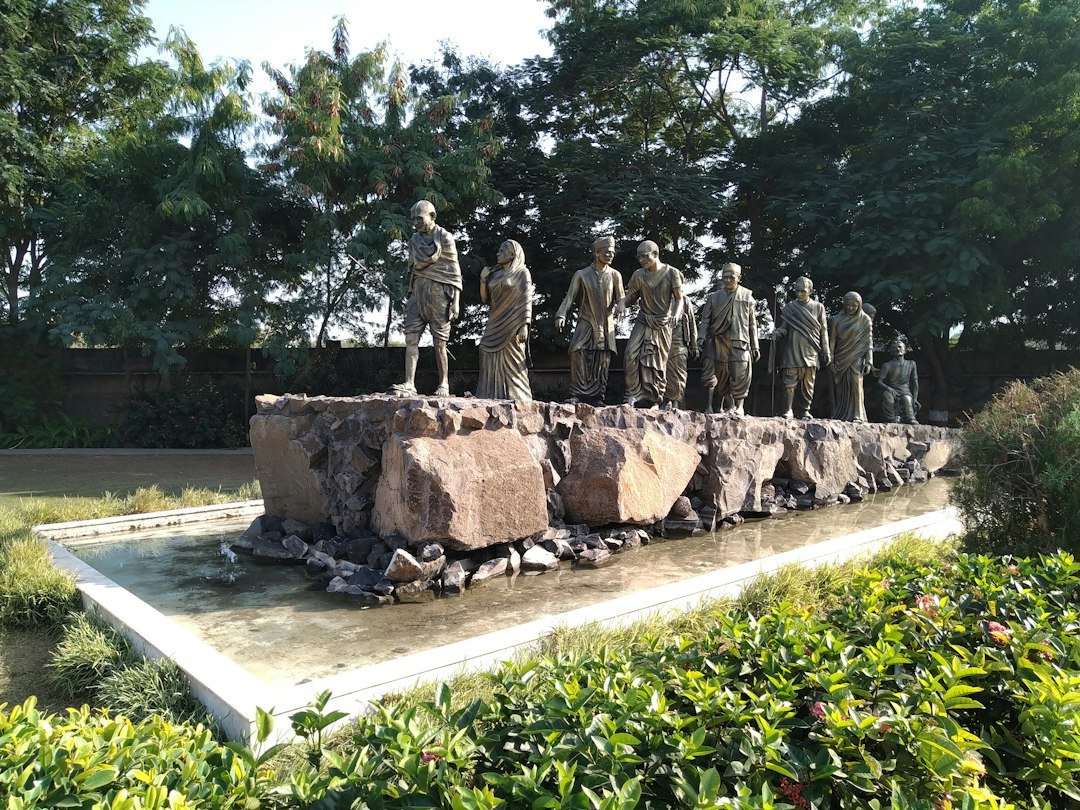
India observes Rashtriya Ekta Diwas, or National Unity Day, on 31 October every year to mark the birth anniversary of Sardar Vallabhbhai Patel. In 2026, the occasion marks his 151st birth anniversary. The day is more than a ceremonial reminder: it points to one of the most consequential state-building exercises undertaken after Independence—the political integration of the princely states into the Indian Union.
This year’s official programme is scheduled at Ekta Nagar in Gujarat. The Prime Minister’s Office announced that Prime Minister Narendra Modi would participate in the Rashtriya Ekta Diwas celebrations at around 5:30 PM on 31 October. The 2026 celebrations carry the overarching theme “Vande Mataram”, while the Ekta Parade is set to feature Central Armed Police Forces, state police forces and central police organisations, with a special emphasis on the security forces’ work against Left-Wing Extremism. These are announced programme details; they should not be described as completed events before the programme takes place.
What happened on National Unity Day?
National Unity Day was instituted in 2014 and is observed on Patel’s birth date. Government offices, educational institutions and public organisations use the occasion for a unity pledge, awareness programmes, cultural events and the Run for Unity. The focus is on national integration, territorial integrity, public service and the responsibilities of citizens in a diverse republic.
The 2026 observance is especially relevant because it marks 151 years since Patel’s birth on 31 October 1875 at Nadiad in present-day Gujarat. The Prime Minister’s Office has also scheduled tributes at the Statue of Unity and development programmes in Ekta Nagar. The PMO’s visit note lists projects worth more than ₹400 crore for Ekta Nagar on 31 October, separate from the larger Banaskantha programme announced for 30 October.
Who was Sardar Vallabhbhai Patel?
Patel was a lawyer, freedom fighter, organiser and administrator who became independent India’s first Deputy Prime Minister and Home Minister on 15 August 1947. He is popularly remembered as the “Iron Man of India”. His public career included the Kheda Satyagraha of 1918 and the Bardoli Satyagraha of 1928. The success of the Bardoli movement strengthened his national standing and the title “Sardar” became associated with him.
Patel’s administrative experience was not limited to the freedom movement. As president of the Ahmedabad municipal body, he worked on civic administration, sanitation and public services. His reputation for organisation and execution later became important in the difficult work of consolidating the new Union.
Why was integration of princely states necessary?
At Independence, British India did not consist only of territories directly administered by the British. Alongside British Indian provinces were hundreds of princely states whose rulers had entered into arrangements with the British Crown. The lapse of British paramountcy raised a serious question about the future of these territories. They had to decide whether to accede to India or Pakistan, while some rulers initially considered independence.
The challenge was geographic as well as political. If strategically placed states remained outside the Union, transport routes, communications, defence planning and the territorial continuity of the new country could be affected. The task involved states of very different sizes, resources, populations and political conditions. Official government material describes the integration effort as involving more than 560 princely states; different historical compilations use slightly different totals depending on how territories and categories are counted. For examination answers, “more than 560” is a safe broad description unless a question specifies a particular official count.
Patel and V. P. Menon: the team behind the process
Patel took charge of the States portfolio in the interim government and later led the States Ministry as Home Minister. V. P. Menon, a senior civil servant and constitutional adviser, served as Secretary of the States Department. Their work combined negotiation with a practical understanding of administrative and constitutional arrangements.
The Instrument of Accession was the central legal mechanism through which rulers acceded to a dominion. Under the standard arrangement, the dominion’s authority initially covered key subjects such as defence, external affairs and communications. Accession was not always identical to the later merger of a princely state into an existing province or a centrally administered unit. This distinction matters: accession established the constitutional relationship, while subsequent integration and administrative reorganisation consolidated the territory within the Union.
Patel and Menon used persuasion, negotiation, assurances and state-specific arrangements. The objective was not achieved through one uniform formula. The conditions of each state, its geography, public opinion and the decisions of its ruler shaped the process.
Three difficult cases: Junagadh, Hyderabad and Jammu and Kashmir
Junagadh
Junagadh’s ruler announced accession to Pakistan despite the state’s location within the Indian landmass and opposition from sections of its population. The issue escalated into a political and administrative crisis. After the ruler left, the administration sought Indian assistance. A plebiscite was held in February 1948, in which an overwhelming majority voted in favour of joining India. Junagadh is therefore an important example of the interaction between a ruler’s decision, geography and popular sentiment.
Hyderabad
Hyderabad was one of the largest princely states and was located in the heart of the Indian peninsula. The Nizam initially sought to remain independent. Negotiations did not resolve the impasse, and violence and law-and-order concerns escalated. In September 1948, the Government of India undertook the military operation commonly known as Operation Polo or the police action. Hyderabad was integrated into the Indian Union. It is a key case study in post-Independence consolidation and the limits of negotiation when security conditions deteriorate.
Jammu and Kashmir
The ruler of Jammu and Kashmir initially delayed a final decision. Following the invasion by tribal forces from Pakistan in October 1947, the Maharaja sought military assistance from India. The Instrument of Accession was signed in October 1947, after which Indian forces were deployed. The later internationalisation of the dispute and its constitutional history make Jammu and Kashmir a distinct case; it should not be reduced to the same sequence as Junagadh or Hyderabad.
Why Patel’s role matters beyond a historical anniversary
Political integration made it possible to build common institutions across a territory that had previously contained a patchwork of jurisdictions. It supported the development of a unified administrative framework, national transport and communication networks, defence planning and a common constitutional order. The integration process also required later reorganisation, negotiation with regional interests and the creation of new administrative units. It was a foundational stage, not the end of India’s federal evolution.
For polity students, the subject connects to federalism, the Union’s territorial integrity, the constitutional position of states and the distinction between accession and merger. For modern history, it is a major post-1947 development. For defence and internal-security examinations, it offers context on the relationship between political authority, territorial security and the consolidation of the Union.
Statue of Unity: the memorial and its geography
The Statue of Unity stands at 182 metres on Sadhu Bet near Ekta Nagar (formerly Kevadia) in Gujarat, overlooking the Narmada River and the Sardar Sarovar Dam. It was dedicated to the nation on 31 October 2018, Patel’s 143rd birth anniversary. The viewing gallery is at approximately 153 metres. The statue is located in Narmada district, with the Satpura and Vindhyachal ranges forming part of the wider landscape.
The monument is also connected with regional infrastructure, tourism and local economic activity. Its height is a frequently asked static-GK fact, but candidates should also remember the river, district, state, inauguration date and the person commemorated.
Key facts for quick revision
| Fact | Answer |
|---|---|
| National Unity Day | 31 October |
| Patel’s birth | 31 October 1875, Nadiad, Gujarat |
| Birth anniversary in 2026 | 151st |
| First Deputy Prime Minister | Sardar Vallabhbhai Patel |
| First Home Minister | Sardar Vallabhbhai Patel |
| States Department Secretary | V. P. Menon |
| Junagadh plebiscite | February 1948 |
| Hyderabad integration operation | Operation Polo, September 1948 |
| Statue of Unity | 182 metres; Narmada district, Gujarat |
| Statue dedicated | 31 October 2018 |
| 2026 celebration theme | Vande Mataram |
Possible MCQ areas
- Birth date and birthplace of Sardar Patel.
- Patel’s roles in independent India’s first Union Cabinet.
- Role of V. P. Menon and the States Department.
- Meaning and purpose of the Instrument of Accession.
- Chronology of Junagadh, Hyderabad and Jammu and Kashmir.
- Height, location, river and inauguration date of the Statue of Unity.
- Date and theme of National Unity Day 2026.
Official sources and further reading
- Prime Minister’s Office: Gujarat visit and Rashtriya Ekta Diwas programme, 30–31 October 2026
- PIB backgrounder: National Unity Day and Sardar Patel
- PIB historical document: Sardar Patel and integration of Indian states
- District Narmada: Statue of Unity facts and location
Related DailyGKUpdate resources
- Daily Current Affairs 31 October 2026
- History for SSC Chapter 10: Early Medieval India
- UPSC and State PSC Preparation Hub
- Defence and Police Exams Preparation Hub
- Competitive Exams Preparation Hub
Editorial note: The integration of princely states involved a range of legal and political steps. Accession, merger and later administrative reorganisation are related but distinct stages; candidates should preserve that distinction in descriptive answers.