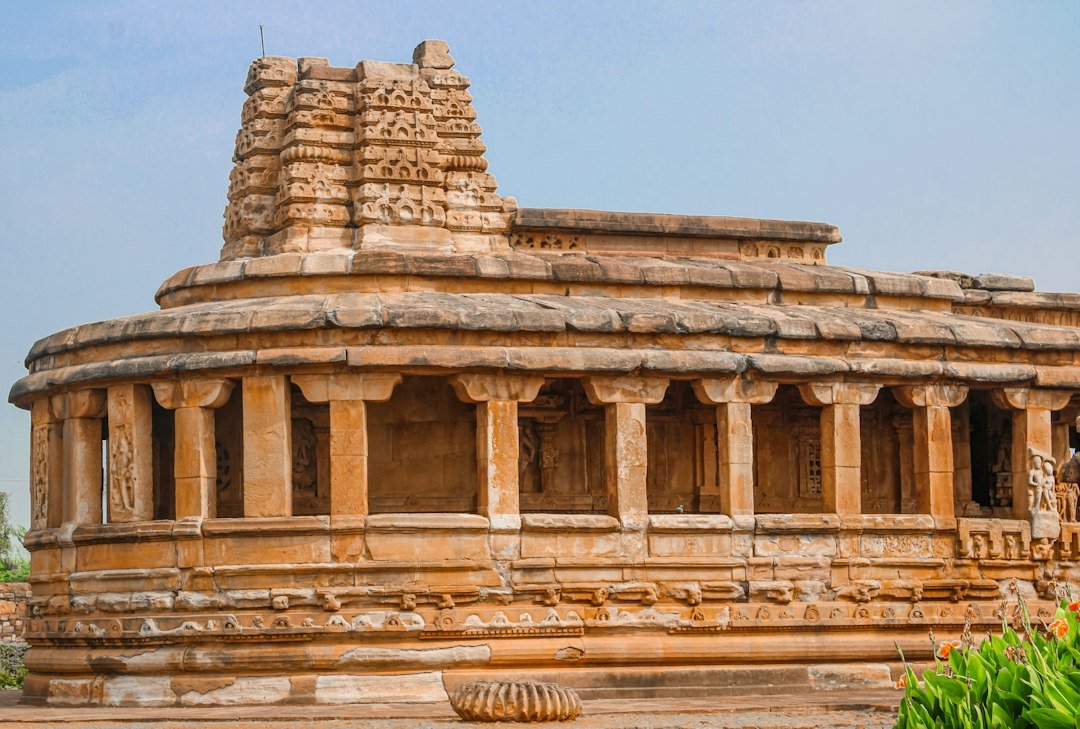
Featured image: Photo by Ramakrishnan Nataraj on Unsplash.
Chapter 10 – History for SSC: Early Medieval India (c. 750–1200 CE) saw the rise of regional kingdoms, intense competition for Kannauj, powerful Deccan and South Indian dynasties, temple-building, new literary traditions and evolving systems of administration. These original study notes cover the Gurjara-Pratiharas, Palas, Rashtrakutas, Cholas, other Chalukya lines, Yadavas and major Rajput kingdoms, with ruler associations, monuments, dates and exam-focused revision material.
Learning objectives
- Understand the political map of early medieval India.
- Compare the Gurjara-Pratiharas, Palas and Rashtrakutas and explain the Tripartite Struggle.
- Revise the rise of the Cholas, their rulers, administration, literature and architecture.
- Identify other regional dynasties and key Rajput lineages, rulers and centres.
- Connect important rulers with inscriptions, literary works, temples and battles.
1. Early Medieval India (c. 750–1200 CE): Regional Powers
From about the eighth century, political authority in much of the subcontinent was organised around powerful regional kingdoms rather than one empire controlling all India. In North India, the Gurjara-Pratiharas and Palas emerged as major powers; in the Deccan, the Rashtrakutas challenged their rivals; and in the far south, the Cholas built a strong state with an influential navy, temple-centred institutions and a detailed local administration. Rajput lineages and other dynasties also controlled important regions. Dates used for dynastic beginnings and endings can vary between reference works, so the sequence and ruler–region associations are especially useful for SSC revision.
1.1 Gurjara-Pratiharas
The Gurjara-Pratiharas were among the leading powers of early medieval North India. Their early base lay in parts of Gujarat and south-western Rajasthan; Kannauj later became their principal political centre. They are often included among the early Rajput ruling houses in traditional exam material.
- Nagabhata I is conventionally identified as the founder or early consolidator of the dynasty.
- Mihira Bhoja (also called Bhoja I) was its best-known ruler. He was a devotee of Vishnu and used the title Ad Varaha or Ādivarāha.
- Mahendrapala I succeeded Mihira Bhoja. The Sanskrit poet and dramatist Rajashekhara was associated with his court; works linked to Rajashekhara include Kavyamimamsa and Karpuramanjari.
- The dynasty remained a major North Indian power for roughly three centuries, although its effective territory and strength changed over time.
- Mahmud of Ghazni captured Kannauj in 1018 CE, a key event in the weakening of the region’s established political order.
1.2 Palas of Bengal and Bihar
The Pala dynasty emerged in Bengal in the mid-eighth century. Its rulers became important patrons of Buddhism and supported monasteries and centres of learning across eastern India.
- Gopala founded the dynasty. He is associated with the foundation or patronage of Odantapuri (also spelt Odantapuri/Odanṭapurī), an important Buddhist monastery and learning centre in present-day Bihar. Some competitive-exam texts describe it as one of the subcontinent’s oldest learning centres and specifically the second-oldest; treat that ranking as a traditional textbook claim rather than a universally settled archaeological classification.
- Dharmapala, the dynasty’s most powerful early ruler, extended Pala influence and founded or patronised Vikramashila University/mahavihara, an important Buddhist centre.
- Devapala was another major Pala ruler. A traditional account records that Balaputradeva, ruler of Srivijaya in Southeast Asia, sought permission and land revenue from five villages to maintain a monastery at Nalanda; this is associated with Pala-era international Buddhist links.
- The Palas were prominent patrons of Buddhism, including Mahayana and Vajrayana traditions, and supported major monastic institutions.
- The Sena dynasty later displaced the Palas in Bengal. Lakshmana Sena was the best-known late Sena ruler; his court poet Jayadeva composed the celebrated Sanskrit poem Gita Govinda.
- In the late twelfth century, Muhammad Bakhtiyar Khalji defeated Sena power in parts of Bengal, contributing to the dynasty’s rapid decline. The exact sequence of the conquest and the extent of control should not be simplified to a single event.
1.3 Rashtrakutas of the Deccan
The Rashtrakutas became a major Deccan power in the eighth century and repeatedly intervened in the struggle for Kannauj. Their empire connected the Deccan with North Indian political and cultural networks.
- Dantidurga (also called Dantivarman in some older summaries) established Rashtrakuta imperial power around 752 CE, overthrowing the earlier Chalukya order in the Deccan.
- Krishna I succeeded Dantidurga and is conventionally dated to c. 768–772 CE. The magnificent Kailasa temple at Ellora, a rock-cut monument, is traditionally associated with his reign and is a landmark of Rashtrakuta art and architecture.
- Govinda II, Krishna I’s son, succeeded him but is generally described as less effective; his brother Dhruva replaced him.
- Govinda III, Dhruva’s son, was a powerful ruler known for campaigns and the expansion of Rashtrakuta influence.
- Amoghavarsha I was one of the longest-reigning and most celebrated Rashtrakuta rulers, traditionally credited with a reign of about 64 years. He made Manyakheta (Malkhed) the dynasty’s capital and supported literature, religion and learning.
- Amoghavarsha I was associated with the Kannada literary work Kavirajamarga, an early landmark in Kannada poetics. He supported Jain scholars; Jinasena is associated with the Jain work Adipurana.
- Sakatayana is linked with the grammatical work Amoghavritti; the mathematician Viracharya with Ganitasarasangraha; and the Kannada poet Pampa with Vikramasenavijaya (also known as Pampa Bharata).
- Krishna III campaigned against the Cholas and defeated them at the Battle of Takkolam in the tenth century, an important turning point in Deccan–South Indian politics.
- Rashtrakuta patronage is associated with the cave-temple traditions of Ellora and Elephanta, though these sites and their monuments developed over different periods and should not all be assigned to one ruler.
- Karka II was the last Rashtrakuta ruler. Tailapa II defeated him and established the later Western Chalukya (Chalukya of Kalyani) line.
1.4 The Tripartite Struggle for Kannauj
The Tripartite Struggle was the prolonged contest among the Gurjara-Pratiharas, Palas and Rashtrakutas for control of Kannauj, a prestigious political centre in the Ganga plain. It began in the eighth century and continued, with changing phases, into the tenth century. The city mattered because control of it carried political prestige and influence over important northern routes and territories. No single side maintained uncontested dominance throughout; Pratihara power became especially prominent in North India during parts of the struggle.
1.5 Cholas: rise and expansion
The Cholas rose to renewed prominence in South India in the ninth century after the Sangam-era Chola line had long ceased to be the dominant power. Their early centre was associated with Uraiyur; the imperial capital later became Thanjavur (Tanjore). Chola rulers expanded across much of southern India and projected power into Sri Lanka and the Malay Peninsula and wider Bay of Bengal region.
- Vijayalaya Chola established the medieval Chola line around c. 850 CE.
- His successor Aditya I defeated the Pallava ruler Aparajita and annexed Tondaimandalam, helping establish Chola dominance in northern Tamil country.
- Parantaka I was an important early ruler who defeated the Pandyas and extended Chola influence into parts of Sri Lanka/Ceylon according to traditional accounts. His forces later suffered a major setback against the Rashtrakutas at Takkolam.
- Chola power reached a high point under Rajaraja I (985–1014 CE) and his son Rajendra I (1012/1014–1044 CE); sources differ on Rajendra’s co-regency and accession dating.
1.6 Rajaraja I
- Rajaraja I expanded Chola power through military campaigns and strengthened its administration and overseas reach.
- He entrusted campaigns in Sri Lanka to his son Rajendra I. Chola forces occupied northern Sri Lanka, where the ruler Mahinda V was unable to prevent the conquest; the island was not permanently and uniformly controlled in every period.
- He used royal titles including Mummudi Chola, Jayankonda and Sivapadasekara, and was a devotee of Shaivism.
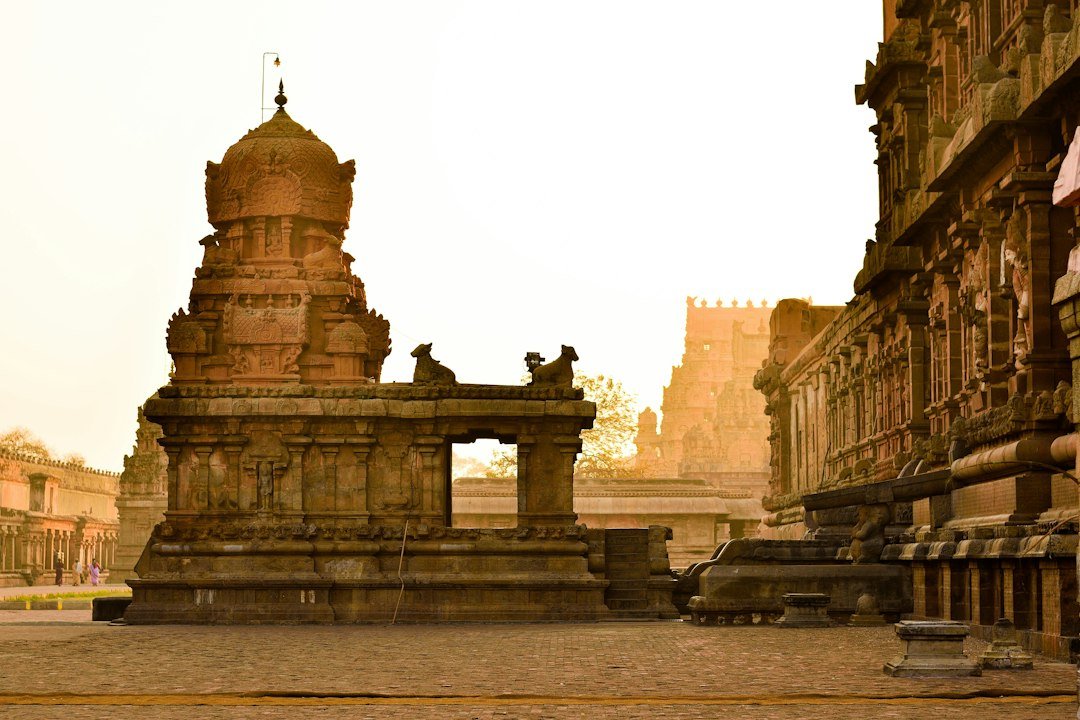
- He commissioned the celebrated Rajarajesvara/Brihadisvara Temple at Thanjavur, a masterpiece of Dravidian architecture. Textbook descriptions identify the towering vimana, ardhamandapa, mahamandapa and the large Nandi pavilion (Nandimandapa) among its notable components.
- The temple is a landmark of Chola art, architecture, royal patronage and Shaiva worship; it is part of the UNESCO-listed Great Living Chola Temples.
1.7 Rajendra I
- Rajendra I (1012/1014–1044 CE) continued his father’s military and imperial policies and presided over the Chola Empire at its widest extent.
- He campaigned in Sri Lanka against Mahinda V and extended Chola control farther into the island.
- His northern expedition reached the Ganga region; he commemorated the campaign through the title Gangaikondachola and founded the city of Gangaikondacholapuram.
- He built the Rajesvaram/Brihadisvara temple at Gangaikondacholapuram, dedicated to Shiva.
- Chola naval expeditions reached the Srivijaya sphere in Southeast Asia, demonstrating the dynasty’s maritime reach and interest in Bay of Bengal trade routes.
- Chola political power declined over subsequent generations. Rajendra III is generally regarded as the last Chola ruler; the Pandyas under Jatavarman Sundara Pandya II absorbed Chola territory in the thirteenth century.
1.8 Chola administration, society and culture
- The king stood at the centre of an elaborate administrative system supported by officials. Traditional textbook terminology distinguishes high-ranking officials as Perundanam and lower-ranking officials as Sirudanam; spellings and precise usage vary in historical works.
- The empire was divided into mandalams; these were subdivided into valanadus and nadus. A nadu included a group of villages.
- Village institutions and assemblies played important roles in local affairs. The ur was a village assembly in a non-Brahmana settlement; the sabha/mahasabha was associated with Brahmadeya villages; and the nagaram represented an urban or merchant community. A town was administered through a body called the nagaram or nagattar in textbook accounts.
- Land revenue was central to state finance. Older exam materials use the term Puravuvartinaikkalam for the land-revenue department; terminology may be transliterated differently.
- The Cholas maintained a regular army, including infantry, cavalry and elephant units, and also developed naval capabilities.
- Shaivism and Vaishnavism both flourished. Major literary works included Ramavataram or the Tamil Ramayana by Kamban, and Periyapuranam (also called Tiruttondar Puranam) by Sekkilar.
- Dravidian temple architecture reached an outstanding level under the Cholas. Their bronze casting is world-famous, particularly images of Nataraja, Shiva as the cosmic dancer.
1.9 Other regional dynasties
Eastern Chalukyas of Vengi
- Kubja Vishnuvardhana, brother of Pulakeshin II, founded the Eastern Chalukya line with its centre at Vengi in present-day Andhra Pradesh.
- The dynasty weakened over time and its territories were annexed by the Cholas in 1076 CE in the chronology used by many exam guides; the political process involved long-standing Chola–Eastern Chalukya alliances and succession struggles.
Western Chalukyas of Kalyani
- Tailapa II founded or restored the Western Chalukya power in 973 CE after the decline of the Rashtrakutas.
- Vikramaditya VI is generally regarded as the dynasty’s greatest ruler.
- Vijnaneshvara, author of the legal commentary Mitakshara, was associated with his court.
- The Sanskrit poet Bilhana wrote Vikramankadeva Charita, a courtly account praising Vikramaditya VI.
Yadavas of Devagiri
- The Yadavas were initially subordinate to the Chalukyas but became independent as Chalukya power weakened.
- Bhillama V was an important early independent ruler and made Devagiri (later Daulatabad, in present-day Maharashtra) his capital.
- Simhana II was among the dynasty’s strongest rulers. Ramachandra was a later ruler; Hemadri, his minister, compiled the Sanskrit encyclopaedic work Chaturvarga Chintamani.
- Devagiri was captured by Alauddin Khalji in 1296, followed by further campaigns and eventual incorporation into the Delhi Sultanate’s expanding sphere. This was after the 750–1200 period used in this chapter’s title.
1.10 Rajput kingdoms
From about the eighth century, several Rajput-identified lineages consolidated regional power. Their origins have been explained through different traditions and historical theories; no single origin story should be treated as universally accepted. The following ruler–region associations are common in competitive-exam summaries.
| Dynasty/lineage | Centre of power | Important ruler(s) |
|---|---|---|
| Paramaras | Malwa; Dhar | Bhoja |
| Chauhans/Chahamanas | Ajmer and Shakambhari | Prithviraj III |
| Gahadavalas | Kannauj | Govindachandra; Jayachandra |
| Chandellas | Bundelkhand; Mahoba and Khajuraho | Dhangadeva |
Paramaras of Malwa
- Upendra is traditionally named the founder of the Paramara line.
- Dhar in present-day Madhya Pradesh became an important capital.
- Raja Bhoja was the dynasty’s most famous ruler, celebrated for learning, literary and architectural patronage. He is associated with Bhoj Shala, a centre of Sanskrit learning at Dhar, and with a temple of Sarasvati.
- Paramara power weakened toward the end of the twelfth century; Malwa later came under the Khalji expansion.
Chauhans of Ajmer and Delhi
- Vasudeva is traditionally identified as the founder of the Chauhan/Chahamana line.
- Ajayaraja was an important ruler associated with the development of Ajmer as a capital.
- Prithviraj III, also called Rai Pithora, was the best-known Chauhan ruler. The court poet Chand Bardai is traditionally associated with the epic poem Prithviraj Raso, although its surviving form developed over time.
- Prithviraj defeated Muhammad Ghori at the First Battle of Tarain (1191) and lost to him at the Second Battle of Tarain (1192). The latter opened the way for Ghurid expansion into North India.
Gahadavalas of Kannauj
- Chandradeva founded or consolidated Gahadavala power around Kannauj and Varanasi.
- Govindachandra was one of the dynasty’s strongest rulers.
- Jayachandra was its best-known late ruler. He was defeated and killed by Muhammad Ghori’s forces at the Battle of Chandawar in 1194.
Chandellas of Bundelkhand
- Nannuka is traditionally identified as the founder of the Chandella dynasty.
- Their political centre shifted between Mahoba and Khajuraho; Khajuraho is famous for its medieval temple complex.
- Dhangadeva was among the dynasty’s greatest rulers.
- Parmardi-deva (Paramardi) was a late ruler who eventually accepted the authority of Qutb-ud-din Aibak in the traditional account.
- The Chandellas are associated with the construction and patronage of the world-famous temples of Khajuraho, built across several generations rather than by a single ruler.
1.11 Chronology and key pairings for quick revision
| Ruler/event | High-value association |
|---|---|
| Nagabhata I | Gurjara-Pratihara dynasty |
| Mihira Bhoja | Pratihara ruler; title Adi Varaha; Vishnu devotion |
| Gopala | Founder of the Palas |
| Dharmapala | Pala ruler; Vikramashila |
| Dantidurga | Rashtrakuta power established c. 752 CE |
| Amoghavarsha I | Manyakheta; Kavirajamarga; Jain patronage |
| Battle of Takkolam | Rashtrakuta Krishna III defeated Chola forces |
| Vijayalaya Chola | Medieval Chola line, c. 850 CE |
| Rajaraja I | 985–1014 CE; Brihadisvara Temple, Thanjavur |
| Rajendra I | Gangaikondacholapuram; northern and overseas campaigns |
| Tailapa II | Western Chalukyas of Kalyani, 973 CE |
| Prithviraj III | First and Second Battles of Tarain, 1191 and 1192 |
| Jayachandra | Gahadavala ruler; Battle of Chandawar, 1194 |
| Mahmud of Ghazni | Capture of Kannauj, 1018 CE |
2. SSC exam revision checklist
- Learn the three powers in the Tripartite Struggle and the strategic importance of Kannauj.
- Match Mihira Bhoja with Adi Varaha; Gopala with the Palas; Dharmapala with Vikramashila; and Amoghavarsha I with Manyakheta and Kavirajamarga.
- Remember Krishna I and Ellora’s Kailasa temple; Krishna III and the Battle of Takkolam.
- Match Rajaraja I with Brihadisvara Temple at Thanjavur and Rajendra I with Gangaikondacholapuram.
- Revise the Chola administrative units—mandalam, valanadu and nadu—and village institutions.
- Remember Tailapa II and the Western Chalukyas of Kalyani, Vikramaditya VI and Bilhana, and the Yadavas’ capital at Devagiri.
- Revise Paramara Bhoja, Prithviraj III and the two Battles of Tarain, Jayachandra and Chandawar, and Chandella Dhangadeva and Khajuraho.