Updated: 12 November 2026 | Environment, Economy & Science
India has prohibited exports of a specified category of lithium-ion battery black mass, a secondary material containing recoverable critical minerals. DGFT Notification No. 49/2026–27 dated 10 November 2026 changed export policy under ITC (HS) 85491400 from Free to Prohibited, with immediate effect and until further orders. Transitional arrangements under paragraph 1.05 of the Foreign Trade Policy (FTP) 2023 apply. The Ministry of Commerce and Industry announced the measure on 11 November and linked it to domestic recycling capacity, critical-mineral recovery and lower import dependence. Official PIB explanation.
What is black mass?
Black mass is a powdery intermediate recovered when end-of-life lithium-ion batteries or battery-manufacturing waste are mechanically processed, particularly through shredding and separation. It can contain recoverable lithium, cobalt, nickel, manganese and graphite, depending on battery chemistry and processing. It is not a finished battery or a single pure mineral; composition varies with feedstock and cell chemistry.
The notified tariff item is precise: ITC (HS) 85491400 covers unsorted waste and scrap of primary cells, primary batteries and electric accumulators, including spent cells, batteries and accumulators, that do not contain lead, cadmium or mercury. DGFT specifically identifies the item as lithium-ion battery black mass. The restriction should not be extended casually to every battery, recycled metal or product under another tariff code; classification and notification wording matter.
What changed in export policy?
| Element | Position after Notification 49/2026–27 |
|---|---|
| Covered ITC (HS) | 85491400 |
| Earlier policy | Free |
| Revised policy | Prohibited |
| Effective | 10 November 2026, immediate effect |
| Duration | Until further orders |
| Transition | FTP 2023 paragraph 1.05 |
Exporters with shipments or contractual commitments already in the pipeline must review paragraph 1.05 and the facts of their transaction. A news summary cannot determine whether a consignment qualifies for a transition. Customs classification, documentation, shipment status and the notification should be checked with the competent authority or qualified trade professional.
Why retain black mass in India?
The official rationale is feedstock security. India has developed battery-waste recycling and critical-mineral refining capacity, but the Ministry says it is not fully utilised because domestic feedstock is inadequate. Indian recyclers sometimes import black mass to meet processing requirements even while material generated in India is exported. Retaining domestic black mass is intended to improve plant utilisation, encourage investment and employment, and increase recovery of lithium, cobalt, nickel and other minerals.
These metals are inputs for EVs, advanced-chemistry-cell batteries, grid storage, electronics and renewable-energy technologies. Recycling offers a secondary supply route alongside mining and imports. It does not eliminate primary mineral production or international sourcing; it can reduce dependence by recovering material already present in products and industrial waste.
Urban mining and circular economy
Urban mining recovers valuable materials from discarded products and waste streams rather than only geological deposits. A battery at end of life can be a waste-management challenge and a resource-bearing feedstock. The circular-economy sequence is design/use, collection, safe storage/transport, refurbishment where suitable, recycling, recovery and reintegration into manufacturing.
Black mass is an intermediate step. Mechanical processing separates components and produces a concentrated material; further refining—often hydrometallurgical or another suitable process—is needed to recover usable compounds/metals. Recovery rates and environmental performance depend on technology, chemistry, process controls and compliance. Shredding alone does not yield battery-grade lithium, and every recycler cannot recover every metal.
Battery Waste Management Rules, 2022
India’s Battery Waste Management Rules, 2022 establish Extended Producer Responsibility (EPR) for batteries placed on the market. Producers must meet collection, recycling or refurbishment obligations; waste batteries collected for EPR are to be sent to registered recyclers/refurbishers rather than landfilled or incinerated. CPCB administers registration and EPR-certificate systems, with State Pollution Control Boards involved in implementation. Export policy and EPR address different stages: DGFT controls export status of the notified material; battery rules govern domestic producer responsibility and end-of-life management.
Official references: Battery Waste Management Rules, 2022 · CPCB EPR note.
Fit with critical-mineral policy
PIB says the restriction complements the National Critical Mineral Mission (NCMM) and the ₹1,500-crore Incentive Scheme for Critical Mineral Recycling approved in September 2025. That scheme develops recycling capacity for separation and production of critical minerals from secondary sources such as battery/e-waste. The export restriction seeks to make feedstock available to that capacity: incentives support processing investment; domestic retention supports material access.
Connect this with our Critical Mineral Processing Scheme, grid-scale energy storage explainer and Semicon 2.0 article. These policies are related but not interchangeable: processing incentives, recycling incentives, export controls and storage capacity address different bottlenecks.
Benefits and implementation questions
- Feedstock: domestic recyclers may gain material previously exported.
- Capacity: plants may process more, subject to collection, logistics, technology and quality.
- Mineral recovery: domestic recovery could supplement imports of lithium, cobalt, nickel and manganese.
- Investment/jobs: predictable feedstock can support capital, skilled operations and downstream manufacturing.
- Safeguards: battery waste needs controlled handling, storage, transport and processing; retention is not a substitute for safe recycling.
- Compliance: exporters/customs brokers must apply the exact HS code, prohibition and transition rules.
These are expected effects, not guaranteed outcomes. Recovery depends on yields, costs, purity, energy use, enforcement and commercial demand. An export ban alone does not create collection networks, refining technology or markets.
Safety, collection and the recycling bottleneck
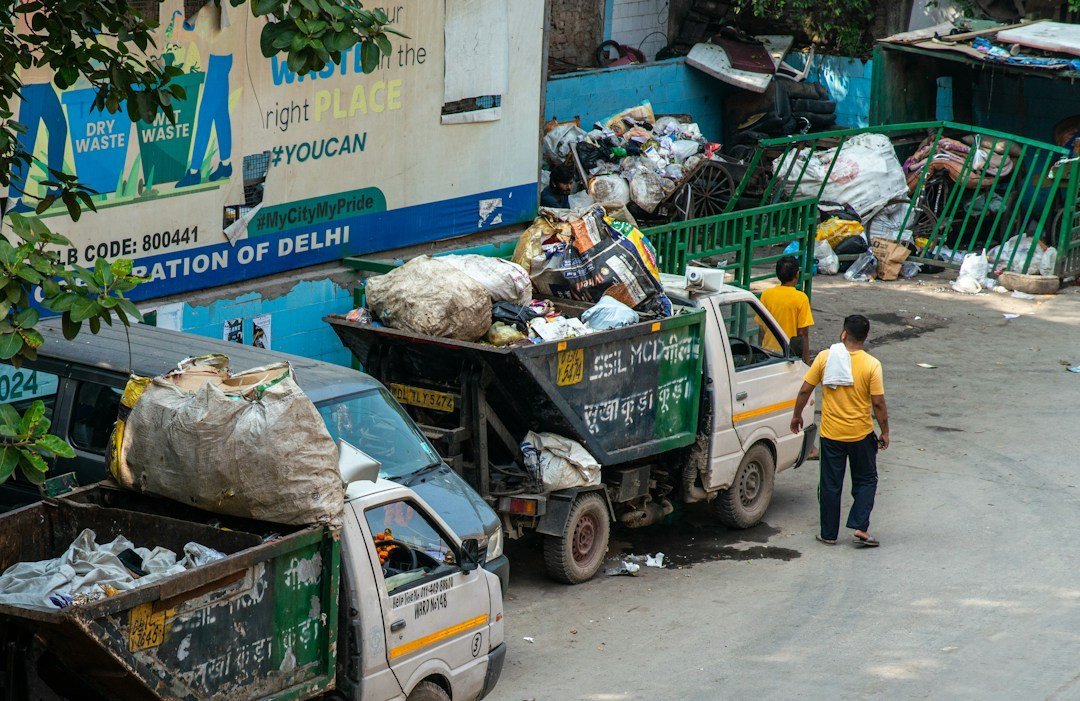
Battery recycling is not simply a commodity-trade issue. Damaged or improperly stored lithium-ion batteries can create fire and thermal-runaway risks; transport and storage require appropriate segregation, packaging and safety controls. Processing also needs pollution-control measures for dust, electrolyte residues and other hazardous fractions. A policy that retains feedstock domestically must therefore be accompanied by registered facilities, traceability, worker protection, environmental permissions and enforcement against informal handling.
The supply chain begins before the recycler receives black mass. Producers, importers, collection systems, repair/refurbishment networks, aggregators and registered recyclers all influence whether end-of-life batteries reach a compliant facility. Quality and chemistry identification matter because different battery types yield different material streams. The commercial challenge is to balance safe collection, recovery efficiency, energy and chemical inputs, residue treatment, and the price that downstream manufacturers will pay for recovered material.
Exam relevance and static GK
- Environment: EPR, Battery Waste Management Rules 2022, circular economy, resource efficiency and pollution-control institutions.
- Economy/trade: DGFT, ITC (HS), export policy, FTP 2023 and Foreign Trade (Development and Regulation) Act, 1992.
- Science: lithium-ion chemistry, black mass, mechanical separation and hydrometallurgical recovery.
- Energy: critical minerals for EVs, ACC batteries, grid storage, electronics and renewables.
- UPSC GS-III: conservation, pollution, infrastructure, S&T, indigenisation and supply-chain resilience.
Key facts
| Fact | Remember |
|---|---|
| Notification | DGFT 49/2026–27, 10 November 2026 |
| HS code | 85491400 |
| Change | Free → Prohibited |
| Effective | Immediately, until further orders |
| Transition | FTP 2023 Para 1.05 |
| Material | Unsorted battery waste/black mass as specified, excluding lead/cadmium/mercury |
| Minerals | Lithium, cobalt, nickel, manganese |
| Related scheme | ₹1,500-crore Critical Mineral Recycling Incentive Scheme |
Primary sources
- PIB: export prohibition and rationale, 11 November 2026
- DGFT — Notification 49/2026–27
- MoEFCC Battery Waste Management Rules
- CPCB EPR/registered recycler guidance
Bottom line: this is a feedstock-retention measure. Its success depends on domestic collection, safe recycling, mineral recovery and compliance—not merely on changing export classification.