Updated: 29.11.2026. The fifth edition of Kashi Tamil Sangamam (KTS 5.0) was inaugurated in Varanasi on 28 November 2026. Running until 12 December, the programme is built around the theme “Thirukkural Payilvom – Thirukkural Abhyas Karen”, or “Let us learn the Thirukkural”. It brings Tamil Nadu and Kashi together through academic exchange, language learning, cultural programmes and visits to Varanasi, Prayagraj and Ayodhya.
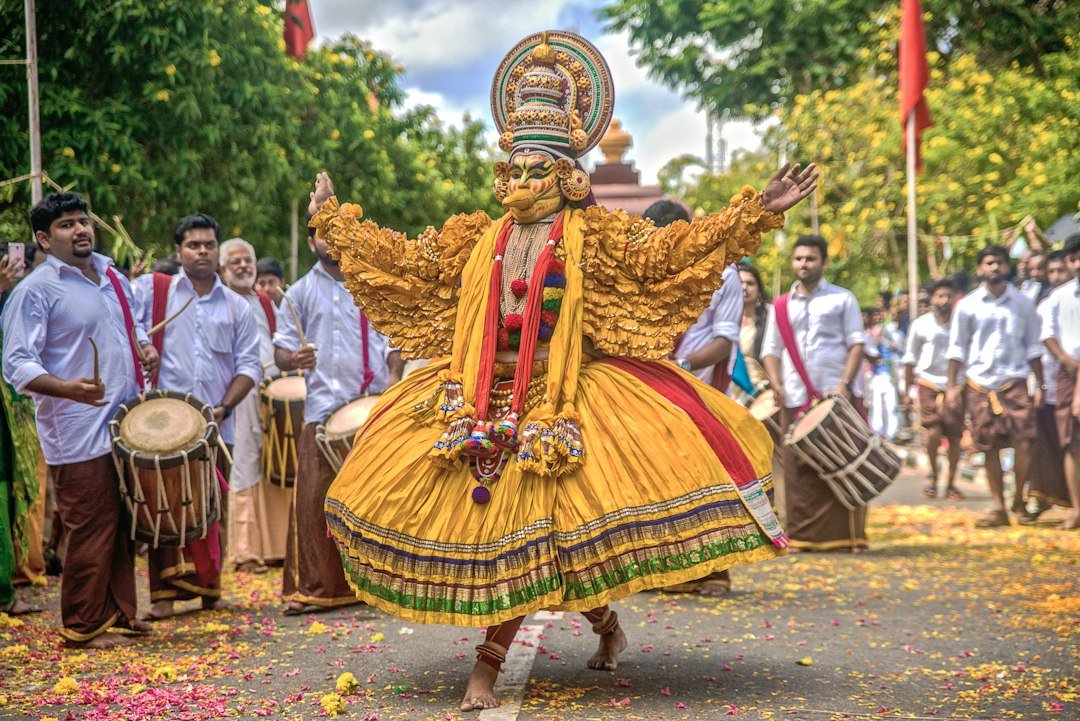
Featured image is illustrative. Photo by Nandu Menon on Unsplash.
The Vice-President of India, Shri C. P. Radhakrishnan, inaugurated the fifth edition in Varanasi. Prime Minister Narendra Modi welcomed participants arriving from Tamil Nadu and other parts of the country, noting that this edition places the wisdom of poet-saint Thiruvalluvar at the centre of the exchange. The Prime Minister also welcomed the release of Thirukkural translations in 50 languages, including 10 foreign languages. Read the Prime Minister’s official statement.
What is Kashi Tamil Sangamam 5.0?
Kashi Tamil Sangamam is an educational and cultural initiative that celebrates the historical, linguistic and civilisational connections between Tamil Nadu and Kashi (Varanasi). The fifth edition is being held from 28 November to 12 December 2026. The Ministry of Education’s backgrounder identifies the programme as a platform for bringing two old centres of learning closer through academic interaction, cultural exchange and people-to-people contact.
Around 1,400 participants from Tamil Nadu are expected to travel in seven groups of approximately 200 each. Their itinerary includes Varanasi, Prayagraj and Ayodhya. The structured journey is described as an eight-day programme, with four days devoted to travel and four days to visits and organised activities. The programme is not simply a tourism circuit: it is designed to create conversations among students, teachers, artisans, scholars, spiritual leaders and cultural practitioners.
Why is the theme “Thirukkural Payilvom” important?
The theme translates broadly as “Let us learn the Thirukkural”. The Thirukkural is a classical Tamil work attributed to Thiruvalluvar. It is known for concise couplets dealing with ethical conduct, public life, material prosperity, relationships and human values. Its teachings are not confined to one religious or regional setting; they have been interpreted as a work of universal ethical and social philosophy.
The text contains 1,330 couplets arranged in 133 chapters. Each chapter contains ten couplets. The work is traditionally organised into three broad divisions: Aram (virtue or ethical conduct), Porul (wealth, polity and public life) and Inbam (love and human relationships). This structure makes the Thirukkural relevant to discussions of personal ethics, governance, leadership and social responsibility.
For KTS 5.0, the theme has been extended beyond the delegates’ itinerary. The Prime Minister’s statement notes that translations have been released in 50 languages, including 10 foreign languages. Wider translation is intended to make the text accessible to students and readers who do not know Tamil. It also provides a practical example of how classical literature can be used in multilingual education and cultural diplomacy.
Major components and participation
- Delegation visits: Around 1,400 participants from Tamil Nadu will travel in seven groups to Varanasi, Prayagraj and Ayodhya.
- Student engagement: The pre-event backgrounder described a programme through 1,000 HEIs; the 28 November PIB release says the initiative is being taken forward across more than 1,330 institutions, while Education Minister Pralhad Joshi cited 1,380 participating HEIs at inauguration.
- School and college outreach: Fifty teachers from Tamil Nadu will visit Uttar Pradesh to introduce the Thirukkural in schools and colleges through orientation modules, interactive sessions and quizzes.
- Reading and learning activities: The National Book Trust, in association with the Rashtriya e-Pustakalaya, is part of activities intended to promote reading habits, storytelling and creative engagement.
- Digital and multilingual access: Technology and translated editions are being used to take the text beyond Tamil-speaking audiences.
The programme therefore links cultural exchange with formal education. Its reach is not limited to the delegates who travel to Uttar Pradesh; the participation of higher education institutions and schools creates a wider campus-based component.
Historical links between Kashi and Tamil Nadu
The connection between Kashi and Tamil Nadu is older than the present programme. Pilgrimage traditions have linked Kashi and Rameswaram for generations. Tamil communities have lived around Varanasi’s Hanuman Ghat and Kedar Ghat. The PIB backgrounder records that Swami Kumaragurupara of Dharmapuram Adheenam travelled from Tamil Nadu to Kashi and built the Kedareshwar Temple at Kedar Ghat. The area also contains the approximately 200-year-old Kumaraswamy Mutt and Markandeya Ashram.
In Tamil Nadu, Tenkasi is popularly known as the “Kashi of the South”. Banaras Hindu University has a chair dedicated to Mahakavi Subramania Bharati, reflecting the continuing academic and literary relationship between the two regions. These examples show that KTS 5.0 builds on existing religious, educational and cultural connections rather than creating a new relationship from scratch.
The first Kashi Tamil Sangamam was held in 2022 during Azadi Ka Amrit Mahotsav. The four earlier editions facilitated exchanges involving language, knowledge, traditions and lived experiences. The fifth edition continues that approach while giving a more visible role to the Thirukkural and its teaching in campuses.
Why the initiative matters
India’s linguistic diversity is often discussed through constitutional provisions and language policy. KTS 5.0 adds a practical dimension: it creates settings in which students and teachers can learn from another linguistic tradition. The programme also illustrates the idea of Ek Bharat Shreshtha Bharat, which encourages interaction between States and regions so that citizens understand one another’s heritage and social experiences.
For education, the initiative highlights the value of translation, reading, campus-level cultural programmes and interdisciplinary learning. For cultural diplomacy within India, it demonstrates how literature can connect communities across geographical distance. For public administration, it offers a case study in designing a programme that combines central coordination, State participation, universities, schools and cultural institutions.
Key facts for competitive examinations
| Item | Fact |
|---|---|
| Edition | Fifth edition (KTS 5.0) |
| Dates | 28 November–12 December 2026 |
| Inauguration | Vice-President C. P. Radhakrishnan, Varanasi |
| Theme | Thirukkural Payilvom – Thirukkural Abhyas Karen |
| Participants | Around 1,400 from Tamil Nadu, in seven groups |
| Locations | Varanasi, Prayagraj and Ayodhya |
| Campus reach | 1,000 HEIs in pre-event backgrounder; more than 1,330 in PIB release; 1,380 cited by Education Minister |
| Thirukkural | 1,330 couplets in 133 chapters, in three divisions |
Exam relevance and static-GK connections
UPSC and State PSC: Art and culture, Indian literature, cultural integration, education policy, language diversity and the role of institutions in national integration. SSC and Railways: Varanasi, Prayagraj and Ayodhya mapping; Thiruvalluvar; the structure of the Thirukkural; and the dates and theme of KTS 5.0. Teaching and research examinations: multilingual education, translation, campus engagement and the role of classical texts in contemporary learning. Essay and interview preparation: cultural federalism, unity in diversity and the use of literature to strengthen social understanding.
Static-GK revision should distinguish the Thirukkural from other classical Tamil works, remember its three divisions, and connect Kashi with Varanasi in Uttar Pradesh. Prayagraj is associated with the confluence of the Ganga, Yamuna and the traditionally identified Saraswati; Ayodhya is associated with the Ramayana tradition and the Sarayu river. These geographic and cultural links can support map-based and culture questions.
Possible MCQ areas
- Which edition of Kashi Tamil Sangamam is being held in 2026?
- What is the theme of KTS 5.0?
- How many couplets and chapters are there in the Thirukkural?
- Which three places are included in the delegate itinerary?
- Which constitutional and cultural ideas are reflected in the programme’s objective?
Official sources
- PIB Backgrounder: Kashi Tamil Sangamam 5.0, 24 November 2026.
- Ministry of Education / PIB: KTS 5.0 inauguration, 28 November 2026 (Education Minister cites 1,380 HEIs).
- Prime Minister’s statement on commencement of KTS 5.0, 28 November 2026.
- Tamil Nadu Urban Local Bodies: Thiruvalluvar and the Thirukkural.
Related reading
- Constitution in All 22 Scheduled Languages: Eighth Schedule and language policy
- Daily Current Affairs 29 November 2026
- Current Affairs Hub
- Competitive Exams Preparation Hub
Editorial note: Dates, participation figures and programme components above are based on the Ministry of Education/PIB backgrounder and the Prime Minister’s official statement. The programme’s stated objectives should not be confused with a change to the constitutional status of any language.

One thought on “Kashi Tamil Sangamam 5.0 2026: Theme, Dates, Thirukkural and Key Facts”
Comments are closed.