Current affairs update: 18 October 2026. The most actionable item for young candidates is the reopened IndiaSkills 2026–27 registration window, which closes on 19 October 2026. Other exam-relevant developments include the Indian Navy–Royal Navy Exercise KONKAN-26, commissioning of the indigenous multi-purpose vessel INS Samarthak, and a ₹1.19 crore biodiversity benefit-sharing distribution by the National Biodiversity Authority. These developments connect to skill development, defence, international relations, environmental governance and the Biological Diversity Act.
This edition prioritises official figures and institutional context over headline repetition. Candidates should use the source links to confirm the original notices and deadlines before taking action.
1. IndiaSkills 2026–27 registration closes on 19 October
The Ministry of Skill Development and Entrepreneurship reopened the IndiaSkills Competition 2026–27 registration window following requests from institutions and aspiring participants. The extended deadline is 19 October 2026, and applications are to be completed through the Skill India Digital Hub (SIDH).
According to the ministry’s announcement, the competition had received approximately 4 lakh registrations at the time of the update. It covers 63 skill categories across manufacturing, engineering, construction, digital technologies, creative industries and services. The National Skill Development Corporation (NSDC) is the implementation partner under the ministry’s aegis.
The extension followed India’s performance at WorldSkills Shanghai 2026. The official release says Team India finished 10th globally, winning six silver medals and 20 Medallions for Excellence, compared with 13th place at WorldSkills Lyon 2024. A 70-member Indian contingent competed across 63 skills in Shanghai.
Why it matters: IndiaSkills is not a conventional written recruitment examination. It assesses practical and occupational skills and offers a progression route through district/zonal, state, regional and national levels, potentially leading to international representation. ITI students, polytechnic learners, college students and skilled workers should check the relevant category rules rather than assume that every category has identical entry requirements.
Action: Eligible aspirants who missed the earlier registration should visit the official IndiaSkills registration page before the window closes. Do not wait for the deadline hour to resolve profile, document or login problems.
2. Exercise KONKAN-26 concludes off Plymouth, United Kingdom
The India–United Kingdom bilateral maritime exercise KONKAN-26 concluded off Plymouth on 15 October, with the Ministry of Defence publishing its official summary on 17 October. The exercise ran from 8 to 15 October 2026. India’s Indian Navy deployed the stealth frigate INS Trishul; the Royal Navy deployed HMS Sutherland, a Duke-class anti-submarine warfare frigate. The exercise was conducted by the Royal Navy’s Fleet Operational Standards and Training organisation.
The four-day sea phase, from 12 to 15 October, included advanced seamanship manoeuvres, joint tactical exercises, communications procedures, anti-surface asymmetric warfare, anti-submarine warfare and weapon firings in a multi-threat maritime environment.
Why it matters: Bilateral exercises help navies practise communication and coordinated procedures before a real crisis. Interoperability is especially important in anti-submarine warfare and multi-domain maritime operations, where ships need to share information and respond to evolving threats. The exercise also supports the wider India–UK maritime partnership.
Exam connection: Remember the participating countries, the Indian and British ships, the location (Plymouth, UK), the dates, and the difference between the harbour phase and sea phase. The source release specifically highlights the four-day sea phase, not a four-day total exercise.
Official source: Ministry of Defence release on KONKAN-26.
3. INS Samarthak commissioned: a milestone for indigenous shipbuilding
The Indian Navy commissioned INS Samarthak, the first of class Multi-Purpose Vessel, on 16 October 2026 at Karwar, Karnataka. The commissioning ceremony was presided over by Vice-President C. P. Radhakrishnan, in the presence of Chief of the Naval Staff Admiral Krishna Swaminathan and other officials.
The vessel was designed and built by Larsen & Toubro’s shipyard. The official release describes it as the first major warship built by an Indian private shipyard and states that it has more than 75% indigenous content. It can support maritime surveillance and reconnaissance, offshore patrolling, trials and evaluation, and humanitarian assistance and disaster relief operations. It will also help test and evaluate indigenous sensors, weapons and emerging technologies, including systems associated with unmanned operations.
Why it matters: The platform links defence procurement with domestic manufacturing, systems integration, testing capacity and the Aatmanirbhar Bharat objective. A test-and-evaluation vessel helps the Navy assess equipment before or alongside wider operational adoption. The indigenous-content figure is a useful factual point, but it should not be confused with a claim that every component is locally manufactured.
Static GK connection: Karwar is in Karnataka on India’s western coast. INS is the prefix used for commissioned Indian Navy ships. For exams, distinguish a vessel’s commissioning from its launch, keel-laying or delivery—these are separate milestones.
Official source: Ministry of Defence release on INS Samarthak.
4. National Biodiversity Authority distributes ₹1.19 crore under benefit sharing
On 17 October, the National Biodiversity Authority (NBA) announced a distribution of ₹1.19 crore under the Access and Benefit Sharing (ABS) mechanism to 29 State Biodiversity Boards and one Union Territory Biodiversity Council. The amount represents contributions received from companies for research and commercial utilisation of agricultural biological resources.
The official explanation addresses a practical issue: some biological resources were sourced through markets or traders, so individual benefit claimers could not readily be identified. The NBA therefore used a distribution mechanism recommended by an expert committee and approved by the Authority. Allocations were calculated in proportion to estimated cultivation areas for the relevant biological resources, using official agricultural statistics.
The release identifies contributions related to maize, rice, pearl millet and cotton. Limagrain India contributed for five maize hybrids, two rice hybrids and three pearl millet hybrids. Contributions for cotton included Corteva Crop India for research involving 16 varieties and Crystal Crop Protection for commercial utilisation of 14 hybrids.
The wider data point: The NBA stated that ₹86 crore realised from the agriculture sector had been disbursed to beneficiaries, while total disbursements by the Authority exceeded ₹203 crore. These are cumulative figures reported in the release, not the value of this single distribution.
The funds allocated to State Biodiversity Boards and the UT council must be used for purposes specified under Section 32(2) of the Biological Diversity Act, 2002, including biodiversity documentation, conservation and sustainable use, local biodiversity governance, research, capacity building and improving community livelihoods.
Why it matters: ABS is intended to connect the commercial use of biological resources with fairer sharing of benefits and support for conservation. It is relevant to questions about biodiversity governance, agricultural genetic resources and the relationship between commercial research and community welfare.
International link: The release notes that the 17th Conference of the Parties to the Convention on Biological Diversity (COP17) is scheduled for 19–30 October 2026 in Yerevan, Armenia.
Official source: NBA benefit-sharing distribution release.
Possible MCQ areas and revision points
- IndiaSkills 2026–27: registration deadline, approximate registrations, number of skill categories, implementing partner and India’s WorldSkills Shanghai 2026 position.
- Exercise KONKAN-26: participating navies, INS Trishul, HMS Sutherland, Plymouth and the sea-phase dates.
- INS Samarthak: commissioning date, Karwar, shipbuilder, indigenous content and multi-purpose functions.
- Access and Benefit Sharing: National Biodiversity Authority, Biological Diversity Act, 2002, Section 32(2), State Biodiversity Boards and the role of cultivation-area data.
- COP17: Convention on Biological Diversity, dates and host city Yerevan, Armenia.
Related Daily GK Update resources
- Daily Current Affairs 16 October 2026: Ramsar Sites, Exports and Defence Contracts
- India’s Ramsar Sites: Sukhna Wetland and Sauj Jheel
- India Exports April–September 2026–27: trade data and context
- ISRO IPRC recruitment: revised application deadline
- Latest Articles master page
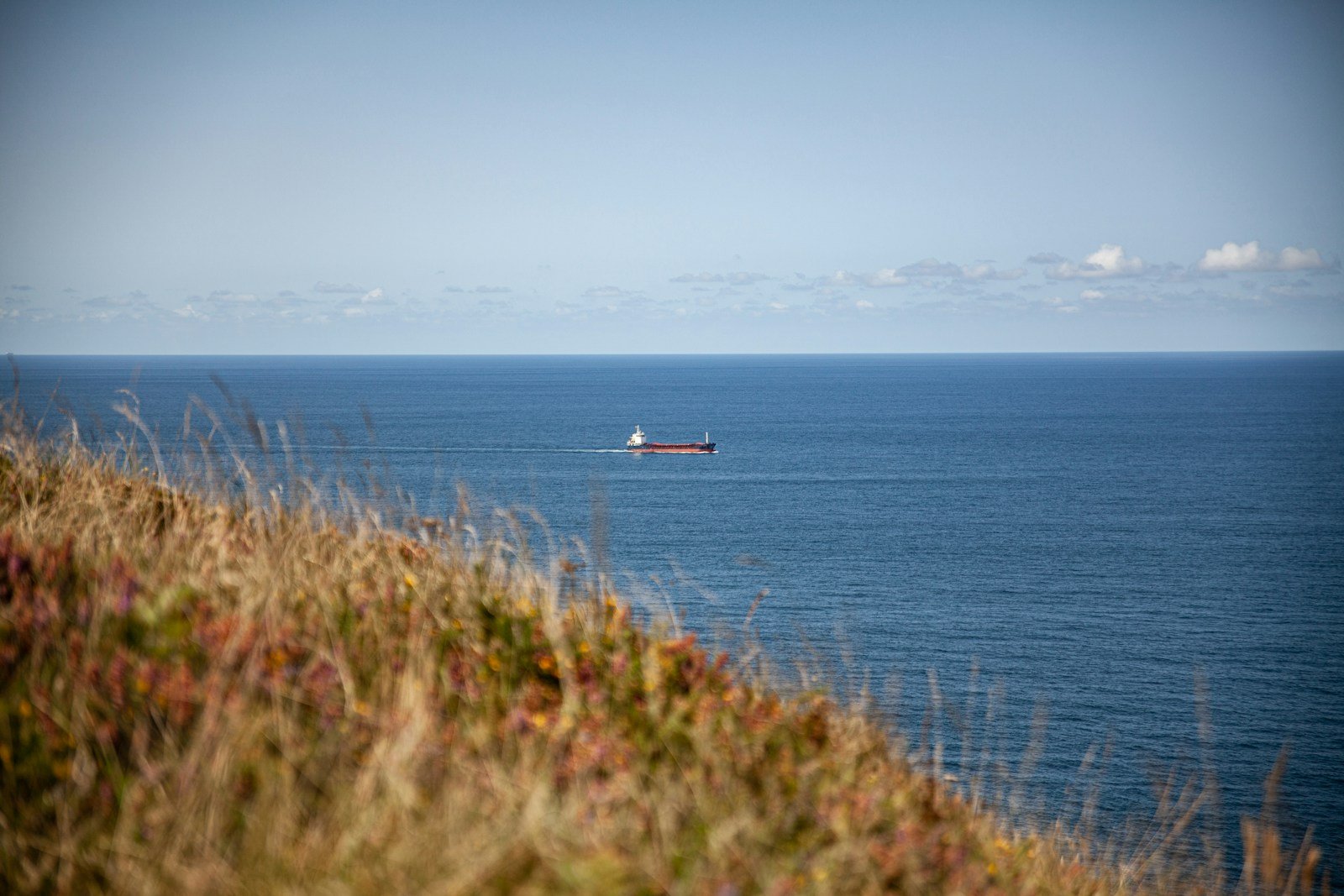
Image credit: Guille Álvarez via Unsplash. Figures and dates in this article are drawn from the linked government releases. Where a release describes a cumulative total, it is labelled as such to avoid confusing it with a single day’s announcement.
One thought on “Daily Current Affairs 18 October 2026: IndiaSkills, INS Samarthak and Biodiversity Benefit Sharing”
Comments are closed.