Updated: 29.11.2026. Researchers at the National Institute of Technology (NIT) Rourkela have developed a method to convert inactive bone morphogenetic protein-2 (BMP-2) discarded by pharmaceutical companies into a hyaluronic-acid-based hydrogel with potential applications in wound healing, tissue regeneration and drug delivery. The Ministry of Education highlighted the work in a PIB release dated 26 November 2026. The important distinction is that this is a promising laboratory and preclinical research result—not an approved wound treatment or a technology ready for routine clinical use.
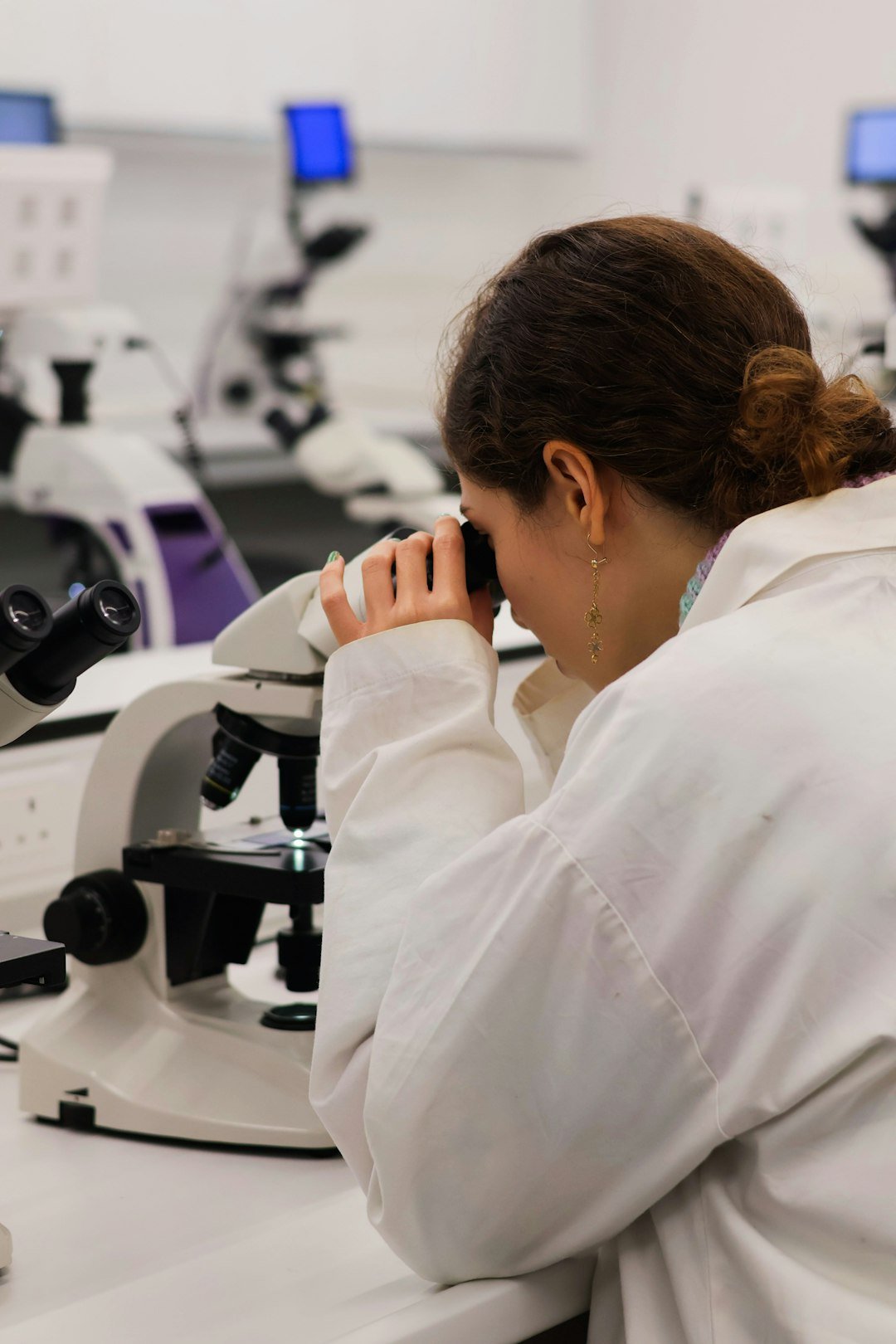
Featured image is illustrative; it is not a photograph of the NIT Rourkela research team. Photo by Chidera Faustina Okeke on Unsplash.
What did the NIT Rourkela team develop?
The research team converted inactive, aggregated BMP-2 proteins into small hydrogel particles, commonly described as microgels. The work involves researchers from three departments: Prof. Harekrushna Sahoo of the Department of Chemistry, Prof. Monalisa Mishra of the Department of Life Sciences, and Prof. Devendra Verma of the Department of Biotechnology and Medical Engineering. The paper’s authors include Devi Prasanna Behera, Kalpanarani Dash, Samadrita Roy and the three faculty members.
Proteins are large biological molecules whose functions depend on their three-dimensional structure. In pharmaceutical manufacturing, exposure to heat, chemicals or harsh processing can unfold a protein. Unfolded molecules may stick together and form aggregates. When this happens, the protein can lose the biological activity for which it was manufactured. Such inactive material is often discarded. The NIT Rourkela approach asks whether this discarded protein material can still serve as a useful structural component in a biomaterial.
How the BMP-2 hydrogel is made
The PIB release describes a process in which the team heated BMP-2 proteins to approximately 85°C for 10 minutes. The heat unfolded the proteins. Subsequent chemical reactions promoted aggregation, producing a network of protein clumps. The researchers then added hydrogen peroxide and hyaluronic acid to convert the aggregates into a gel.
Hyaluronic acid (HA) is a water-attracting polysaccharide found naturally in the body’s extracellular matrix and connective tissues. In the composite, it contributes to hydration and the physical structure of the gel. The research paper reports that adding HA improves the pore architecture and water-retention capacity of the BMP-2 network. The resulting material is not a conventional plastic dressing; it is a hydrated, porous microgel intended to hold water and retain a medicine for controlled release.
What properties were observed?
- Porous structure: The composite’s average pore size was about 15 µm, larger and more open than the denser BMP-2-only gel, helping water absorption and cellular infiltration.
- Water retention: Hyaluronic acid improves the gel’s ability to hold water and maintain a hydrated structure.
- Drug loading and release: In laboratory tests, the researchers loaded the hydrogel with the antibiotic ampicillin and examined how it was released. The results suggest potential for local or targeted drug delivery.
- Cell response: The gel supported fibroblast growth and showed improved hemocompatibility and reduced cytotoxicity compared with the BMP-2-only system.
- Biological evaluation: The team tested wound-healing activity using Drosophila melanogaster as an in-vivo model. The journal paper reports approximately 40–45% faster wound closure for the BMP-2/hyaluronic-acid composite compared with the BMP-2-only hydrogel in that model.
These findings are encouraging, but each result has a defined scope. Ampicillin release in a laboratory test is not proof that the material can safely deliver antibiotics in a human wound. Fibroblast growth is a cell-based observation, and the Drosophila experiment is an early biological model. The results cannot be directly translated into a claim of human clinical efficacy.
Why BMP-2 and hyaluronic acid matter
BMP-2 (bone morphogenetic protein-2) is a signalling protein studied in bone formation and tissue repair. Here, inactive BMP-2 aggregates form the microgel framework, while hyaluronic acid contributes hydration and a more porous architecture. The aim is to repurpose the protein’s structure, not restore its original pharmaceutical function.
Hydrogels are three-dimensional networks that hold water and can be tuned for wound dressings, drug delivery and tissue engineering. A useful biomedical hydrogel must also release its payload at a controlled rate, interact safely with tissue and have suitable mechanical and degradation properties.
What is the evidence—and what remains unproven?
The findings appeared in the Royal Society of Chemistry’s Journal of Materials Chemistry B, 2026, volume 14, pages 6665–6680; the paper was first published on 28 April 2026. Its DOI is 10.1039/D6TB00343E. It reports improved water retention, sustained antibiotic release and 40–45% faster wound closure than BMP-2 alone in the Drosophila model.
The Ministry of Education’s 26 November release states that the researchers still need to establish biocompatibility in higher animal models before clinical trials can be considered. Prof. Devendra Verma indicated that this further testing could take around 10–12 months, but that is a research estimate, not a guaranteed timeline or an announcement of a clinical-trial date. Safety, toxicity, immune response, degradation, dosage and reproducibility must be evaluated before any clinical application.
The PIB release also gives Indian patent application number 202531107839, dated 6 November 2025. This should be described as the application number cited in the release; it should not be presented as proof that a patent has already been granted.
Why the research matters
The work connects waste valorisation with advanced biomaterials. Repurposing proteins that have lost their original activity could reduce pharmaceutical waste and provide a new research feedstock, provided the resulting material meets safety and quality standards.
For healthcare, the potential lies in a material that can hold water, support cells and release a drug over time. A local delivery system could eventually help maintain a therapeutic substance near a wound rather than relying only on repeated systemic dosing. However, the current study does not establish a clinical benefit, a treatment protocol or a commercial product. It establishes a research direction that needs further validation.
The project is interdisciplinary: chemistry supports gel formation, life sciences contribute biological testing, and biotechnology and medical engineering connect the material with drug delivery and tissue repair.
Key facts at a glance
| Item | Verified detail |
|---|---|
| Institution | National Institute of Technology Rourkela, Odisha |
| Research material | Inactive/aggregated BMP-2 combined with hyaluronic acid |
| Heating step | About 85°C for 10 minutes |
| Gel-forming additions | Hydrogen peroxide and hyaluronic acid |
| Drug used in lab test | Ampicillin |
| Cell type assessed | Fibroblasts |
| In-vivo model | Drosophila melanogaster |
| Journal | Journal of Materials Chemistry B, 2026 |
| DOI | 10.1039/D6TB00343E |
| Patent application number cited by PIB | 202531107839, dated 6 November 2025 |
Exam relevance and static-GK connections
UPSC and State PSC: Science and technology, biotechnology, health innovation, waste management, circular economy and research institutions. The development can be used in GS Paper III answers on biotechnology, affordable healthcare, indigenous research and conversion of waste into value-added materials. CSIR-UGC NET and research examinations: protein structure, denaturation, aggregation, biomaterials, hydrogels, cell culture, drug delivery and experimental models. GATE Biotechnology and Life Sciences: protein chemistry, tissue engineering, cell biology and biomedical applications.
Static-GK revision should cover the meaning of BMP-2, hyaluronic acid, fibroblasts, hydrogels and Drosophila melanogaster. NIT Rourkela is an Institute of National Importance located in Odisha. The development should be remembered as a preclinical research result, not as an approved therapy.
Possible MCQ areas
- What is the full form of BMP-2?
- Which polysaccharide was combined with the aggregated protein to form the hydrogel?
- At what temperature and for how long were the BMP-2 proteins heated in the reported process?
- Which antibiotic was used in the laboratory drug-release test?
- Which organism was used as the in-vivo wound-healing model?
- Why is higher-animal biocompatibility testing necessary before clinical trials?
Official and research sources
- Ministry of Education / PIB: NIT Rourkela turns waste proteins into hydrogels, 26 November 2026.
- Royal Society of Chemistry: Research paper and abstract, Journal of Materials Chemistry B (2026).
- NIT Rourkela Department of Life Science.
Related reading: Daily Current Affairs 29 November 2026 · Ground-Level Enhancement #77 and space-weather research · Teaching & Research Exams Hub.
Editorial caution: This article describes the research reported by NIT Rourkela and the Ministry of Education. It is not medical advice, and the hydrogel should not be represented as an approved wound-care product or used in place of clinically validated treatment.


One thought on “NIT Rourkela Develops Waste-Protein Hydrogel: BMP-2, Hyaluronic Acid and Wound-Healing Research”
Comments are closed.