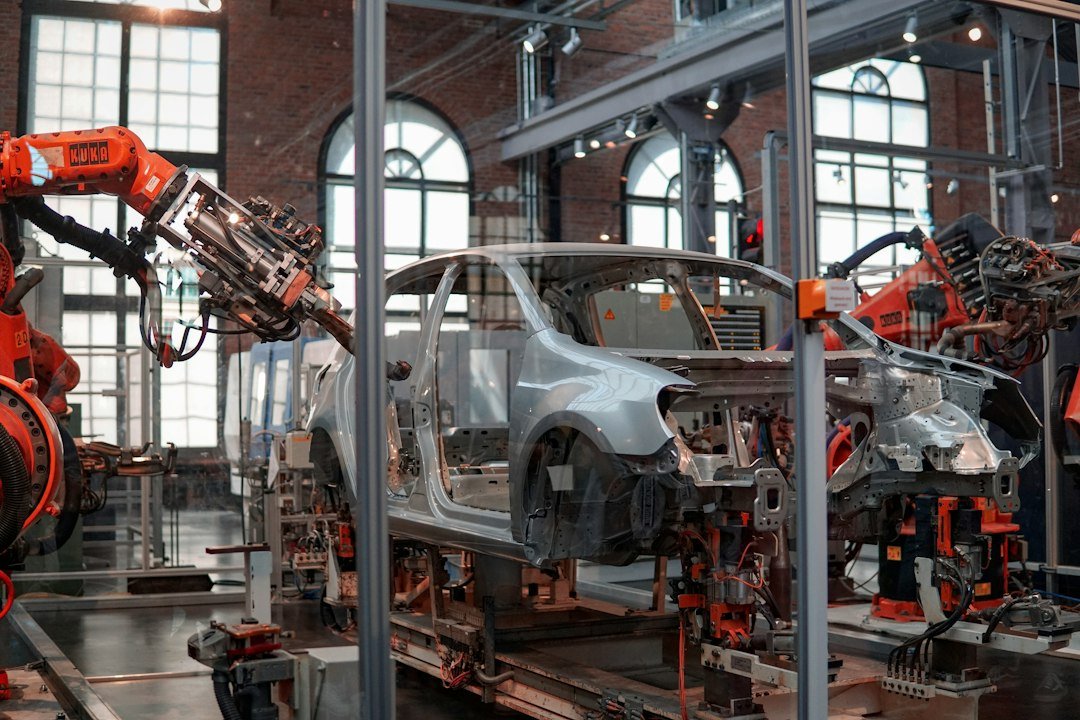
The Production Linked Incentive (PLI) Scheme for Automobile and Auto Component Industry has recorded a sharp rise in incentive payments during 2026–27. The Ministry of Heavy Industries reported that ₹4,385.28 crore was disbursed during the financial year up to 25 November 2026. Cumulative incentive disbursement since the scheme began has reached ₹6,771.64 crore. The latest figures also show cumulative investment of ₹52,806 crore, incremental sales of ₹82,993 crore and 77,755 employment opportunities. These figures make PLI-Auto an important current-affairs topic for examinations covering manufacturing, electric mobility, industrial policy and domestic value addition.
PLI-Auto Scheme 2026: key facts at a glance
| Parameter | Verified detail |
|---|---|
| Implementing ministry | Ministry of Heavy Industries |
| Scheme approval | 15 September 2021 |
| Approved outlay | ₹25,938 crore |
| Incentive period | FY 2022–23 to FY 2026–27 |
| Disbursement period | Subsequent financial years, FY 2023–24 to FY 2027–28 |
| FY 2026–27 incentive disbursement | ₹4,385.28 crore as of 25 November 2026 |
| Cumulative incentive disbursement | ₹6,771.64 crore since inception |
| Cumulative investment | ₹52,806 crore as of 30 September 2026 |
| Incremental sales | ₹82,993 crore over the base year FY 2019–20 |
| Employment opportunities | 77,755 |
| Minimum domestic value addition | 50% for eligible products |
What happened on 25 November 2026?
Union Minister for Heavy Industries and Steel H. D. Kumaraswamy chaired a review meeting with Dr. Hanif Qureshi, Additional Secretary, Ministry of Heavy Industries, to review the implementation of the PLI-Auto Scheme. The Ministry’s release reported the current-year disbursement of ₹4,385.28 crore and the cumulative disbursement of ₹6,771.64 crore.
The Ministry reports investment as of 30 September and incentive and DVA figures as of 25 November; keep these reference dates attached to the data.
What is the PLI-Auto Scheme?
The Union Cabinet approved the PLI Scheme for Automobile and Auto Component Industry on 15 September 2021 with a budgetary outlay of ₹25,938 crore for five years, covering FY 2022–23 to FY 2026–27. The Ministry of Heavy Industries implements the scheme. Its purpose is to strengthen domestic manufacturing of Advanced Automotive Technology (AAT) products, deepen localisation and help create domestic and global supply chains for advanced vehicles and components.
The scheme is focused on zero-emission vehicle technologies, particularly Battery Electric Vehicles (BEVs) and Hydrogen Fuel Cell Vehicles, along with notified advanced automotive components. The Ministry states that incentives apply to performance during FY 2022–23 to FY 2026–27, while actual disbursement takes place in the following financial year. This timing explains why the incentive payment window extends to FY 2027–28 even though the five-year performance period ends in FY 2026–27.
Two components: Champion OEM and Component Champion
The official scheme has two components:
- Champion OEM Incentive Scheme: for eligible original equipment manufacturers producing advanced automotive technology vehicles.
- Component Champion Incentive Scheme: for eligible manufacturers of advanced automotive technology components.
The Ministry’s FAQ limits applicants to companies incorporated or registered in India under the Companies Act. Eligible existing automotive firms and qualifying new non-automotive investors may apply; proprietorships, partnerships and LLPs are not eligible.
OEM covers eligible vehicles; Component Champion covers eligible components. The same product cannot receive duplicate incentives under both segments. These eligibility rules describe the scheme’s original selection framework; the 25 November 2026 update is a progress review of approved applicants, not a fresh open application window.
Why the 50% domestic value addition rule matters
A central condition is a minimum 50% Domestic Value Addition (DVA) for an eligible product. DVA measures the value added within India in the production process. The requirement is designed to ensure that the incentive supports genuine domestic manufacturing and localisation rather than merely the assembly or sale of imported finished products.
As of 25 November 2026, the Ministry reported that DVA certificates had been issued to 9 Champion OEMs covering 139 products or variants and 10 Component Champions covering 53 products or variants. These certifications are evidence that eligible products have met the domestic-value-addition requirement. They should not be confused with the total number of approved applicants under the scheme.
What do the latest performance figures show?
Investment: Approved applicants reported cumulative investment of ₹52,806 crore as of 30 September 2026, against a target of ₹42,500 crore. The reported investment is about 24.2% above the target. It indicates that the scheme has attracted capital into manufacturing capacity and technology, although investment commitments and actual disbursement are different measures.
Incremental sales: The scheme has facilitated incremental sales of ₹82,993 crore over the base year FY 2019–20. This is an incremental measure against the specified base year, not the total turnover of the entire Indian automobile industry.
Employment: The Ministry reported 77,755 employment opportunities. This figure reflects the scheme’s reported contribution to manufacturing and related activity; it should not be described as a count of only permanent direct factory employees unless a source makes that distinction.
Incentive payments: The ₹4,385.28 crore disbursed in FY 2026–27 is a financial-year figure up to 25 November. The ₹6,771.64 crore cumulative figure covers disbursement since the scheme’s inception. Neither figure should be confused with the total approved outlay of ₹25,938 crore.
How PLI-Auto differs from FAME and PM E-DRIVE
PLI-Auto is a manufacturing-side incentive. It rewards eligible companies for investment and sales of notified advanced automotive products that meet scheme conditions, including the DVA threshold. It is not a direct purchase subsidy paid to an individual buying an electric car or two-wheeler.
FAME-II and PM E-DRIVE are separate demand-side programmes; PLI-Auto is a manufacturing incentive. The Ministry’s FAQ distinguishes PLI-Auto from FAME-II consumer incentives.
Why the scheme matters for the Indian economy
Industrial deepening: Advanced vehicles require batteries, power electronics, motors, control systems, fuel-cell technologies and specialised components. A domestic supplier base can reduce import dependence and improve the resilience of the manufacturing ecosystem.
Technology transition: The focus on battery electric and hydrogen fuel-cell technologies connects industrial policy with the transition to cleaner transport. It also creates a reason for domestic firms to invest in research, testing, production processes and skilled labour.
Investment and jobs: Read the outlay, applicant investment, incremental sales and incentive payments as separate measures.
Global competitiveness: Localisation can help Indian suppliers meet global quality standards, but it does not yet prove self-sufficiency in every advanced component.
What candidates should remember — and what not to assume
- The scheme was approved on 15 September 2021 with an outlay of ₹25,938 crore for five years, FY 2022–23 to FY 2026–27.
- The incentive disbursement window runs in the subsequent financial years, through FY 2027–28.
- The two components are Champion OEM and Component Champion.
- Eligible products must meet a minimum 50% DVA requirement.
- The ₹4,385.28 crore figure is FY 2026–27 disbursement as of 25 November 2026; ₹6,771.64 crore is cumulative disbursement since inception.
- Investment of ₹52,806 crore is reported as of 30 September 2026; incremental sales are measured against FY 2019–20.
- PLI-Auto is a manufacturing incentive for eligible companies, not a retail subsidy for vehicle buyers.
Exam relevance: UPSC, State PSC, SSC, banking and technical exams
UPSC and State PSC: Connect PLI-Auto with industrial policy, Make in India, electric mobility, domestic value addition, supply-chain resilience, employment and technology development under GS Paper III. A mains answer should explain both the incentive design and the measurable outcomes, while acknowledging that investment and disbursement are different indicators.
SSC and other objective exams: Revise the Ministry, approval date, outlay, five-year period, two components, 50% DVA requirement and the latest disbursement and investment figures.
Banking and insurance exams: Focus on capital investment, industrial credit, domestic manufacturing, incremental sales, employment and the role of performance-linked incentives in economic policy.
Possible MCQ areas
- Which ministry implements PLI-Auto? Ministry of Heavy Industries.
- What is the approved outlay? ₹25,938 crore.
- When was the scheme approved? 15 September 2021.
- What is the incentive period? FY 2022–23 to FY 2026–27.
- What are the two components? Champion OEM and Component Champion.
- What is the minimum DVA threshold? 50%.
- How much incentive was disbursed in FY 2026–27 up to 25 November 2026? ₹4,385.28 crore.
- What was the cumulative incentive disbursement since inception? ₹6,771.64 crore.
- What is the base year for incremental sales? FY 2019–20.
Official sources and related reading
- Ministry of Heavy Industries / PIB: PLI-Auto records ₹4,385.28-crore incentive disbursement, 25 November 2026.
- Ministry of Heavy Industries: PLI-Auto scheme overview and five-year period.
- Ministry of Heavy Industries: Official PLI-Auto FAQ — eligibility, two components and DVA conditions.
For broader preparation, read the NITI Aayog PLI Impact Assessment 2026, 12 Years of Make in India, the CIE Manufacturing Scheme 2026 and the Current Affairs Hub.

One thought on “PLI-Auto Scheme 2026: ₹4,385 Crore Incentives and Growth”
Comments are closed.