Preview published: 25 November 2026 | National Milk Day: 26 November 2026 | Reading time: 8–10 minutes
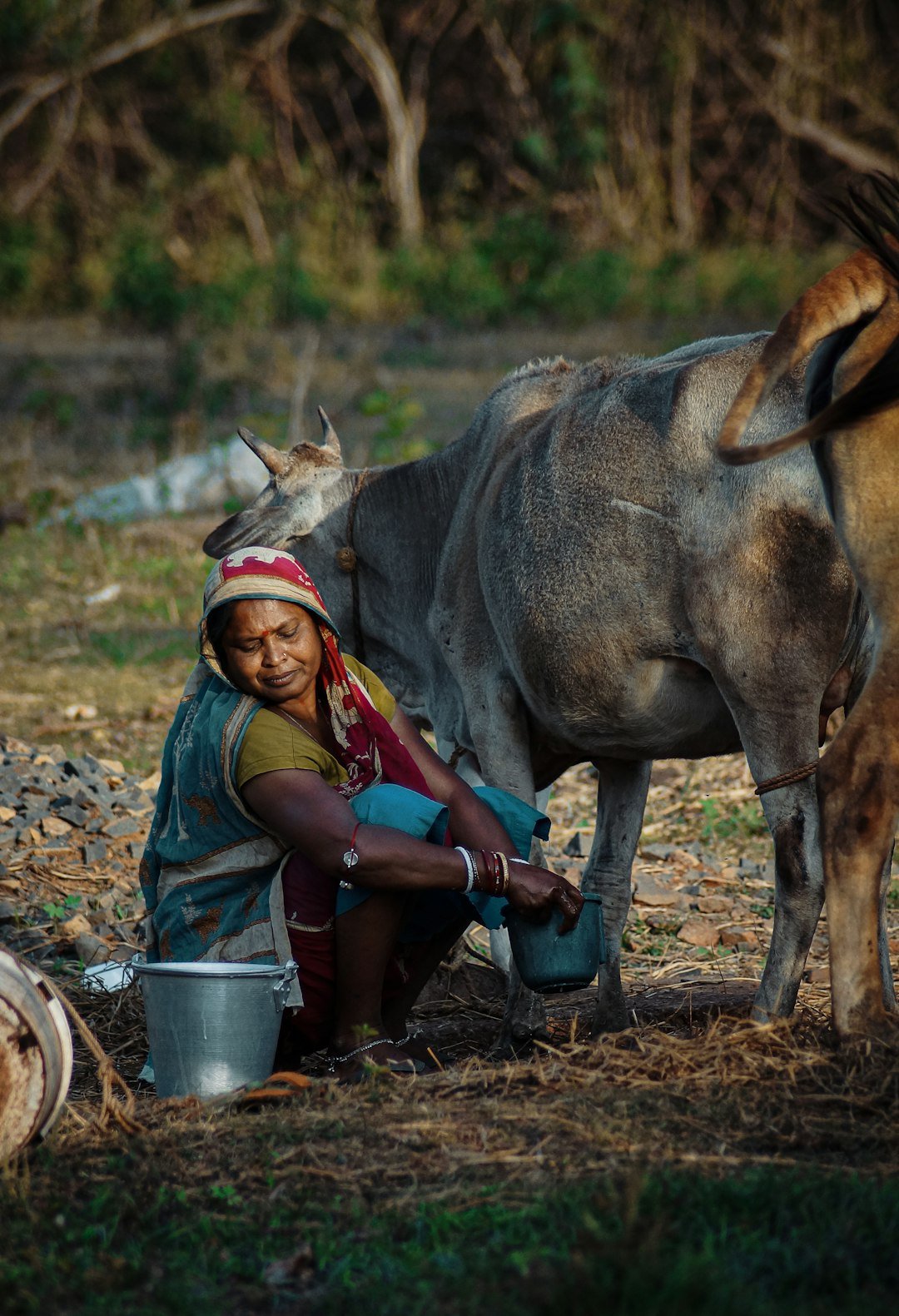
India will observe National Milk Day on 26 November 2026 with a national programme in Patna, Bihar. The event is scheduled to honour the dairy sector’s contribution to nutrition, farm income and rural employment, while launching new infrastructure and quality-assurance initiatives. It will also provide an occasion to review the latest published milk-production statistics and the legacy of Dr Verghese Kurien, widely associated with India’s White Revolution.
This is a preview based on the Department of Animal Husbandry and Dairying’s announcement of 24 November. The Patna programme and the release of Basic Animal Husbandry Statistics (BAHS) 2026 are scheduled for 26 November; their outcomes and new statistical tables should be added only after the official release.
Why is National Milk Day observed on 26 November?
National Milk Day commemorates the birth anniversary of Dr Verghese Kurien, born on 26 November 1921. Kurien became a central figure in India’s dairy cooperative movement and the transformation commonly called the White Revolution. His work helped place milk producers, rather than only intermediaries, at the centre of procurement, processing and marketing systems.
Established in 1965, the National Dairy Development Board (NDDB) helped organise village milk cooperatives for procurement, chilling, processing and marketing. The cooperative network also linked farmers to veterinary care, breeding and feed services.
National Milk Day 2026: what is planned in Patna?
The Department of Animal Husbandry and Dairying (DAHD), under the Ministry of Fisheries, Animal Husbandry and Dairying, will hold the celebration at Bapu Sabhagar, Patna, Bihar, on 26 November. Union Minister Rajiv Ranjan Singh, popularly known as Lalan Singh, is scheduled to attend as Chief Guest. Bihar Chief Minister Samrat Choudhary, Union Minister of State Prof. S. P. Singh Baghel and Bihar Minister for Dairy, Fisheries and Animal Resources Nand Kishore Ram are also expected to be present.
The event will include the presentation of the National Gopal Ratna Awards 2026, which recognise contributions to indigenous cattle and buffalo breeds, dairy development and livestock productivity. The three principal categories are:
- Best Dairy Farmer rearing indigenous cattle or buffalo breeds (Non-North-Eastern Region).
- Best Artificial Insemination Technician (Non-North-Eastern Region).
- Best Dairy Cooperative Society, Milk Producer Company or Dairy Farmer Producer Organisation (Non-North-Eastern Region).
Special awards are also scheduled for winners from the North-Eastern Region and Himalayan States.
Major dairy and livestock projects scheduled for dedication
The Patna programme is expected to include NPDD projects: Data Processing and Milk Collection Units for dairy cooperatives, mineral-mixture plants at Patna and Muzaffarpur, and an effluent-treatment plant at Mithila Milk Union, Samastipur.
A major infrastructure item is the dedication of Namaste India’s 2 LLPD milk-processing plant at Sikandarpur, Bihta, Patna. LLPD means lakh litres per day; the plant’s stated capacity is two lakh litres per day. It was established with assistance under the Animal Husbandry Infrastructure Development Fund (AHIDF). The event is also scheduled to distribute certificates for veterinary medicine sales centres sanctioned under the Livestock Health and Disease Control Programme.
The programme is also scheduled to launch rating and grading procedures for dairy cooperatives and Milk Producer Organisations, an online application portal and a Climate-Resilient Roadmap for the livestock and dairy sector towards Viksit Bharat @2047.
India’s latest published milk-production data
The latest complete national figures available before the 26 November event are in Basic Animal Husbandry Statistics 2025, which covers 2024–25. It reports that India produced 247.87 million tonnes of milk in 2024–25, up from 239.30 million tonnes in 2023–24. This was a year-on-year increase of 3.58%. Per-capita availability rose from 471 grams per day to 485 grams per day.
| Indicator | 2024–25 figure |
|---|---|
| Total milk production | 247.87 million tonnes |
| Growth over 2023–24 | 3.58% |
| Per-capita availability | 485 grams per day |
| India’s global position | First in milk production |
| Crossbred/exotic cattle average yield | 9.05 kg per animal per day |
| Indigenous/non-descript cattle average yield | 3.86 kg per animal per day |
The five largest milk-producing States were Uttar Pradesh (15.66%), Rajasthan (14.82%), Madhya Pradesh (9.12%), Gujarat (7.78%) and Maharashtra (6.71%). Together they accounted for 54.09% of national production. These are shares of national milk output, not rankings by per-animal productivity.
Species-wise, indigenous buffaloes contributed 31.18% of milk and crossbred cattle 30.80%; indigenous cattle contributed 11.20%, non-descript cattle 9.64%, non-descript buffaloes 11.97%, goats 3.32% and exotic cows 1.89%. Buffaloes and indigenous animals therefore remain central to the sector.
What should readers expect from BAHS 2026?
DAHD has announced that Basic Animal Husbandry Statistics 2026 will be released at the Patna event. It will use the Integrated Sample Survey conducted from 1 March 2025 to 28 February 2026 and is expected to provide production estimates for milk, eggs, meat and wool, including State-wise estimates and per-capita availability. At the time this preview was prepared, the 2026 report had not yet been released. The 2024–25 figures above therefore remain the latest verified published data; they must not be presented as the 2025–26 result.
How did Operation Flood change Indian dairying?
Operation Flood was launched in 1970 and became one of the world’s largest rural development programmes. NDDB describes it as a programme that linked milk producers with consumers through a National Milk Grid, helping reduce seasonal and regional price variations and improve the producer’s access to a regular market.
Operation Flood ran in three phases: 1970–1980, 1981–1985 and 1985–1996. Phase I linked 18 milksheds to Delhi, Mumbai, Kolkata and Chennai; Phase II expanded to 136 milksheds and 290 urban markets. By the end of Phase II, NDDB records that 43,000 village cooperatives covered 4.25 million milk producers.
The cooperative structure is often called the Anand pattern, associated with the Kaira District Cooperative Milk Producers’ Union and the Amul model. Producers collectively own and govern the institutions that procure and market their milk, improving bargaining power when the cooperative is professionally managed.
Why dairy matters to the rural economy
Dairying complements seasonal crop income and supports jobs in collection, chilling, processing, veterinary care and retail. At current prices, livestock-sector GVA rose from ₹5.10 lakh crore in 2014–15 to ₹15.06 lakh crore in 2023–24, a 12.77% compound annual growth rate; livestock contributed about 31% of agriculture and allied-sector GVA. These are livestock, not dairy-only, figures.
Future growth depends on quality testing, cold chains, affordable feed, disease control, breed improvement, fodder and climate adaptation. Higher output alone does not guarantee safe milk or better farmer income.
What to track after 26 November
- Use the official BAHS 2026 release to update milk, egg, meat and wool baselines; do not substitute it until published.
- Record the awardees and verify the Bihta plant and other project details from DAHD’s post-event release.
Exam relevance
UPSC and State PCS: connect National Milk Day with rural development, cooperative federalism, agricultural diversification, nutrition, climate resilience and the livestock economy. SSC and other objective exams: remember the date, Dr Verghese Kurien, NDDB, Operation Flood, top milk-producing States and the 2024–25 production figure. Agriculture, veterinary and research exams: revise animal breeding, artificial insemination, milk collection, chilling, processing, animal nutrition and the Integrated Sample Survey.
Static GK and possible MCQ areas
- National Milk Day: 26 November, the birth anniversary of Dr Verghese Kurien.
- NDDB was established in 1965; Operation Flood began in 1970.
- Operation Flood Phase I: 1970–1980; Phase II: 1981–1985; Phase III: 1985–1996.
- India’s milk production in 2024–25: 247.87 million tonnes; per-capita availability: 485 grams per day.
- Largest milk-producing State in 2024–25: Uttar Pradesh; second: Rajasthan.
- National Gopal Ratna Awards recognise dairy farmers, artificial insemination technicians and dairy cooperative/producer organisations.
Official sources
- DAHD: National Milk Day 2026 programme in Patna, 24 November 2026.
- Basic Animal Husbandry Statistics 2025 (official PDF) and the PIB release on 2024–25 milk, egg, meat and wool production.
- NDDB: Operation Flood — phases and objectives.
- NDDB: institutional history.
Related reading on DailyGKUpdate
- India’s Agricultural Exports 2026–27 — value addition and agricultural trade.
- India Horticulture Production 2025–26 — crop and allied-sector data.
- Current Affairs Hub and Competitive Exams Preparation Hub.
Editorial note: This article was prepared before the 26 November event. The BAHS 2026 data, awardees and inauguration outcomes will be added only after the Department publishes the relevant official details.

One thought on “National Milk Day 2026: India’s 247.87 Million Tonnes of Milk, Patna Event and Gopal Ratna Awards”
Comments are closed.