Published: 18 November 2026 | Reading time: 8–9 minutes
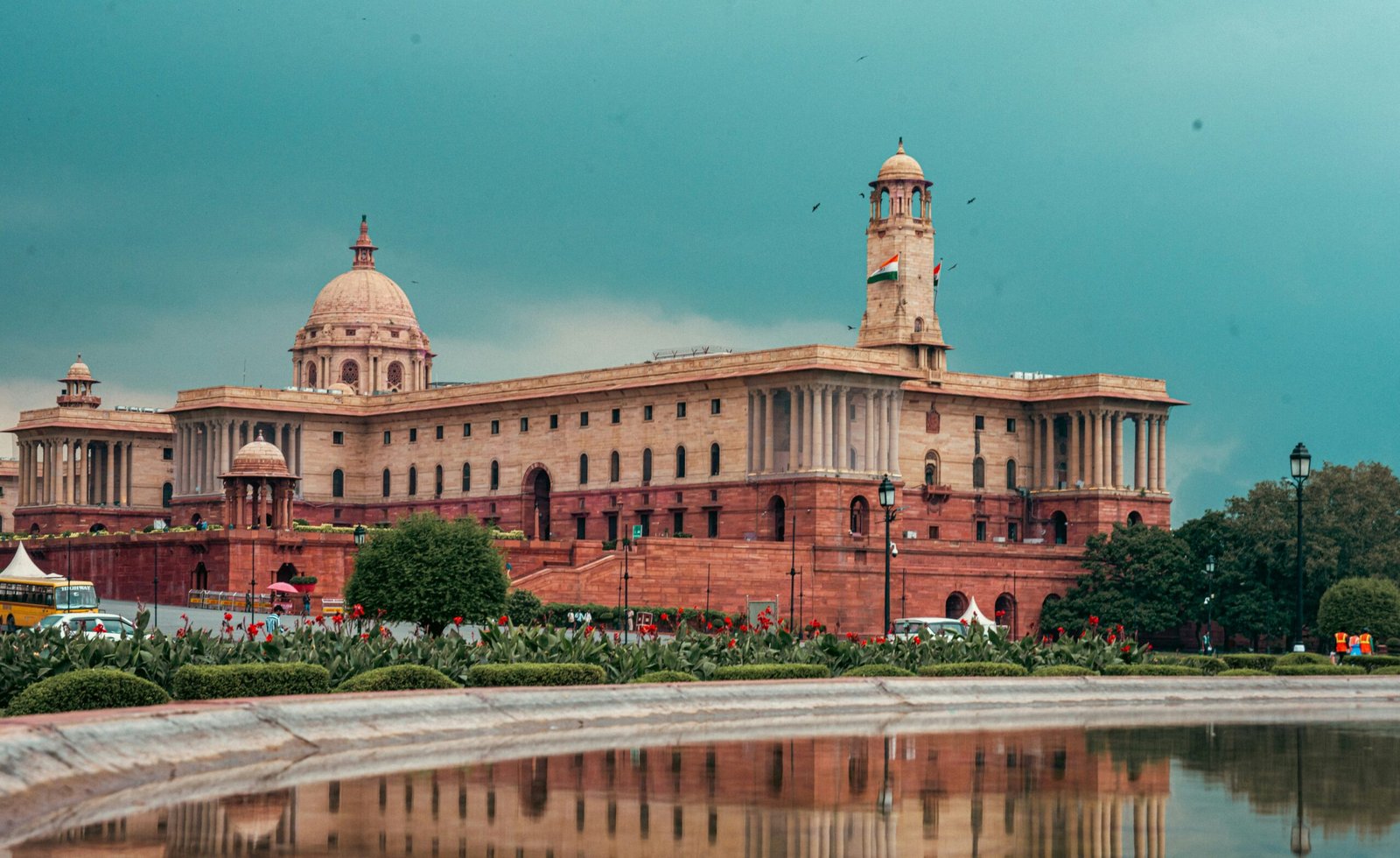
Illustrative image credit: Zoshua Colah via Unsplash.
The Ministry of Social Justice and Empowerment is holding the two-day departmental summit Samaveshi Niti Sankalp on 18–19 November 2026 at Sushma Swaraj Bhawan, New Delhi. The summit is designed to strengthen coordination between the Union Government, States and Union Territories on welfare delivery and inclusive development. Its preparation included more than 13,500 responses from over 450 districts, which have been incorporated into background notes for policy deliberations. For competitive-exam candidates, the event is significant because it connects social justice, disability inclusion, scholarships, drug-demand reduction and Centre–State governance in one policy exercise.
What happened?
The Ministry convened the third departmental summit in a series envisioned to encourage collective ownership of national priorities and improve implementation outcomes. The 18–19 November meeting brings together political leadership, senior officials, field-level functionaries and other stakeholders. Prime Minister Narendra Modi is scheduled to attend the valedictory session. The Ministry’s Secretary, Sudhansh Pant, said that consultations with State and UT officials and feedback from stakeholders had informed the background material for the meeting.
The event is not a new centrally sponsored scheme or a standalone financial allocation. It is a policy-coordination platform intended to identify implementation gaps, share working practices and develop time-bound action plans. That distinction matters: a summit can shape administrative priorities, but its announcements should not be mistaken for a notified scheme, budget sanction or a statutory change unless a separate government order provides one.
Why it matters: policy delivery depends on the last mile
Social-justice programmes often involve multiple departments, levels of government and delivery institutions. A scholarship may be designed centrally but require State-level verification, institutional data and timely disbursement. Disability inclusion may require accessible buildings, transport, digital interfaces, education support and coordination between health, social welfare and local authorities. Drug-demand reduction involves prevention, treatment, rehabilitation, community organisations and law-enforcement coordination.
The consultation figure—more than 13,500 responses from over 450 districts—is relevant because it signals an attempt to bring implementation experience into policy discussion. It does not, by itself, establish that every district participated or that all suggestions will be adopted. The value of the process will depend on whether the summit produces clear responsibilities, measurable milestones, monitoring arrangements and feedback loops after the meeting.
The four thematic areas
1. Reimagining prevention and drug-demand reduction for a Nasha Mukt Bharat
This theme looks beyond enforcement and treats substance-use prevention as a public-health and social-development issue. A practical approach includes awareness among young people, early identification, counselling, treatment, rehabilitation, family support and community participation. The policy challenge is to connect services so that a person identified by a school, health worker or local organisation can reach appropriate support rather than being left with a one-time awareness message.
For exam preparation, connect this theme with the constitutional directive under Article 47, which directs the State to endeavour to improve public health and to prohibit intoxicating drinks and drugs injurious to health except for medicinal purposes. Article 47 is a Directive Principle of State Policy, not a Fundamental Right.
2. One Nation, One Scholarship Portal — accessible scholarships and empowered students
The scholarship theme focuses on improving access and reducing friction for students who depend on financial support. A more integrated digital system can help students discover eligible schemes, submit applications and track progress. But a portal alone cannot remove every barrier. Accurate institutional data, awareness, accessible design, grievance redressal, timely verification and reliable payments remain necessary.
The policy issue is especially important for students from disadvantaged communities, persons with disabilities and learners in remote areas. A single-window approach is useful only when it is interoperable with the systems of States, universities, schools and scholarship administrators. The summit’s theme should therefore be read as a governance and service-delivery priority, not as proof that every scholarship has already been merged into one operational system.
3. Early intervention and reduction of disability burden
Early identification can improve access to health, rehabilitation, assistive devices, inclusive education and family support. It is particularly relevant in childhood, when timely screening and intervention may reduce the long-term impact of some conditions. The phrase “reduction of disability burden” should not be interpreted as reducing the rights or status of persons with disabilities. The public-policy objective is to remove preventable barriers, provide timely support and improve participation and independence.
For administration, this requires coordination among primary health centres, district hospitals, schools, disability certification authorities, rehabilitation professionals and social-welfare departments. A useful action plan would specify referral pathways, service standards, trained personnel and district-level monitoring.
4. Sugamya Bharat for Viksit Bharat
Sugamya Bharat Abhiyan, also known as the Accessible India Campaign, seeks to improve accessibility in the built environment, transport and information and communication systems. Accessibility is not limited to ramps. It includes lifts, tactile paths, accessible toilets, audio and visual information, sign-language support, websites and mobile applications that can be used with assistive technology.
The summit theme links disability inclusion with the broader idea of development. An inaccessible public building or online form can prevent a citizen from using a service even when the service formally exists. This is why accessibility needs to be incorporated at the design stage, procurement stage and audit stage rather than added only after complaints.
How the summit is structured
The PIB note identifies four thematic areas, four breakout sessions and two full-house sessions. States and Union Territories are to receive dedicated opportunities to present their experience in breakout sessions and share views during plenary deliberations. Two experts are also expected to share international best practices. The summit will include a digital exhibition showcasing key Ministry initiatives.
The format matters because it allows both detailed subject-level discussion and cross-cutting coordination. Breakout sessions can examine operational issues within each theme, while full-house sessions can help identify overlaps—for example, how digital scholarship delivery must also be accessible to students with disabilities.
Key facts and figures
| Item | Verified detail |
|---|---|
| Summit | Samaveshi Niti Sankalp |
| Dates | 18–19 November 2026 |
| Venue | Sushma Swaraj Bhawan, New Delhi |
| Organiser | Ministry of Social Justice and Empowerment |
| Consultation responses | More than 13,500 |
| District coverage in consultations | More than 450 districts |
| Policy themes | Four |
| Deliberation format | Four breakout sessions and two full-house sessions |
| Ministry Secretary | Sudhansh Pant |
| Valedictory session | Prime Minister Narendra Modi scheduled to grace it |
Background: the constitutional and institutional framework
Social justice in India is supported by constitutional guarantees and Directive Principles. Article 14 provides equality before law and equal protection of laws. Article 15 prohibits discrimination on specified grounds and permits special provisions for disadvantaged groups. Article 16 concerns equality of opportunity in public employment. Article 21 has been interpreted to protect life and dignity. Article 41 refers to public assistance in cases including disability, subject to the State’s economic capacity. Article 46 directs the State to promote the educational and economic interests of weaker sections, particularly Scheduled Castes and Scheduled Tribes.
For disability rights, the Rights of Persons with Disabilities Act, 2016 is a key statutory framework. It provides for rights, accessibility, education, employment and non-discrimination. The Accessible India Campaign is an important policy initiative in this area. The Nasha Mukt Bharat Abhiyaan is a national campaign focused on awareness and community participation in reducing substance abuse. Scholarship delivery involves multiple central and State schemes, so the portal theme is about coordination as much as technology.
What should be watched after the summit?
The useful follow-up indicators are not the number of speeches or meetings. Candidates and readers should look for published action points, nodal departments, timelines, budgetary support, district-level service standards, accessibility audits, scholarship grievance-resolution data and measurable outcomes in prevention and rehabilitation. If the Ministry issues a detailed outcome document, it should be assessed separately from the advance announcement.
Exam relevance
UPSC GS-II: social justice, welfare schemes, vulnerable sections, Centre–State relations, governance, service delivery and accountability. GS-III: human capital, public health and digital infrastructure. GS-IV: empathy, inclusion, dignity and citizen-centric administration.
State PSC and teaching exams: focus on disability inclusion, scholarship administration, public-health awareness and the role of local institutions. SSC and other objective exams: remember the Ministry, venue, dates, four themes and consultation figures.
Static GK connection
- Article 47: duty of the State to improve public health and address harmful intoxicants.
- Article 46: promotion of educational and economic interests of weaker sections.
- Rights of Persons with Disabilities Act: 2016.
- Sugamya Bharat Abhiyan: Accessible India Campaign.
- Nasha Mukt Bharat Abhiyaan: national campaign on substance-use prevention and awareness.
- Ministry: Ministry of Social Justice and Empowerment, Government of India.
India: country facts for static GK
President: Droupadi Murmu; Prime Minister: Narendra Modi; Capital: New Delhi; Currency: Indian rupee (INR).
Possible MCQ areas
- Which Ministry is organising Samaveshi Niti Sankalp?
- Where and when is the summit being held?
- What are the four thematic areas?
- Which constitutional Article concerns public health and intoxicating substances?
- Which Act provides the principal statutory framework for rights of persons with disabilities?
Official source
PIB: Samaveshi Niti Sankalp, 18–19 November 2026. The Ministry’s announcement is the primary source for the dates, venue, consultation figures and session themes.
Related articles on DailyGKUpdate
- Nasha Mukt Bharat Abhiyaan: public-health and Article 47 connections
- Adi Vaani and access to public information in tribal languages
- KVS digital initiatives and education governance
- Digital governance and the DPDP framework
Editorial note: the summit is an institutional consultation and coordination exercise. Any subsequent scheme notification, funding decision or action plan will be reported separately after verification.