Updated: 13 November 2026 | Economy, banking awareness and statistics
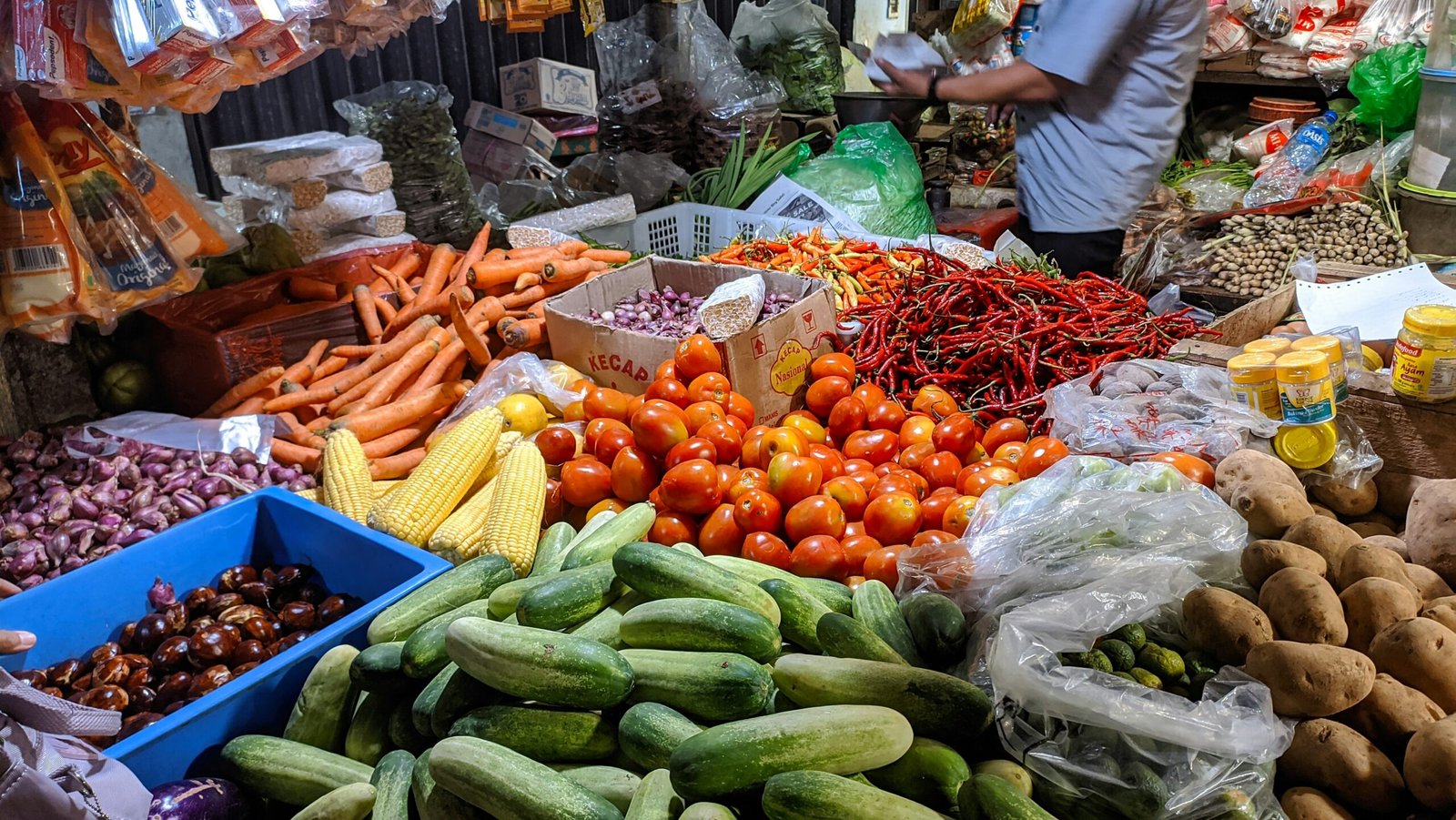
India’s retail inflation measured by the Consumer Price Index (CPI) rose to 6.09% year-on-year in October 2026, while consumer food inflation reached 8.94%. The Ministry of Statistics and Programme Implementation (MoSPI) released the figures on 12 November under the revised CPI series with base year 2024=100. Rural headline inflation was 6.63%, urban inflation 5.41%; food inflation was 9.09% in rural areas and 8.68% in urban areas. These figures are provisional and should be read with the new series’ methodology—not mixed with index values from the older 2012 base.
1. What the October release says
| Indicator | October 2026 |
|---|---|
| Combined CPI inflation, year-on-year | 6.09% (provisional) |
| Rural CPI inflation | 6.63% |
| Urban CPI inflation | 5.41% |
| Combined food inflation (CFPI) | 8.94% |
| Rural food inflation | 9.09% |
| Urban food inflation | 8.68% |
| Combined CPI index | 110.05 |
| Combined Consumer Food Price Index | 113.23 |
Inflation is a rate of change, not the index level itself. A CPI index of 110.05 on a 2024=100 base means the measured price level is 10.05% above the base-period level; it does not mean October inflation was 110.05%. The 6.09% rate compares the October 2026 index with October 2025 under the linked 2024 series.
2. Why India revised CPI to base 2024=100
A price index needs a reference period and expenditure weights. The previous all-India CPI series used 2012=100 and a consumption basket based on older household expenditure patterns. Consumption changes over time: households use different services, digital products, transport modes and housing arrangements, while the relative importance of food, education, health and communication also changes.
MoSPI introduced the CPI series with base 2024=100 from January 2026 data, released in February 2026. The revised basket and weights draw on the Household Consumption Expenditure Survey (HCES) 2023–24. The objective is to improve representativeness, coverage and detail in the inflation measure. The old CPI 2012 series runs through December 2025; the new series provides inflation data from January 2026 onward.
Because the item basket, weights, market coverage and collection methodology changed, a direct comparison of index numbers between CPI 2012 and CPI 2024 is not appropriate. Use the linked inflation series and the official methodological notes rather than simply placing old and new index values side by side.
3. The basket expanded from 299 to 358 weighted items
At the all-India level, the revised CPI includes 358 weighted items: 308 goods and 50 services. The earlier series had 299 items—259 goods and 40 services. The new structure uses the United Nations’ Classification of Individual Consumption According to Purpose (COICOP) 2018 framework, moving from six broad groups to 12 divisions, with more granular groups, classes and subclasses.
Important additions and coverage improvements include rural house rent, online media/streaming services, selected modern consumption products, CNG/PNG and more detailed services. Digital and administrative sources are used where appropriate for items such as telephone charges, rail and air fares, fuel, postal charges and online subscriptions. Twelve online markets in large towns are included to capture e-commerce price variation.
The new classification also places items according to their purpose of consumption. For example, electricity and cooking fuels are treated within housing-related divisions, while petrol and diesel are classified with transport. This matters because inflation in one division can be analysed separately from another.
4. How prices are collected
MoSPI’s new series expands price collection to 1,465 rural markets and 1,395 urban markets across 434 towns, along with 12 online markets in 12 towns with populations above 25 lakh. The October release reports weekly-roster price collection from 1,407 urban markets (including online markets) and 1,465 villages, with a 100% response rate for the month.
The series also adopts Computer Assisted Personal Interviewing (CAPI), using handheld devices, standardised item specifications, in-built validation checks and real-time monitoring. Digital collection can improve timeliness and consistency, but the quality of an index still depends on sampling, price verification, item comparability and the treatment of missing observations.
5. Food inflation and item-level movements
Food inflation at 8.94% was higher than headline CPI inflation. The combined item table showed year-on-year inflation of 116.22% for onion, 60.74% for garlic, 52.39% for silver jewellery, 48.32% for ginger and 47.30% for lemon. Potato inflation was −14.24%, cauliflower −10.57%, coconut −5.60%, brinjal −3.34% and cabbage −1.92%.
Item-level rates are not the same as their contribution to headline inflation. Contribution depends on the item’s weight in the basket as well as its price movement. A high percentage increase in a low-weight item may affect the combined index less than a moderate increase in a heavily weighted item. This is why MoSPI publishes weights, division-level indices and inflation rates alongside the headline number.
Food prices are particularly relevant to rural and urban comparisons because consumption patterns and expenditure weights differ. The new series assigns food and non-alcoholic beverages a larger share in the rural basket than in the urban basket. Seasonal supply, storage, transport, weather and market conditions can influence food prices; the CPI release measures the outcome but does not by itself identify the cause of each price movement.
6. CPI and the Reserve Bank’s inflation-targeting framework
India’s flexible inflation-targeting framework uses headline CPI inflation. The Government retained the target at 4%, with a tolerance band of 2–6%, for 1 April 2026 to 31 March 2031. The Monetary Policy Committee (MPC), constituted under Section 45ZB of the RBI Act, determines the policy rate required to achieve the target.
October’s 6.09% reading is 0.09 percentage point above the upper tolerance level for that month. It is important not to describe one monthly reading as an automatic statutory failure of the inflation target. Under the notified definition, failure occurs when average inflation remains above the upper tolerance level or below the lower level for three consecutive quarters. A single monthly observation can nevertheless inform the MPC’s assessment of price pressures and risks.
Headline CPI is not the same as core inflation, CPI-IW or the Wholesale Price Index. Core inflation is a constructed measure excluding specified volatile components; CPI-IW is compiled by the Labour Bureau for industrial workers and is relevant to dearness allowance; WPI tracks prices at the wholesale level. The new MoSPI CPI series does not replace CPI-IW used in the central-government DA formula.
7. Exam relevance and static GK
- MoSPI: Ministry of Statistics and Programme Implementation; the National Statistical Office (NSO) compiles CPI.
- Base year: CPI 2024=100 from January 2026; older CPI 2012 series ends December 2025.
- HCES: Household Consumption Expenditure Survey 2023–24 supplies the new basket and weights.
- COICOP 2018: UN classification of individual consumption according to purpose.
- RBI Act: Sections 45ZA/45ZB underpin inflation target and MPC framework.
- Target: 4% CPI with 2–6% tolerance, retained through March 2031.
UPSC/State PCS: GS-III inflation, monetary policy, statistical systems, price stability and food supply; GS-II institutions and governance. Banking/SSC: CPI versus WPI, CPI-IW, base year, inflation calculation, rural/urban rates and the MPC.
Official sources and related study
MoSPI: CPI October 2026, base 2024=100
MoSPI eSankhyiki macro indicators · MoSPI official website
RBI: Flexible Inflation Targeting framework
Banking Awareness Study Material · Current Affairs Hub
Data note: October 2026 CPI and CFPI rates are provisional. The article follows the MoSPI/PIB release and RBI’s current target framework.


One thought on “CPI October 2026 Inflation 6.09%: New Base 2024=100, Food Prices and RBI Target Explained”
Comments are closed.