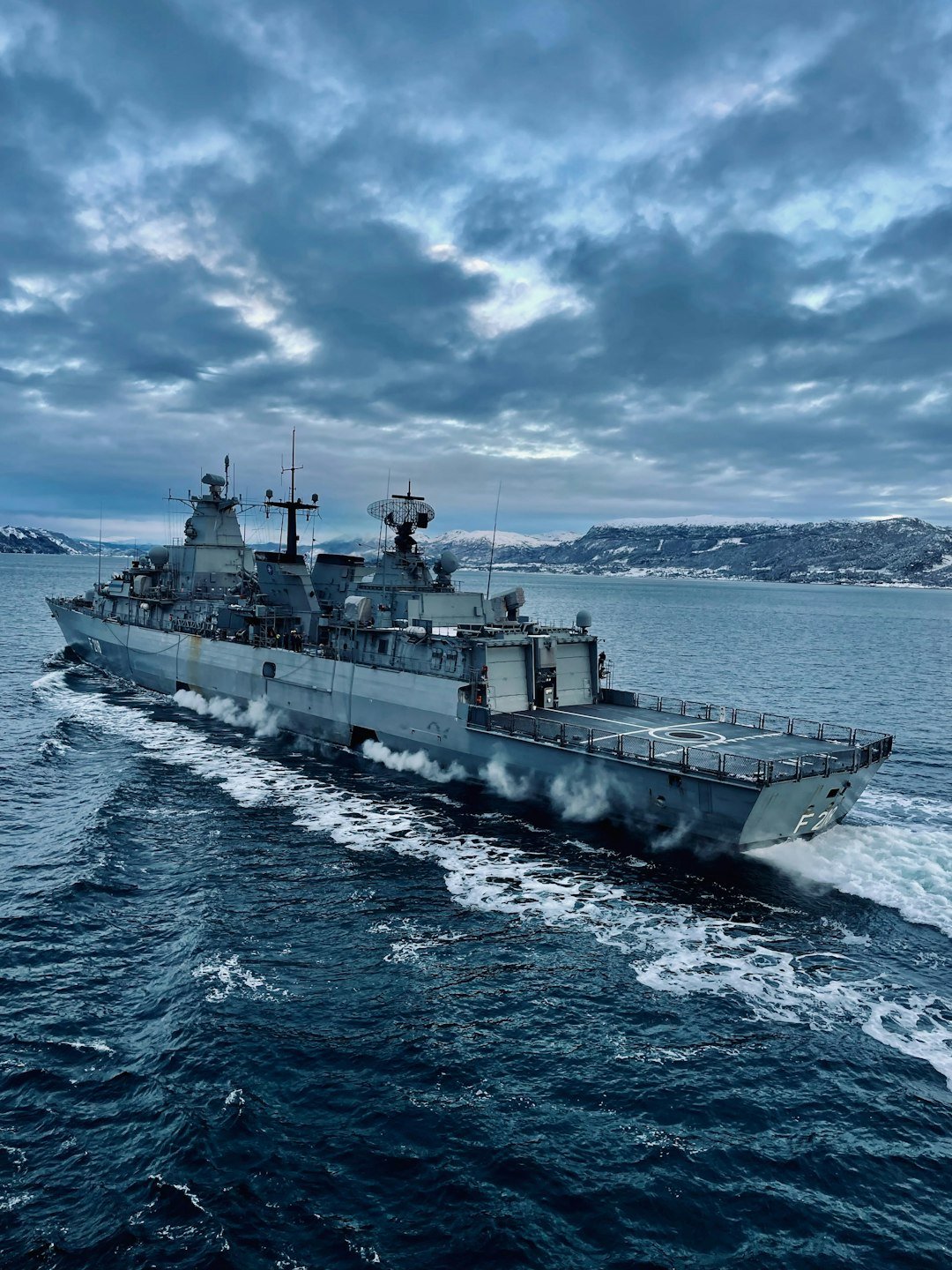
On 3 November 2026, the Ministry of Defence confirmed that the Indian Navy had rescued all 20 crew members of fishing vessel Azini after a coordinated operation lasting more than 48 hours. The rescue off Somalia’s north-eastern coast ended without casualties or injuries. The official account describes a mission-deployed warship, a maritime reconnaissance aircraft, persistent surveillance, calibrated non-kinetic measures and Marine Commandos brought in through a precision airdrop by an Indian Air Force C-17.
This is more than a dramatic rescue headline. It connects naval readiness, maritime domain awareness, inter-service coordination, international law and the economic importance of safe sea lanes—topics relevant to UPSC GS-II/GS-III, defence examinations, CAPF, State PSC and general awareness.
Azini operation: verified facts at a glance
| Fact | Officially reported position |
|---|---|
| Vessel | Fishing vessel Azini |
| Threat | Hijacked by armed pirates off north-eastern Somalia; possible use as a “mother ship” |
| Duration | More than 48 hours |
| Rescue outcome | All 20 crew members safe; no casualties or injuries |
| Indian platforms | Mission-deployed warship; maritime reconnaissance aircraft; IAF C-17; Marine Commandos |
| Operational method | Persistent surveillance, tracking, calibrated non-kinetic containment and tactical intervention |
| Official confirmation | Ministry of Defence / PIB, 3 November 2026 |
Primary source: Ministry of Defence release
Why a hijacked fishing vessel can become a wider threat
Somali piracy has historically involved small, fast craft operating near the coast. A captured fishing vessel or dhow can change the risk profile: pirates may use a larger, longer-range vessel as a floating base—commonly described as a mother ship—to carry fuel, equipment and smaller attack boats farther from shore. This can extend the threat toward merchant routes and make early identification and interdiction strategically important.
The Ministry’s Azini statement explicitly says the hijacked vessel could have been employed as a mother ship for further attacks on merchant shipping. That is the central security rationale behind the operation. The rescue protected the crew and prevented the vessel from being used to facilitate further piracy; the official release does not provide a detailed weapons inventory, pirate nationality or prosecution decision, so those should not be inferred.
How the operation combined multiple capabilities
1. Persistent maritime surveillance
A small vessel is difficult to find across a vast ocean area. The Navy’s warship and maritime reconnaissance aircraft worked together to locate the vessel and track its movements. The value of maritime domain awareness (MDA) lies in combining observations, communications and analysis to build a reliable picture of activity at sea. It is not simply radar coverage: it includes identifying, locating and understanding vessels and events that may affect maritime security.
2. Containment before tactical intervention
The official account says the platforms used calibrated non-kinetic measures to contain the vessel’s movement and prevent escape. “Non-kinetic” broadly refers to measures that do not rely on direct destructive force; in this release the exact techniques are not disclosed. The term should not be expanded into unverified claims about jamming, warning shots or specific manoeuvres.
3. Navy–Air Force coordination
Marine Commandos were augmented through a precision airdrop by an IAF C-17 aircraft. This demonstrates the ability to coordinate a maritime platform, airborne surveillance and strategic airlift for a specialised intervention. The C-17 is a heavy transport aircraft; its role here was the delivery of the commando element, not a combat strike.
4. Crew safety as the operational objective
The outcome reported by the Ministry was the safe release of 20 people, with no casualties or injuries. Human life and the security of the vessel were central to the mission. An anti-piracy response is not merely the capture of suspected pirates; it also requires protecting hostages, restoring control of the ship and managing the immediate maritime risk.
India’s maritime-security posture: why the Indian Ocean matters
India’s trade and energy imports depend heavily on Indian Ocean routes. Disruption in the Arabian Sea, Gulf of Aden or Red Sea approaches can affect shipping schedules, insurance, freight and supply chains—even when an incident occurs far from Indian territorial waters.
The Navy has maintained anti-piracy deployments in the Gulf of Aden since 2008 and expanded mission-based deployments as threats evolved. Operation Sankalp (2019) safeguards maritime trade and Indian-flagged vessels in the Gulf region; it is distinct from the Azini rescue.
The release calls India a “First Responder and Preferred Security Partner” in the Indian Ocean Region, reflecting an ambition to respond rapidly to distress, support partners and protect seafarers.
International law: UNCLOS and piracy
The United Nations Convention on the Law of the Sea (UNCLOS), adopted in 1982, provides the international legal framework for piracy. Article 100 requires states to cooperate to the fullest possible extent in repressing piracy on the high seas or outside any state’s jurisdiction. Articles 101–107 address the definition of piracy, seizure of pirate ships and related powers.
For examination purposes, distinguish piracy from armed robbery against ships. UNCLOS piracy generally concerns illegal violence, detention or depredation for private ends on the high seas or outside state jurisdiction, involving one ship against another. Incidents within territorial waters are generally classified under domestic law as armed robbery at sea rather than UNCLOS piracy. The location and legal jurisdiction therefore matter.
India enacted the Maritime Anti-Piracy Act, 2022 (Act No. 3 of 2023), which came into force on 22 February 2023. It gives effect to UNCLOS piracy provisions and provides for offences, arrest, seizure, designated courts and trial. Under Section 3, piracy may attract imprisonment up to life or a fine/both; where the act causes death or an attempt thereof, the statute provides death or life imprisonment. Section 4 covers attempts and aiding/abetting/conspiracy, with imprisonment up to ten years or fine or both. These provisions are legal context—not a statement that Azini suspects have been charged or prosecuted under the Act.
India Code: Maritime Anti-Piracy Act, 2022 (official PDF) · United Nations: Piracy under international law
Somalia: map-based static GK
- Country: Federal Republic of Somalia, in the Horn of Africa.
- Capital: Mogadishu.
- Currency: Somali shilling.
- President: Hassan Sheikh Mohamud.
- Prime Minister: Hamza Abdi Barre.
- Geographic relevance: Somalia borders the Gulf of Aden and Indian Ocean; its coastline lies near routes connecting the Indian Ocean to the Red Sea and Suez Canal.
For map questions, locate Somalia, the Horn of Africa, Gulf of Aden, Bab el-Mandeb, Red Sea, Arabian Sea and the western Indian Ocean. The Azini incident is a maritime-security event, not a conflict between India and Somalia.
What the Azini rescue demonstrates—and what it does not prove
The operation demonstrates long-range surveillance, coordinated maritime response, airlift support and the ability to protect non-Indian crew members in a distant area. It also illustrates why anti-piracy work depends on sustained presence, logistics, intelligence-sharing and inter-service planning rather than a single warship’s action.
It does not, by itself, establish that Somali piracy has been eliminated, that every commercial route is safe, or that the pirates’ legal fate is known. The Navy’s success is one operation within a wider regional security challenge. Continued monitoring, cooperation with maritime information centres and prosecution under applicable law remain important.
Prelims and mains revision pointers
- Azini: 20 crew; operation over 48 hours; no casualties; Navy warship + maritime reconnaissance + IAF C-17 + Marine Commandos.
- Mother ship: hijacked fishing vessel used as a platform to extend pirate operations.
- UNCLOS: 1982; Article 100 cooperation; Article 101 definition of piracy.
- India’s Maritime Anti-Piracy Act: Act 3 of 2023; in force 22 February 2023.
- Operation Sankalp (2019) is distinct from the Azini rescue.
- Somalia: Mogadishu; Somali shilling; President Hassan Sheikh Mohamud; PM Hamza Abdi Barre.
Possible MCQ areas
Expect factual questions on crew count, platforms, the mother-ship concept, the UNCLOS article on cooperation, the Indian anti-piracy law and Somalia’s location/capital/currency. In mains, the case can be used to discuss maritime domain awareness, blue-water capability, non-traditional security threats, inter-service jointness and India’s role as a security partner.
Related resources
Read Daily Current Affairs 3 November 2026, browse the Competitive Exams Preparation Hub, and use the UPSC & State PSC Preparation Hub for syllabus-based revision.