Chapter 9 – History for SSC: The Post-Gupta Period covers the Hunas, Pushyabhuti/Vardhana dynasty, Harshavardhana, Xuanzang, the Chalukyas of Badami, Pulakeshin II, important literary works and early medieval temple architecture. These notes include the chapter’s major details, chronology, static GK, exam relevance and likely MCQ areas for SSC CGL, CHSL, CPO, MTS and other competitive examinations.
Learning objectives
- Hunas and their incursions
- Pushyabhutis/Vardhanas and the political background
- Harshavardhana: reign, campaigns, religion, assemblies and literature
- Chalukyas of Badami, Pulakeshin II, the Aihole inscription and temple architecture
1. Introduction: the post-Gupta transition
By the late fifth and sixth centuries CE, Gupta imperial power had weakened. Several regional centres of power emerged, including the Hunas in parts of the north-west, Pushyabhutis at Thanesar, Maukharis at Kannauj, Gauda in Bengal and Chalukyas in the Deccan. The period saw political competition, regional state formation, religious patronage, Sanskrit literature and developments in temple architecture.
2. The Hunas
- The Hunas originated in Central Asia and entered the Indian subcontinent through its north-western approaches during the fifth and sixth centuries CE.
- Huna pressure began during the later Gupta period. Traditional exam summaries associate early attacks with Kumaragupta I’s period and resistance especially with Skandagupta; the precise chronology is complex.
- Skandagupta checked an early Huna advance, but later incursions increased as Gupta power weakened.
- Toramana and Mihirakula are among the best-known Huna rulers connected with Indian history.
- The Hunas contributed to political instability but were not the only cause of Gupta decline; succession disputes, regional powers and other economic and political pressures also mattered.
3. Pushyabhuti or Vardhana dynasty
- The dynasty is known as the Pushyabhuti or Vardhana dynasty. Pushyabhuti is traditionally named its founder; Thanesar, in present-day Haryana, was its early centre.
- Some exam summaries describe early Pushyabhutis as feudatories of the Guptas, although the precise relationship is not firmly established by surviving evidence.
- Prabhakaravardhana was an important early ruler and is associated in traditional accounts with the title Paramabhattaraka Maharajadhiraja.
- His children included Rajyavardhana, Harshavardhana and Rajyashri (also spelt Rajyasri/Rajyashri).
- Rajyashri married Grahavarman, a Maukhari ruler of Kannauj, strengthening ties between the two houses.
- Devagupta of Malwa attacked the Maukharis, killed Grahavarman and captured Rajyashri. Shashanka, ruler of Gauda in Bengal, was involved in the ensuing conflict.
- Rajyavardhana defeated the Malwa ruler but was later killed; traditional accounts blame Shashanka, although details rely on literary sources.
- Harshavardhana succeeded his brother and came to power in 606 CE.
4. Harshavardhana and his times
Harsha, also known as Harshavardhana and associated with the title Shiladitya, conventionally ruled from 606 to 647 CE. He was the best-known Pushyabhuti ruler.
Reign, campaigns and capital
- Harsha came to power in 606 CE after Rajyavardhana’s death. He sought to rescue his sister Rajyashri and avenge the deaths of his brother and brother-in-law.
- He allied with Bhaskaravarman, king of Kamarupa (broadly present-day Assam), against Shashanka of Gauda. The conflict was prolonged; Harsha’s influence in parts of Bengal expanded after Shashanka’s death and subsequent political changes.
- Harsha’s authority extended across much of northern India, including areas of present-day Haryana, Punjab, Uttar Pradesh, Bihar, Rajasthan and Odisha. Direct administration and political influence did not necessarily cover every area uniformly.
- He shifted his principal capital from Thanesar to Kannauj, which became a major centre of north Indian politics.
- His southward advance was checked near the Narmada by Pulakeshin II, the Chalukya ruler of Badami. Harsha did not conquer all India, and Kashmir was not under his direct control in the conventional account.
- Harsha died in 647 CE without a clearly established direct heir; his political consolidation did not endure as a unified empire.
Xuanzang (Hiuen Tsang) and Nalanda
- The Chinese Buddhist pilgrim Xuanzang, called Hiuen Tsang in older Indian exam material, began his journey to India in 629 CE.
- He travelled to study Buddhist philosophy and texts and spent time at Nalanda, a major centre of Buddhist learning in Bihar.
- His account is known as Da Tang Xiyu Ji, translated as Great Tang Records on the Western Regions; older exam books often call it Si-Yu-Ki. It records geography, customs, religious institutions and political conditions.
- Xuanzang visited Harsha’s court and is an important source for the period, though his perspective and purpose should be considered.
- Relations and diplomatic exchanges with the Tang court are also associated with this period.
Religion, assemblies and charity
- Traditional accounts say Harsha worshipped the Sun early in life and later patronised Shaivism and Buddhism. His patronage crossed religious traditions.
- In later years, he strongly supported Mahayana Buddhism while continuing support for other traditions.
- He held a major assembly at Kannauj associated with the exposition of Mahayana Buddhism.
- Harsha is associated with a quinquennial charitable gathering at Prayaga (modern Prayagraj, formerly Allahabad), where he distributed wealth and gifts to religious communities and the poor. Xuanzang’s account is an important source for this tradition.
- Popular accounts sometimes give exact figures for daily feeding, arrests and alleged conspiracies around the Kannauj assembly. Treat such details cautiously unless a reliable source is specified.
Literature and scholars
- Harsha is traditionally credited with three Sanskrit plays: Ratnavali, Priyadarshika (also spelt Priyadarsika) and Nagananda.
- Banabhatta, the celebrated court poet, wrote Harshacharita, a Sanskrit prose biography of Harsha, and Kadambari, a major prose romance.
- Jayasena and Haridatta are named in some traditional study materials among scholars connected with Harsha’s court or patronage.
- Nalanda was a major centre of education in Harsha’s time. Its growth involved patronage across multiple rulers and generations.
Harsha: high-value facts
- Reign: 606–647 CE (conventional chronology); dynasty: Pushyabhuti/Vardhana.
- Early capital: Thanesar; later principal capital: Kannauj.
- Key ally: Bhaskaravarman of Kamarupa; rival in Bengal: Shashanka of Gauda.
- Chinese pilgrim: Xuanzang/Hiuen Tsang; important centre of learning: Nalanda.
- Plays attributed to Harsha: Ratnavali, Priyadarshika, Nagananda.
- Banabhatta: Harshacharita and Kadambari.
- Harsha’s advance south was checked near the Narmada by Pulakeshin II. His death in 647 CE was followed by political fragmentation.
5. Chalukyas of Badami (Vatapi)
The Badami Chalukyas were a major Deccan power. Their capital was Vatapi, now Badami in Karnataka. Their period is important for the Harsha–Pulakeshin II rivalry and for early medieval temple architecture.
- Chalukya dynastic traditions name Jayasimha among early ancestors; Pulakeshin I established the dynasty’s power at Vatapi and is commonly treated as the first major ruler of the line.
- Pulakeshin I is traditionally said to have performed an Ashvamedha sacrifice.
- Kirtivarman I succeeded Pulakeshin I; exam chronologies commonly give 566 CE for his accession.
- Pulakeshin II, whose reign began around 610 CE (some older summaries give 608 CE), was the greatest and best-known early Badami Chalukya ruler.
- He checked Harsha’s southward expansion near the Narmada and campaigned against neighbouring powers including the Kadambas and Pallavas. The Chalukya–Pallava rivalry continued beyond his reign.
- Ravikirti, Pulakeshin II’s court poet, composed the celebrated Sanskrit Aihole inscription, dated to 634 CE, which praises the king and is a key historical source.
- Xuanzang also travelled through the Deccan during this broad period.
- The early Badami Chalukya dynasty is generally dated from the sixth to the eighth century CE; exact boundaries vary by reference.
Chalukya architecture and temples
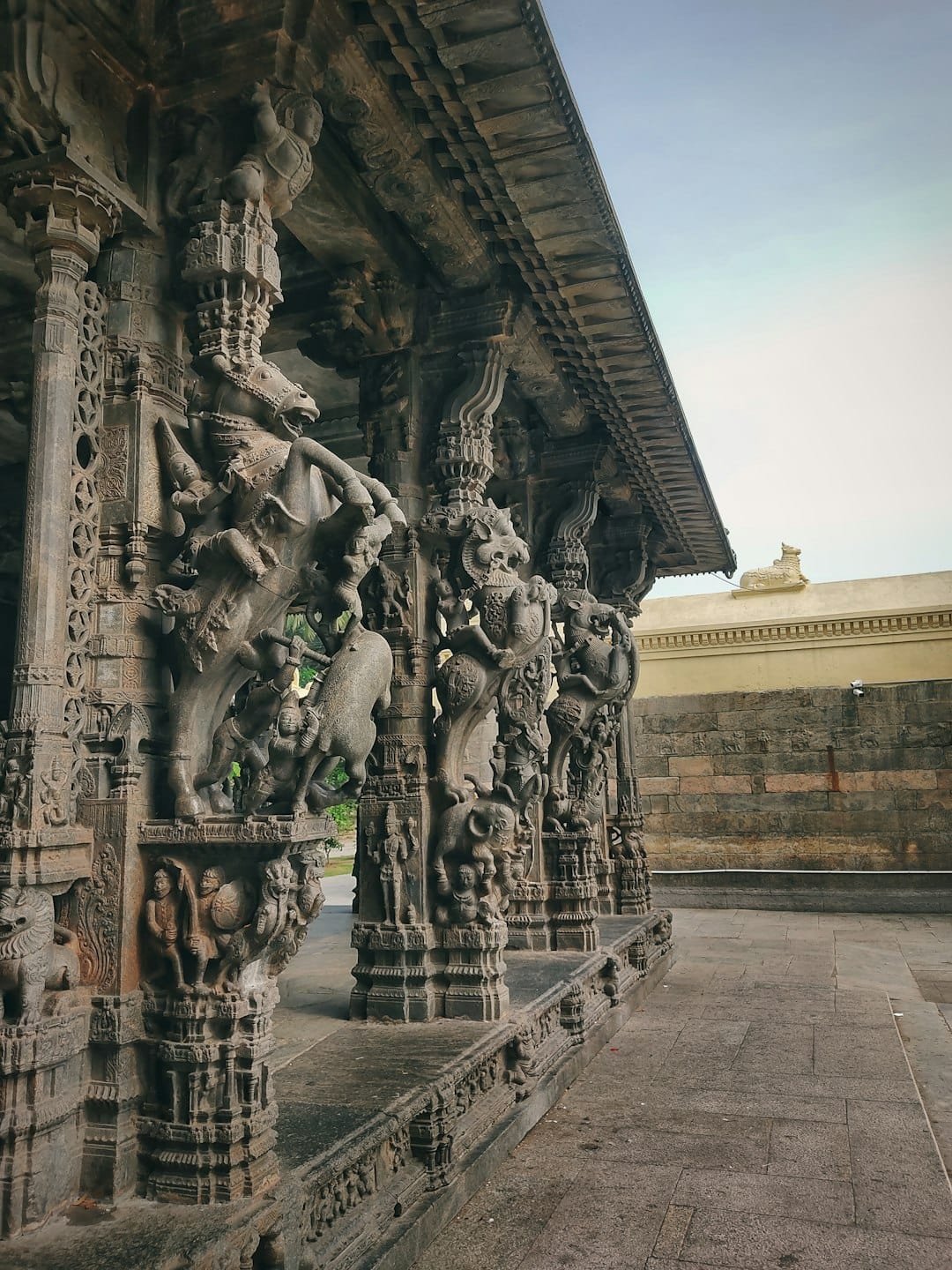
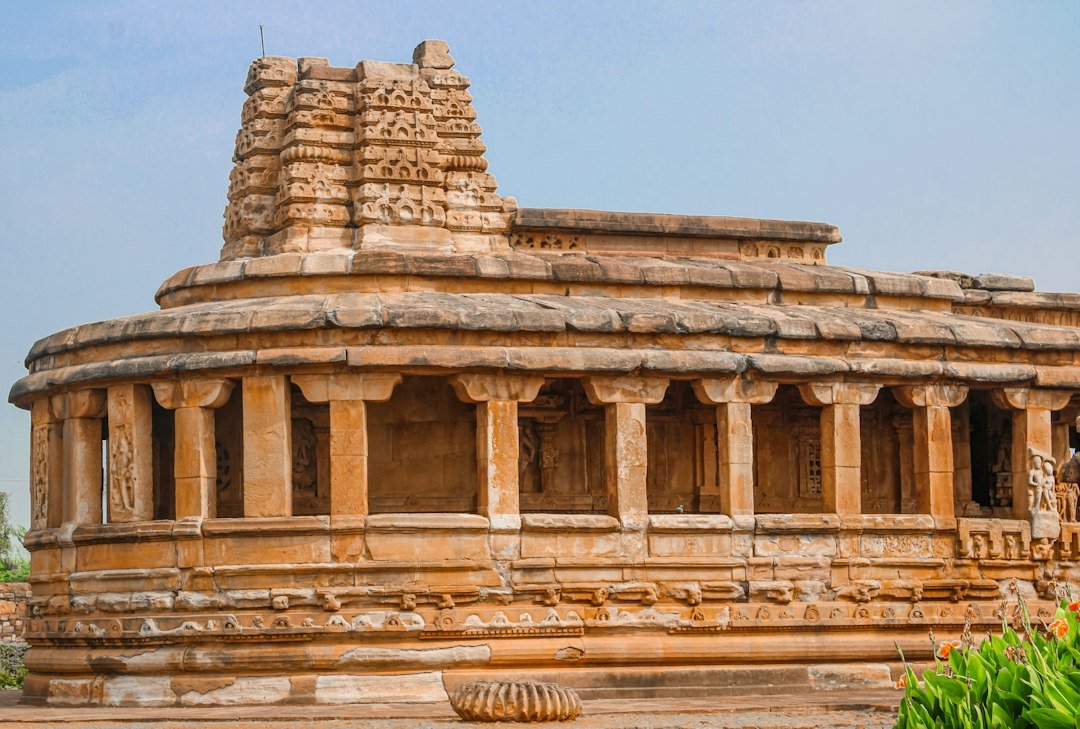
- Aihole in Karnataka is often called the “cradle” or laboratory of Indian temple architecture because it contains many experimental temple forms.
- Badami/Vatapi and Pattadakal are other major Chalukya architectural centres. Buildings show northern Nagara and southern Dravida elements; later classifications often discuss a Deccan/Vesara synthesis.
- The Virupaksha Temple at Pattadakal is among the best-known monuments associated with the Chalukya tradition.
- Other sites named in study materials include Vishnu temples at Badami/Vatapi, the Lad Khan and Durga temples at Aihole, and the Kashi Vishveshvara Temple at Lakkundi. The Lakkundi temple belongs to a later Chalukya phase, so it should not be attributed casually to Pulakeshin II’s reign.
- Not every monument at Aihole, Badami or Pattadakal dates to one king or one short period; the sites developed over time.
6. Chronology for revision
| Person/event | Date / significance |
|---|---|
| Huna incursions | Fifth–sixth centuries CE |
| Skandagupta | Mid-fifth century; resisted early Huna pressure |
| Harsha’s accession | 606 CE |
| Xuanzang’s journey | Began in 629 CE |
| Aihole inscription | 634 CE; Ravikirti and Pulakeshin II |
| Harsha’s death | 647 CE |
7. SSC exam relevance and possible MCQ areas
- Hunas: Central Asian origin, fifth–sixth-century incursions, Toramana, Mihirakula and Skandagupta’s resistance.
- Pushyabhuti/Vardhana dynasty and Thanesar.
- Prabhakaravardhana, Rajyavardhana, Harshavardhana and Rajyashri.
- Grahavarman and the Maukharis; Devagupta of Malwa; Shashanka of Gauda.
- Harsha’s accession and conventional reign dates; Bhaskaravarman and Kamarupa.
- Thanesar to Kannauj: Harsha’s capital shift.
- Xuanzang/Hiuen Tsang, his travel account, Nalanda and the Tang dynasty.
- Harsha’s three plays and Banabhatta’s Harshacharita and Kadambari.
- Prayaga charitable assembly and the Kannauj religious assembly.
- Pulakeshin II, Badami Chalukyas and the Narmada frontier.
- Ravikirti, Sanskrit and the Aihole inscription.
- Aihole, Badami, Pattadakal and early Chalukya temple architecture.
8. Static GK connections
- Thanesar: Haryana; early Pushyabhuti centre.
- Kannauj: Uttar Pradesh; major political centre under Harsha.
- Kamarupa: kingdom broadly associated with Assam.
- Nalanda: Bihar; renowned ancient Buddhist learning centre.
- Badami/Vatapi, Aihole and Pattadakal: Karnataka; Chalukya-era political and architectural centres.
- Narmada River: central India; associated with the frontier where Harsha’s southern expansion was checked.
9. Sources and historical accuracy
Key sources include Banabhatta’s Harshacharita, Xuanzang’s travel account, inscriptions such as Ravikirti’s Aihole inscription, coins and archaeological evidence. Court literature can praise rulers and present events from a particular viewpoint; historians compare it with inscriptions and material evidence. Dates and details in older exam guides sometimes differ, so remember standard exam associations while recognising where the evidence is debated.
10. Chapter summary
- The Gupta decline created space for regional states; the Hunas were one pressure among several.
- The Pushyabhutis rose at Thanesar, and Harsha became ruler in 606 CE.
- Harsha moved his principal capital to Kannauj, allied with Bhaskaravarman and extended influence across much of northern India.
- Xuanzang’s account, Nalanda, Prayaga, Harsha’s plays and Banabhatta’s writings are central cultural topics.
- Pulakeshin II of the Badami Chalukyas checked Harsha near the Narmada.
- The Aihole inscription, Ravikirti and the temple centres of Aihole, Badami and Pattadakal are high-value examination topics.
Related History chapters
- Chapter 6: The Pre-Gupta Period
- Chapter 7: The Sangam Age
- Chapter 8: The Gupta Empire
- Complete History for SSC CGL hub
Revision strategy: Memorise the ruler–dynasty–source–monument pairs, revise the chronology, then practise factual MCQs.