Updated: 23 November 2026 | Reading time: 8–10 minutes
The inauguration of the National Disaster Response Force’s 12th Battalion campus at Itanagar is more than a new institutional facility. It addresses a practical challenge in disaster management: how to place trained personnel, equipment and coordination capacity closer to regions where earthquakes, floods, landslides and severe weather can disrupt transport and communications. The campus is intended to support Arunachal Pradesh, the wider Northeast and adjoining regions, while also becoming a training location for the State Disaster Response Forces of all eight northeastern states.
What happened at Itanagar?
Union Home Minister and Minister of Cooperation Amit Shah inaugurated the campus of the NDRF’s 12th Battalion at Itanagar, the capital of Arunachal Pradesh. According to the Ministry of Home Affairs release, the campus has been constructed with earthquake-resistant buildings and is designed to act as a regional disaster-response centre. The facility will serve not only Arunachal Pradesh and the Northeast but also several neighbouring regions when natural disasters require additional support.
A major feature is the planned training of State Disaster Response Force personnel from all eight northeastern states. This matters because state-level responders are often the first organised teams to reach an affected district. A shared training environment can improve interoperability, common operating procedures, rescue skills and coordination between state and central forces.
The campus also includes an Olympic-size swimming pool and a diving tank for specialised personnel training. The release notes that the pool will also be made available to swimmers from Itanagar and elsewhere in Arunachal Pradesh. The facility therefore has a public-facing sports component alongside its primary disaster-management role.
Why the Northeast needs specialised disaster-response capacity
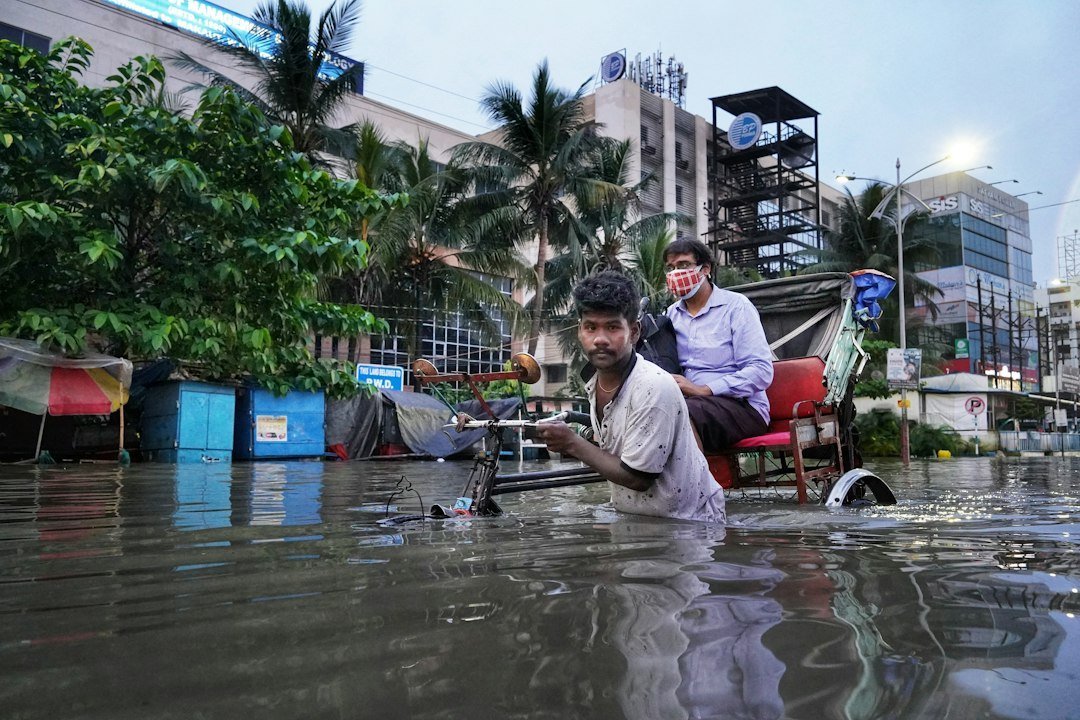
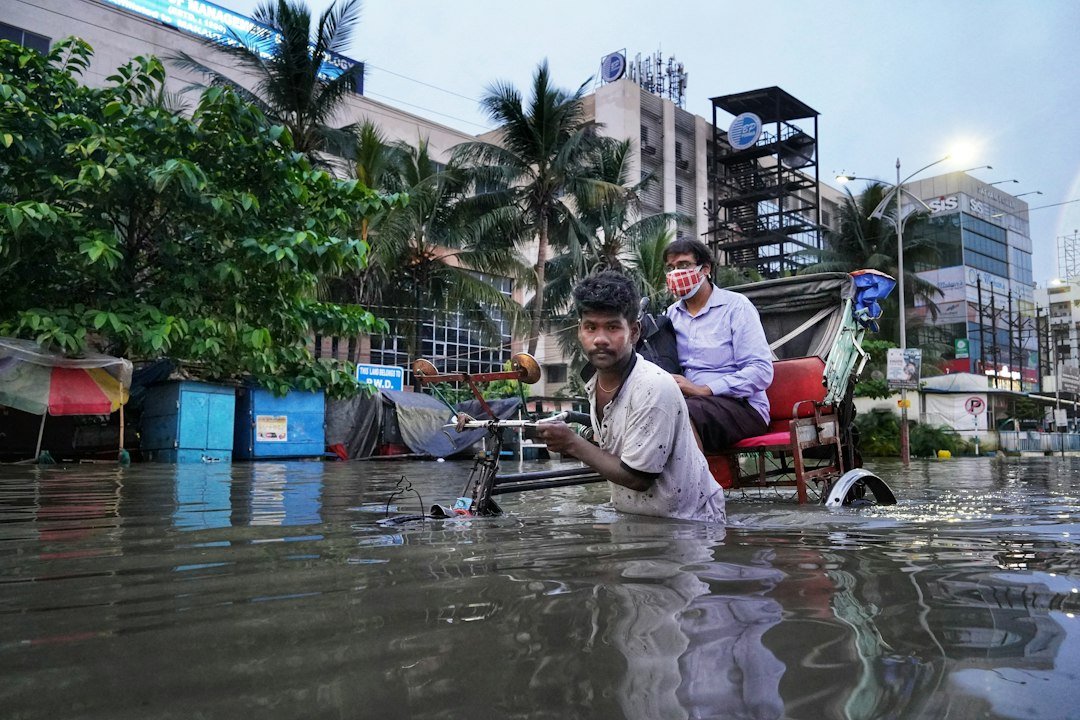
The Northeast’s risk profile is shaped by its terrain, river systems, rainfall patterns and seismic setting. Mountain roads can be blocked by landslides; intense rainfall can trigger flash floods; rivers can rise quickly; and earthquakes can damage buildings, bridges and essential services. In remote locations, the time required to move rescue teams and heavy equipment can be as important as the technical quality of the response itself.
Itanagar’s location gives the campus a regional role. Training state teams locally can build a stronger first-response network, while NDRF units can provide specialist support for complex incidents. The objective is not to replace local administration or state forces. It is to make the response chain more coordinated: local volunteers and district officials identify needs, state teams begin immediate action, and specialised national teams reinforce the operation where required.
What the operational figures tell us
The Ministry of Home Affairs release states that NDRF has carried out more than 11,000 rescue and relief operations and saved over 1.61 lakh lives. These are cumulative figures reported by the Ministry and should be quoted with that attribution. They demonstrate the scale of the Force’s deployment, but they also point to the importance of prevention and preparedness. A successful disaster-management system is not measured only by the number of people rescued after an event; it is also judged by how many people are evacuated before impact, how quickly essential services recover and whether future exposure is reduced.
The same release says the NDRF is deployed at more than 70 locations across the country. It also highlights a change in cyclone-warning capability: advance warnings that were previously available 24–48 hours ahead can now be issued up to seven days in advance, according to the statement. Early warnings are useful only when they reach people in a form they understand and are connected to clear evacuation plans, shelters, transport and local responders.
How India’s disaster-management framework is organised
The institutional framework rests on the Disaster Management Act, 2005. The National Disaster Management Authority (NDMA) provides national policy direction and guidelines. The NDRF is the specialised national response force. State Disaster Management Authorities and State Disaster Response Forces operate at state level, while district authorities and local administrations translate plans into action on the ground. The Ministry of Home Affairs coordinates important aspects of the national disaster-management system.
The NDRF was raised on 19 January 2006 after the Disaster Management Act was enacted. The Force’s official background page says it initially had eight battalions and has since expanded to 16 battalions, each comprising 1,149 personnel. A separate NDRF Raising Day release records its presence at 68 locations, including 28 Regional Response Centres and 24 Tactical Pre-positioning Locations. These figures are sourced from the Force’s official material and may change as deployments and organisational arrangements are updated.
One distinction is essential for examinations: the National Disaster Response Force is a trained operational force, whereas the National Disaster Response Fund is a financial mechanism under Section 46 of the Disaster Management Act. The two share an abbreviation but perform different functions.
From relief after impact to risk reduction before impact
India’s disaster-management approach increasingly emphasises the full disaster-risk cycle. Mitigation reduces the potential impact of hazards through safer infrastructure, land-use planning and protective measures. Preparedness includes training, mock drills, equipment, warning systems and evacuation plans. Response covers search, rescue, medical assistance and immediate relief. Recovery includes restoring housing, livelihoods, public services and infrastructure, ideally in a way that reduces future risk.
The Itanagar campus fits into the preparedness and response parts of this cycle. Earthquake-resistant construction at the facility is an example of risk-informed infrastructure. Training for SDRFs can improve the quality of the first organised response. Regional positioning can reduce mobilisation time. None of these measures eliminates natural hazards, but they can reduce vulnerability and the severity of consequences.
Why the 2026 capacity-building focus matters
The Ministry’s release identifies 2026 as the Year of Capacity Building for NDRF. Capacity building is not limited to adding buildings or equipment. It includes specialised skills, incident command, communications, medical support, technical rescue, coordination with local agencies and learning from past operations. In a multi-hazard region, responders may need to operate in difficult terrain, unstable structures, fast-moving water and areas where roads or mobile networks are unavailable.
The NDRF’s international operations in countries including Japan, Nepal, Türkiye and Sri Lanka also show that specialised disaster response can contribute to humanitarian assistance beyond national borders. Such deployments require disciplined logistics, technical capability and coordination with the host country and international relief agencies.
Exam relevance
- UPSC and State PSC: Disaster Management Act, NDMA, NDRF, SDRF, disaster-risk reduction, early-warning systems, seismic zones, floods and landslides.
- Defence examinations: Civil-military coordination, humanitarian assistance and disaster relief (HADR), logistics in difficult terrain and regional preparedness.
- Railways and SSC: Headquarters and ministry associations, establishment year, number of battalions, operational statistics and basic disaster terminology.
- Teaching and research: Community preparedness, school safety, risk communication, local volunteer networks and resilience education.
Static GK connection
Country profile — India: President: Droupadi Murmu; Prime Minister: Narendra Modi; capital: New Delhi; currency: Indian Rupee (INR).
The Disaster Management Act was enacted on 26 December 2005. The NDRF was raised on 19 January 2006. The NDRF functions under the Ministry of Home Affairs. It should not be confused with the National Disaster Response Fund, which supplements state disaster-response funding in severe disasters when the State Disaster Response Fund is insufficient. Arunachal Pradesh’s capital is Itanagar. The eight northeastern states are Arunachal Pradesh, Assam, Manipur, Meghalaya, Mizoram, Nagaland, Sikkim and Tripura.
Possible MCQ areas
- Which Act provides for the constitution of the NDRF?
- In which year was the NDRF raised?
- Which ministry administers the NDRF?
- How many northeastern SDRFs are expected to receive training at the Itanagar campus?
- What is the difference between NDRF and the National Disaster Response Fund?
- How many rescue and relief operations and lives saved are cited in the Ministry’s release?
Official sources
Read the Ministry of Home Affairs / PIB release on the 12th Battalion campus, the NDRF official About Us page, and the NDRF Raising Day background note. For the statutory framework, consult the National Disaster Management Authority.
Related reading
Continue with the 23 November current-affairs briefing, the Defence and Police Exams Preparation Hub, the UPSC and State PSC Preparation Hub and the Competitive Exams Preparation Hub. The article is an educational explainer; always use the latest official instructions for operational or recruitment matters.