Updated: 20 November 2026 | Reading time: approximately 8–10 minutes
India is set to host a new form of engagement within the Shanghai Cooperation Organisation (SCO): the first SCO Civilisational Dialogue Forum. Prime Minister Narendra Modi is scheduled to inaugurate the three-day forum at Purana Qila, New Delhi, at around 5:30 PM on 20 November 2026. The programme continues until 22 November and is expected to bring scholars, academics, experts and cultural representatives together to discuss the interconnected civilisational heritage of SCO countries.
The development matters because the SCO is usually discussed in examinations through security, regional connectivity, counter-terrorism and Eurasian geopolitics. The new forum adds a cultural and academic dimension. It is useful to understand what the forum is intended to do, how it fits within the SCO framework and why India has an interest in shaping this dialogue.
What has been announced?
The Prime Minister’s Office announced on 19 November that the Prime Minister would inaugurate the first SCO Civilisational Dialogue Forum on 20 November at Purana Qila. The forum is scheduled for 20–22 November 2026. Its stated purpose is to celebrate the region’s interconnected civilisational heritage, strengthen people-to-people ties and promote cross-cultural dialogue and cooperation.
The initiative follows a proposal made by the Prime Minister at the SCO Summit in Tianjin, China, in 2025 to establish a dedicated platform for civilisational dialogue under the SCO framework. The proposal was subsequently welcomed in the Bishkek Declaration. The sequence is significant: an idea advanced at a leaders’ summit has moved into a dedicated institutional programme.
At the time of writing, the inauguration is a scheduled event. It should not be described as already completed until an official post-event statement confirms it.
Why does a civilisational forum matter?
International organisations are not sustained only through government-to-government meetings. Academic exchange, cultural understanding, historical research, tourism, educational links and professional networks can create a wider foundation for cooperation. The forum is designed to provide such a space for the SCO region.
The member countries have different political systems, languages, religions, historical experiences and development priorities. Their societies have nevertheless interacted through trade routes, migration, scholarship, religious movements, artistic traditions and the movement of ideas across Central, South and East Asia. A civilisational dialogue can examine these connections without replacing the SCO’s formal political or security mechanisms.
For India, the platform can highlight its historical connections with Central Asia and the wider Eurasian region. It also allows India to present its cultural institutions, scholarship and plural traditions in a multilateral setting. For the organisation, the forum can broaden public understanding of regional cooperation beyond summit declarations.
Background: how the SCO began
The Shanghai Cooperation Organisation was established on 15 June 2001 in Shanghai, China. Its founding members were China, Russia, Kazakhstan, Kyrgyzstan, Tajikistan and Uzbekistan. The organisation grew out of the earlier Shanghai Five process, which had focused on confidence-building and reduction of military tensions in border areas.
The SCO Charter was signed in June 2002 and entered into force on 19 September 2003. Over time, the organisation expanded its agenda to include regional security, counter-terrorism, economic cooperation, connectivity, culture and people-to-people exchanges.
India and Pakistan became full members in 2017. Iran joined as a full member in 2023, and Belarus became a member in 2024. The SCO now has ten member states: Belarus, China, India, Iran, Kazakhstan, Kyrgyzstan, Pakistan, Russia, Tajikistan and Uzbekistan. Its official languages are Chinese and Russian.
Important SCO institutions
Council of Heads of State: This is the highest decision-making body and meets annually to consider major issues and set the organisation’s priorities.
Council of Heads of Government: This body deals principally with economic and other cooperation matters and approves relevant budgets and programmes.
SCO Secretariat: The permanent Secretariat is located in Beijing, China. It supports the organisation’s administrative and coordination work.
Regional Anti-Terrorist Structure (RATS): RATS is based in Tashkent, Uzbekistan. It supports cooperation against terrorism, separatism and extremism. Its location is a common static-GK question.
Official languages: Chinese and Russian. English is not listed as an official language of the organisation.
India’s place in the organisation
India became a full member in 2017, after years of participation as an observer. Membership gives India a seat in a forum that brings together major Eurasian powers and Central Asian states. The SCO provides a platform for discussions on regional stability, connectivity, counter-terrorism and economic engagement.
India’s participation also involves practical diplomatic considerations. It seeks stronger links with Central Asia, supports regional cooperation against terrorism and engages with partners on trade, energy, transport and cultural ties. At the same time, the organisation includes countries with differing bilateral relationships and strategic priorities. India therefore uses the SCO as one of several multilateral channels, alongside the United Nations, BRICS, G20 and other regional partnerships.
Country facts for quick revision
India: Prime Minister Narendra Modi; capital New Delhi; currency Indian rupee (INR). India became a full SCO member in 2017.
China: President Xi Jinping; capital Beijing; currency renminbi (RMB), commonly called the yuan. The SCO was established in Shanghai, China, in 2001, and its permanent Secretariat is in Beijing.
Why Purana Qila is a relevant venue
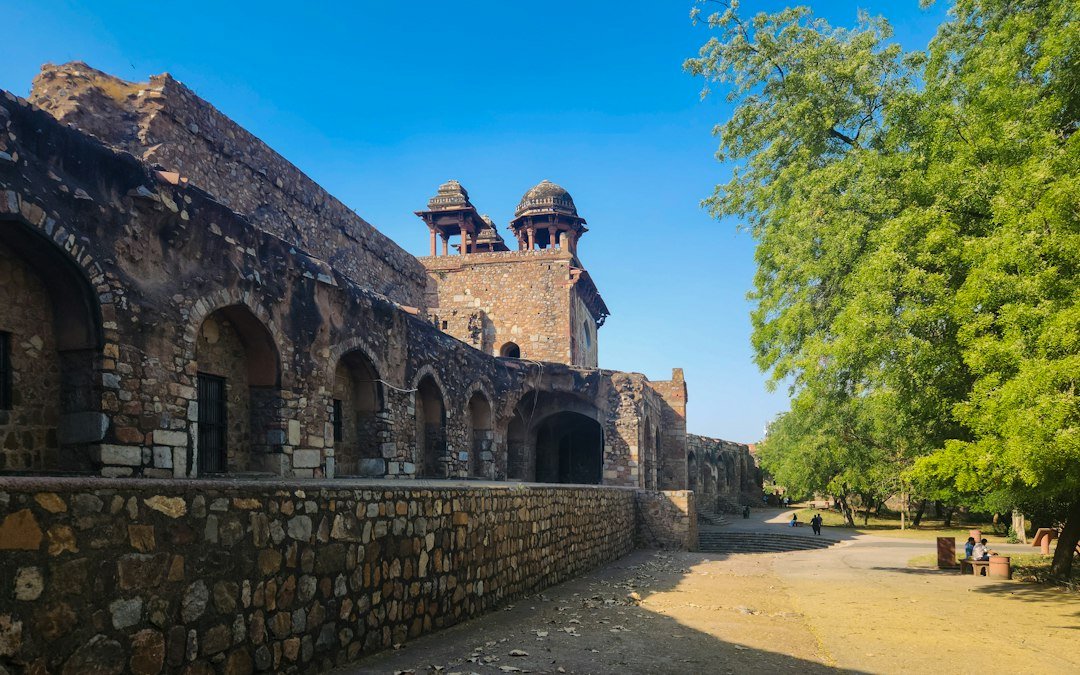
Purana Qila is one of Delhi’s historic fortified complexes. Its use as the venue gives the forum a setting associated with the long history of cultural and political interaction in the subcontinent. The choice of a heritage site is consistent with the programme’s emphasis on civilisational connections, although the official announcement—not assumptions about the venue—should remain the basis for reporting the event’s objectives.
For history preparation, Purana Qila is associated with the medieval history of Delhi and the architectural patronage of Humayun and Sher Shah Suri. The complex includes the Qila-i-Kuhna Mosque and Sher Mandal. The site is frequently discussed in relation to the sixteenth-century transition between the Mughal and Sur periods.
How to understand the forum without confusing it with other SCO activities
The forum is a cultural and academic dialogue initiative. It is not a new military command, a treaty, a free-trade agreement or a replacement for the SCO Secretariat or RATS. It does not, by itself, create a new membership category. Its value lies in providing a structured space for discussion of shared heritage and social connections.
This distinction is important in objective examinations. Questions may ask candidates to identify the organisation’s founding year, headquarters, member states, official languages or RATS location. A descriptive question may ask how people-to-people diplomacy complements traditional security and economic cooperation.
Exam relevance: what to remember
- Organisation: Shanghai Cooperation Organisation.
- Established: 15 June 2001, Shanghai, China.
- Current membership: 10 member states.
- India became a full member: 2017.
- Belarus joined: 2024.
- Official languages: Chinese and Russian.
- Secretariat: Beijing, China.
- RATS: Tashkent, Uzbekistan.
- Forum: first SCO Civilisational Dialogue Forum, scheduled for 20–22 November 2026.
- Venue: Purana Qila, New Delhi.
Possible MCQ areas
- In which year was the SCO established? 2001.
- Which two countries became full members in 2017? India and Pakistan.
- Where is the SCO Secretariat located? Beijing.
- Where is the SCO Regional Anti-Terrorist Structure based? Tashkent.
- What are the official languages of the SCO? Chinese and Russian.
- How many member states does the SCO have following Belarus’s accession? Ten.
How the forum complements the SCO’s wider agenda
The SCO’s original emphasis on border confidence-building and regional security has evolved into a wider agenda. Its charter and subsequent declarations cover cooperation in political, economic, scientific, cultural and humanitarian fields. The civilisational forum belongs to this broader people-to-people dimension. It is useful to distinguish this from the work of RATS: RATS is a specific institutional mechanism for counter-terrorism cooperation, whereas a civilisational dialogue is designed for academic and cultural exchange.
In practical terms, dialogue can take place through universities, museums, research institutions, cultural bodies, libraries and professional networks. Such exchanges can help participants study shared heritage and understand how ideas, technologies, languages and artistic traditions travelled across regions. The forum may also create opportunities for collaborative research and future cultural programmes, but candidates should not assume that a new treaty or permanent institution has been created unless the SCO formally announces one.
India’s participation in the SCO also requires a balanced understanding of its strategic context. The organisation includes states with different interests and bilateral relationships. India’s engagement therefore operates alongside other platforms and partnerships. It provides a channel for dialogue on Central Asia and Eurasia, but it does not replace India’s bilateral diplomacy or its engagement through the UN, G20, BRICS and other forums.
For answer writing, a balanced conclusion is more useful than a celebratory description: cultural diplomacy can deepen mutual understanding and build social links, while the impact of a new forum will depend on regular participation, institutional follow-through and practical outcomes. The scheduled 2026 meeting is the first step; its long-term significance should be judged by subsequent programmes and cooperation.
Official sources and further reading
The Prime Minister’s Office announcement is the primary source for the forum’s dates, venue and stated objectives: PIB announcement dated 19 November 2026. For the organisation’s history, membership and official languages, consult the official SCO overview and its history FAQ.
Continue with the UPSC and State PSC Preparation Hub, the Current Affairs Hub and the Competitive Exams Preparation Hub. The Daily Current Affairs 20 November 2026 roundup places this development alongside other national and international updates.
Editorial note: This explainer distinguishes the announced programme from outcomes that have not yet been officially reported. Recheck the official SCO and PIB websites for any post-inauguration statement or programme details.