Published: 18 November 2026 | Reading time: 8–9 minutes
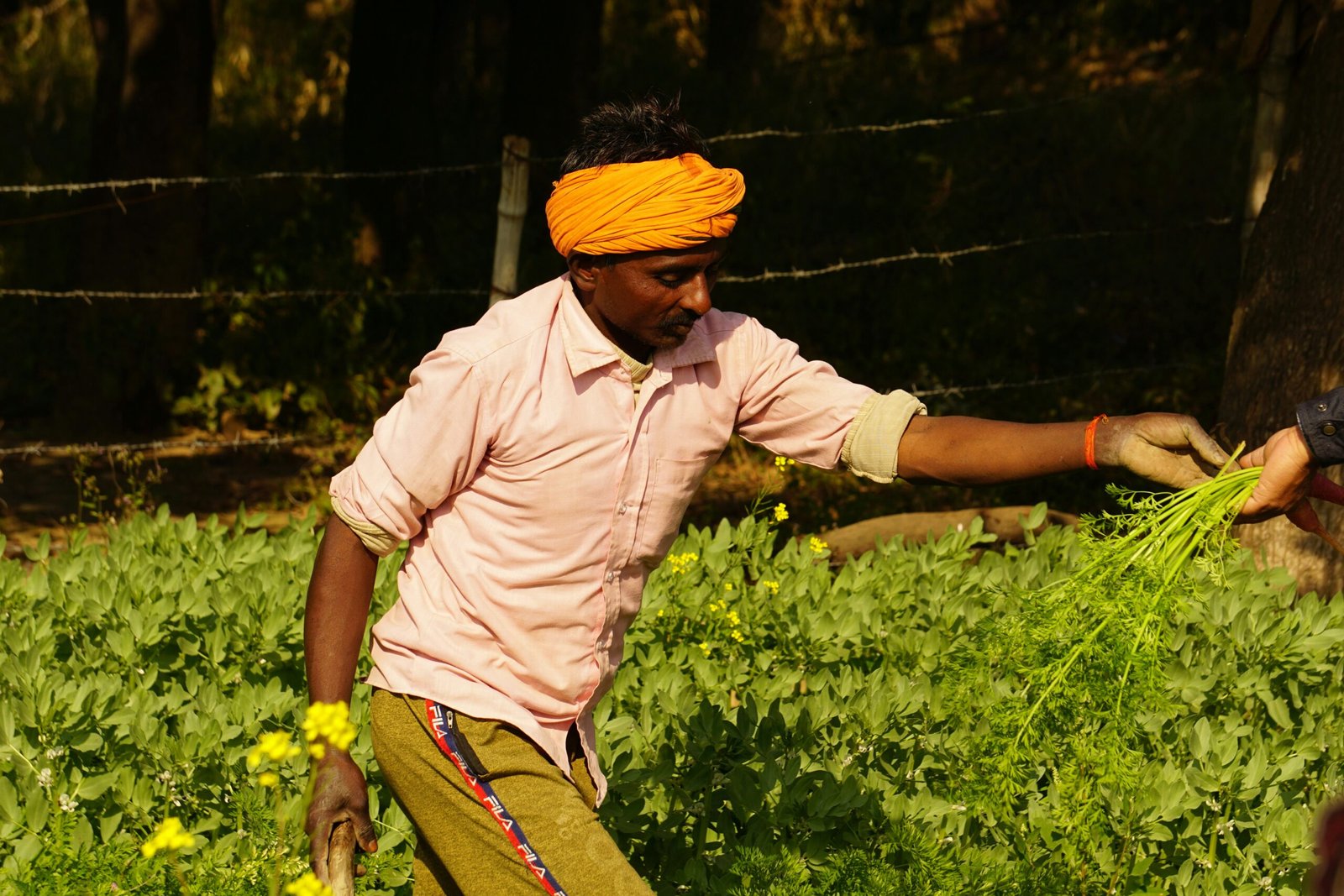
Illustrative image credit: Shruti Singh via Unsplash.
India’s horticulture sector is projected to produce 386.915 million tonnes in 2025–26, according to the Third Advance Estimates released by the Department of Agriculture and Farmers’ Welfare on 17 November 2026. The estimate is 4.36% higher than the 370.738 million tonnes recorded in 2024–25. The noteworthy part is not only the record output: production is expected to rise even though the total area under horticultural crops is estimated to have declined from 301.36 lakh hectares to 297.21 lakh hectares. This makes the data useful for understanding agricultural diversification, productivity, nutrition and farm incomes.
What happened?
Union Agriculture and Farmers’ Welfare Minister Shivraj Singh Chouhan released the Third Advance Estimates of area and production of horticultural crops for 2025–26. The Department compiled the estimates using information received from States, Union Territories and other government agencies. The headline estimate is 3,869.15 lakh tonnes, compared with 3,707.38 lakh tonnes in 2024–25: an increase of 161.77 lakh tonnes, or 4.36%.
These are advance estimates, not the final settled production statistics. As more complete information becomes available, estimates can be revised. This distinction is important when comparing the latest figure with final data from earlier years.
Why it matters: more output from a smaller area
The estimated horticulture area fell by about 4.15 lakh hectares, while output increased by 161.77 lakh tonnes. In broad terms, the figures suggest an improvement in output per unit of area. Using the headline area and production estimates, the implied average output is approximately 13.02 tonnes per hectare in 2025–26, compared with about 12.30 tonnes per hectare in 2024–25. This is a simple calculation from the published totals, not an official productivity indicator for every crop; horticulture includes crops with very different yields and cultivation cycles.
The increase matters for three connected reasons. First, fruits and vegetables contribute to dietary diversity and nutritional security. Second, higher marketable output can create opportunities for growers, traders, cold-chain operators, processors and exporters, provided storage, transport and market access keep pace. Third, the shift towards high-value crops can diversify farm income, although farmers also face price volatility, perishability, weather risks and input costs.
Crop-wise data: where the growth is coming from
1. Fruits
Fruit production is estimated at 1,230.66 lakh tonnes in 2025–26, up from 1,176.49 lakh tonnes in 2024–25. The increase is 54.18 lakh tonnes, or 4.60%. The PIB release identifies banana, mango, papaya, apple, pomegranate and jackfruit as important contributors to the improved estimate. Fruit crops are particularly sensitive to weather, harvesting windows, grading, packaging and cold-chain availability. A higher farm output does not automatically translate into higher farmer income if a large share is lost after harvest or reaches the market at the same time.
2. Vegetables
Vegetable production is projected to reach 2,272.68 lakh tonnes, compared with 2,177.97 lakh tonnes in the previous year, an increase of 4.35%. The area under vegetables is estimated to rise from 117.91 lakh hectares to 119.31 lakh hectares. The release attributes the increase to crops including potato, tomato, brinjal, bottle gourd, cucumber, cabbage, beans and peas.
Potato production is estimated at 655.70 lakh tonnes, up 11.95% from 585.71 lakh tonnes. Tomato output is projected at 214.11 lakh tonnes against 205.99 lakh tonnes. Onion production is estimated at 288.96 lakh tonnes. These figures are useful because potato, onion and tomato are important in household food consumption and often feature in discussions of food-price volatility and supply management.
3. Flowers
Flower production is projected to rise from 42.65 lakh tonnes to 48.82 lakh tonnes, a growth of about 14.45%. The area under flower cultivation is estimated at 4.10 lakh hectares. Floriculture connects agriculture with domestic ceremonies, landscaping, tourism, retail and export markets. Unlike staple crops, its market is highly sensitive to timing, quality, transport and demand cycles.
4. Plantation crops
Combined production of plantation crops—including arecanut, coconut, cashew, betel leaves and cocoa—is estimated to increase by 7.56% to 182.64 lakh tonnes. Plantation crops are important in several regional agricultural economies and support processing and value-added industries. The estimate also illustrates why horticulture is broader than fruit and vegetable farming.
5. Spices and medicinal plants
The total area under spices in 2025–26 is estimated at 47.56 lakh hectares, with production projected at 123.54 lakh tonnes. Improved production of turmeric, garlic, curry leaves and cardamom is expected to support the sector. Aromatic and medicinal plant production is estimated to increase from 9.01 lakh tonnes to 9.28 lakh tonnes. These crops link farming with food processing, pharmaceuticals, traditional medicine and export markets.
Key data at a glance
| Crop / indicator | 2025–26 estimate | Change / comparison |
|---|---|---|
| Total horticulture | 386.915 million tonnes | +4.36%; +16.177 million tonnes |
| Area under horticulture | 297.21 lakh hectares | 301.36 lakh hectares in 2024–25 |
| Fruits | 1,230.66 lakh tonnes | +4.60% |
| Vegetables | 2,272.68 lakh tonnes | +4.35% |
| Potato | 655.70 lakh tonnes | +11.95% |
| Tomato | 214.11 lakh tonnes | 205.99 lakh tonnes in 2024–25 |
| Onion | 288.96 lakh tonnes | 2025–26 estimate |
| Flowers | 48.82 lakh tonnes | +14.45% |
| Plantation crops | 182.64 lakh tonnes | +7.56% |
| Spices | 123.54 lakh tonnes | Area: 47.56 lakh hectares |
Background: horticulture is not the same as foodgrain production
Horticulture covers fruits, vegetables, flowers, spices, plantation crops and aromatic and medicinal plants. It is distinct from the principal foodgrain groups—cereals, pulses and oilseeds—although all form part of the wider agricultural economy. Horticultural crops often have higher value per unit of land than some field crops, but they may require more specialised planting material, irrigation, labour, post-harvest handling and marketing.
The Third Advance Estimates are important because they provide a crop-wise snapshot for policy, planning and market analysis. They can inform decisions on cold storage, processing capacity, logistics, price stabilisation, research priorities and crop diversification. However, the national aggregate should not be read as proof that every state or every farmer has experienced higher income. Production, farm-gate prices, input costs and post-harvest losses must be considered together.
What the figures do not tell us
Three cautions prevent overstatement. First, advance estimates may be revised. Second, higher national output does not guarantee that prices will fall or that farmer earnings will rise; prices depend on arrivals, demand, storage, imports, exports and transport. Third, a decline in aggregate area alongside rising production does not prove that every crop has become more productive. Crop-specific yields and state-level data are needed for that conclusion.
Exam relevance
UPSC and State PSC: the figures connect with agriculture, cropping patterns, diversification, food and nutritional security, agricultural marketing, post-harvest infrastructure and rural livelihoods. For GS-III, candidates can discuss why production growth must be matched by storage, processing, cold chains and market access. For State PSC examinations, the release can be connected with local horticulture specialisations and state agricultural policies.
SSC, Railways, Banking and insurance: memorise the total production, percentage increase, area, potato output and the ministry that released the estimates. Banking-awareness candidates can connect horticulture with agricultural credit, warehouse receipts, food processing and priority-sector lending.
Static GK connection
- Horticulture: cultivation of fruits, vegetables, flowers, spices, plantation and medicinal/aromatic crops.
- Advance estimate: a provisional statistical estimate that may be revised as more data arrive.
- ICAR: Indian Council of Agricultural Research, the national agricultural research system.
- Post-harvest management: grading, storage, cold-chain, processing and transport after harvest.
- Food security includes availability, access, utilisation and stability; horticulture contributes strongly to dietary diversity.
India: country facts for static GK
President: Droupadi Murmu; Prime Minister: Narendra Modi; Capital: New Delhi; Currency: Indian rupee (INR).
Possible MCQ areas
- What is the estimated total horticulture production for 2025–26?
- Which crop group recorded an estimated 14.45% growth?
- What is the estimated potato production?
- Which ministry releases the horticulture advance estimates?
- Why can production rise even when cultivated area falls?
Official source
PIB: Third Advance Estimates of horticulture area and production, 17 November 2026. The release attributes the estimates to the Department of Agriculture and Farmers’ Welfare and information from States, UTs and government agencies.
Related articles on DailyGKUpdate
- WPI October 2026: food and producer-price trends
- CPI October 2026 and inflation measurement
- PM Dhan-Dhaanya Krishi Yojana: agricultural development in 100 districts
- PLI impact assessment and manufacturing linkages
Editorial note: figures are reported as Third Advance Estimates for 2025–26 and should not be described as final production totals.