Published: 18 November 2026 | Reading time: 8–9 minutes
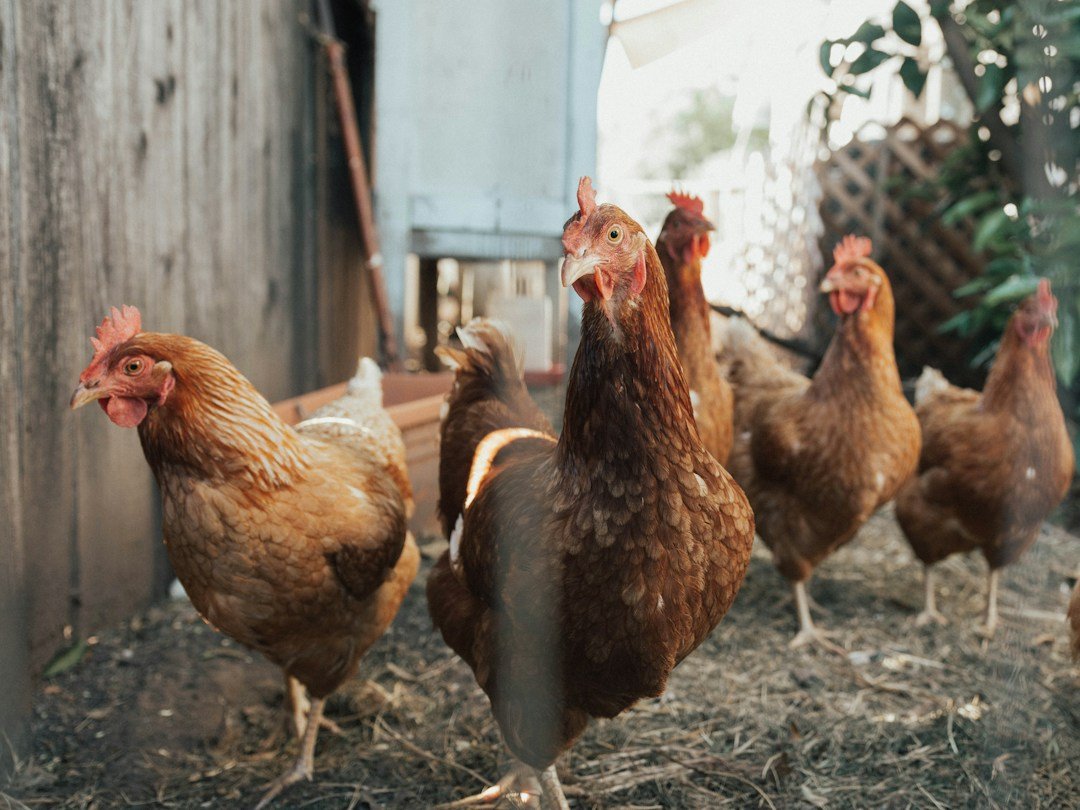
Illustrative image credit: Ben Moreland via Unsplash.
India is preparing to dedicate its first indigenous inactivated vaccine for chickens against the highly pathogenic avian influenza (HPAI) virus H5N1, specifically clade 2.3.2.1a. The Union Minister for Agriculture and Farmers’ Welfare, Shivraj Singh Chouhan, is scheduled to dedicate the vaccine on 20 November 2026 at the ICAR–National Institute of High Security Animal Diseases (ICAR-NIHSAD), Bhopal. The development is important because the Government says that no specific commercial vaccine was available for this H5N1 clade when the announcement was made. The announcement is a research and disease-control milestone; it should not be confused with a nationwide vaccination rollout or a claim that bird flu has been eradicated.
What happened?
ICAR-NIHSAD, Bhopal, has developed an indigenous inactivated vaccine for chickens targeting H5N1 HPAI clade 2.3.2.1a. The Ministry of Agriculture and Farmers’ Welfare announced on 18 November that the vaccine would be dedicated to the nation on 20 November at the institute. This is the first vaccine of its kind in India for the specified clade, according to the official release.
The distinction between the date of announcement and the date of dedication matters. As of 18 November, the scheduled national dedication is still two days away. The PIB release does not provide a commercial launch date, production volume, price, vaccination schedule, dose, field-efficacy percentage or state-wise deployment plan. Those details should be added only when the competent authority publishes them.
Why it matters: poultry is an economic and public-health issue
Bird flu is not simply a veterinary problem. A serious outbreak can trigger mortality in poultry, culling, movement restrictions, trade disruption and loss of consumer confidence. The official release notes that outbreaks can cause nearly 100% mortality among infected birds. The economic consequences extend from poultry farms to hatcheries, feed suppliers, transporters, processors, retailers and households that depend on poultry as an affordable source of animal protein.
India first detected the disease in 2006. The Government reports more than 500 combined outbreaks of H5N1 and H5N8 in the country since then. It also cites estimated direct and indirect losses of ₹2,200–3,000 crore from the 2006 outbreak. The release warns that a major outbreak could put more than 20% of the country’s poultry population at risk and could reduce GDP growth by as much as 1.5% under a severe scenario. These are risk estimates quoted in the official communication, not a forecast that such a loss will occur.
The human-health dimension also requires careful interpretation. The PIB release cites WHO figures of 1,003 human H5N1 cases and 479 deaths across 25 countries since 2003. These are cumulative international figures, not India-only numbers and not a measure of current human infections. The development therefore fits the One Health approach, which recognises the links between human, animal and environmental health.
What is H5N1 and what does the clade designation mean?
Influenza A viruses are classified by their surface proteins: haemagglutinin (H) and neuraminidase (N). H5N1 refers to a subtype carrying H5 and N1 surface proteins. “Highly pathogenic avian influenza” describes the severe disease potential of particular avian influenza viruses in poultry; it is not a statement that every exposure produces severe illness in humans.
A clade is a genetic lineage within a virus subtype. The designation 2.3.2.1a identifies a particular evolutionary branch of H5N1. Vaccine matching matters because influenza viruses evolve. A vaccine designed for one lineage cannot automatically be assumed to provide the same level of protection against every other lineage. The Indian vaccine is specifically described as targeting clade 2.3.2.1a, which the Government says has been responsible for most chicken bird-flu outbreaks in recent years.
“Inactivated” means the vaccine uses virus material that has been rendered non-infectious. It is distinct from a live attenuated vaccine. The official announcement does not disclose the precise formulation or manufacturing protocol, so technical claims beyond the stated inactivated platform should be treated cautiously.
Background: why an indigenous vaccine is significant
India’s poultry industry operates at a large scale and is linked to food security, rural livelihoods and small businesses. In an outbreak, veterinary authorities may need surveillance, laboratory confirmation, movement controls, biosecurity measures and, where prescribed, culling. Vaccination can become one component of a disease-control strategy, but it does not replace early detection, farm-level hygiene, reporting of unusual mortality or official movement restrictions.
ICAR-NIHSAD is a specialised institute under the Indian Council of Agricultural Research. Its mandate includes research on exotic, emerging and re-emerging animal diseases, diagnostics, vaccine development and high-containment biosafety. The institute’s work on avian influenza is relevant because the virus can circulate among birds and, in certain circumstances, affect mammals and humans. The institute’s high-security role is therefore central to national preparedness, not merely to one vaccine announcement.
Key figures to remember
| Indicator | Figure / detail |
|---|---|
| Vaccine | India’s first indigenous inactivated H5N1 chicken vaccine for clade 2.3.2.1a |
| Developer | ICAR-NIHSAD, Bhopal |
| Dedication date | 20 November 2026 |
| First detection in India | 2006 |
| Reported combined H5N1/H5N8 outbreaks | More than 500 |
| Estimated losses in 2006 outbreak | ₹2,200–3,000 crore |
| WHO cumulative H5N1 human cases cited | 1,003 cases and 479 deaths across 25 countries since 2003 |
What the announcement does not establish
For accurate reporting, four limits are important. First, dedication of a vaccine is not proof that it is already available to every poultry farmer. Second, the release does not publish field-trial efficacy or a national deployment schedule. Third, vaccination does not remove the need for surveillance and biosecurity. Fourth, the WHO cumulative human-case figures should not be presented as current Indian cases. Readers should wait for subsequent ICAR, Department of Animal Husbandry and Dairying or state veterinary advisories for operational guidance.
Exam relevance
UPSC and State PSC: connect the development with animal husbandry, food security, zoonoses, One Health, agricultural research institutions and disaster-risk management. In GS-III, it can be used to discuss agricultural supply chains, biosecurity and science-led disease prevention. In GS-II, it offers an example of coordination between research institutions and public administration.
Railways, SSC, Banking and other objective exams: remember the institute, city, virus subtype, clade, vaccine type and dedication date. For agriculture and veterinary science recruitment, revise the difference between HPAI, H5N1 and a viral clade.
Static GK connection
- ICAR: Indian Council of Agricultural Research, the national agricultural research organisation.
- ICAR-NIHSAD: National Institute of High Security Animal Diseases, located in Bhopal, Madhya Pradesh.
- HPAI: Highly Pathogenic Avian Influenza, commonly called bird flu.
- One Health: an integrated approach linking human, animal and ecosystem health.
- Influenza A subtype naming: H and N refer to haemagglutinin and neuraminidase.
India: country facts for static GK
President: Droupadi Murmu; Prime Minister: Narendra Modi; Capital: New Delhi; Currency: Indian rupee (INR).
Possible MCQ areas
- Which ICAR institute developed the indigenous H5N1 chicken vaccine?
- Which clade does the vaccine target?
- What does “inactivated vaccine” mean?
- In which city is ICAR-NIHSAD located?
- What is the One Health approach?
Official source
PIB: India’s first indigenous H5N1 chicken vaccine, 18 November 2026. For institutional background, consult ICAR’s vaccines for livestock and poultry resource and the ICAR portal.
Related articles on DailyGKUpdate
- India’s TB elimination progress and public-health indicators
- National Health Accounts 2023–24: public health financing
- NITI Aayog’s PLI impact assessment
Editorial note: this article distinguishes the official announcement from future rollout details. It will be updated if ICAR or the Ministry publishes further technical or implementation information.