Updated: 12 November 2026 | Daily exam briefing
Today’s official announcements connect financial inclusion, agriculture, critical-mineral security, digital connectivity, maritime preparedness, science and heritage. The most exam-relevant developments are the Cabinet’s continuation of two credit-support schemes through March 2031, the Rabi fertiliser subsidy requirement, DGFT’s export restriction on lithium-ion battery black mass and the opening phase of Sea Vigil-26. Swachh Survekshan 2025–26 rankings were also announced on 11 November; city-wise results are covered separately in our Swachh Survekshan results explainer.
1. Stand-Up India and Mudra credit guarantee schemes extended
The Union Cabinet approved continuation of the Stand-Up India Scheme and the Credit Guarantee Fund for Micro Units (CGFMU) until 31 March 2031. Stand-Up India targets at least 2.5 lakh additional women, Scheduled Caste and Scheduled Tribe entrepreneurs and has a ₹4,111-crore credit-guarantee corpus. CGFMU receives a ₹5,000-crore corpus and is expected to facilitate ₹12.6 lakh crore of Pradhan Mantri Mudra Yojana loans over five years. These are distinct instruments: Stand-Up India supports eligible greenfield enterprises; CGFMU protects lenders against default risk on specified Mudra-linked credit. Read the banking explainer.
2. Rabi 2026–27 fertiliser subsidy: ₹62,370.02 crore
The Cabinet approved Nutrient Based Subsidy rates for phosphatic and potassic (P&K) fertilisers for Rabi, applicable from 1 October 2026 to 31 March 2027. The tentative budgetary requirement is ₹62,370.02 crore—₹24,417.73 crore above the previous Rabi requirement of ₹37,952.29 crore. NBS is a nutrient-linked subsidy mechanism for notified P&K grades, including DAP and NPKS; subsidy is paid to manufacturers/importers so products can be supplied at affordable prices. This is a seasonal budgetary requirement, not a uniform percentage increase in every bag’s subsidy or retail price. Official Cabinet note.
3. DGFT prohibits export of lithium-ion battery black mass
Notification 49/2026–27 dated 10 November changed export policy for the specified black-mass category under ITC (HS) 85491400 from “Free” to “Prohibited”, effective immediately and until further orders. The Ministry of Commerce says the measure is intended to retain recycling feedstock in India, improve recovery of lithium, cobalt, nickel and manganese and reduce import dependence. Transitional arrangements in paragraph 1.05 of the Foreign Trade Policy 2023 apply. Black mass is an intermediate powder from shredding end-of-life lithium-ion batteries and manufacturing waste, not a finished battery. See our black-mass export-policy explainer and official PIB release.
4. Rural 4G saturation: unconnected villages fall by nearly 75%
DoT reported a reduction in villages without 4G from 45,180 in 2022 to 11,372 in 2026. Under the 24,680-site 4G Saturation Project, BSNL had commissioned 18,291 sites. In October 2026 these sites recorded 1.865 crore GB data consumption and a maximum 10.21 lakh active users in a day. Government has sanctioned another 26,000 sites. Remaining challenges include difficult terrain, scattered settlements and remote tribal areas. This illustrates digital inclusion through infrastructure, not merely a mobile signal. DoT/PIB release.
5. Sea Vigil-26 and bilateral naval exercises
The fifth pan-India coastal defence exercise Sea Vigil-26 runs from 11 to 19 November. The Indian Navy is lead agency; Coastal Defence and Security Readiness Evaluation is 11–17 November and the sea phase 18–19 November. It covers India’s coastline and EEZ, all coastal States/UTs and maritime stakeholders. Conceptualised after the 26/11 Mumbai attacks, Sea Vigil tests coastal security and builds up to the Navy’s Theatre Level Readiness Operational Exercise (TROPEX).
The 15th Naseem Al Bahr (Sea Breeze) with Oman included VBSS and cross-deck operations. The eighth India–Myanmar Naval Exercise IMNEX-26 at Visakhapatnam is scheduled 10–14 November. These are separate exercises with different partners. Sea Vigil · Naseem Al Bahr · IMNEX-26.
6. India–Norway research on waste-to-resource construction
CSIR, Norway’s SINTEF and Research Council of Norway held a dialogue in New Delhi on 10 November on waste-to-resource solutions for cement and construction. Discussion covered construction-and-demolition waste, steel slag, fly ash, red mud and residues; recycled aggregates, geopolymer concrete and road construction; and safe cement-kiln co-processing of suitable hazardous waste. Partners identified two to three joint research proposals, pilot demonstrations, technical guidelines and industry–academia links as next steps. This is a research dialogue and prospective collaboration, not a claim that commercial projects have already been commissioned. CSIR/PIB source.
7. Heritage and urban transport: Cabinet decisions
The Cabinet Committee on Economic Affairs approved Yuge Yugeen Bharat Museum at the North and South Block complex in New Delhi through adaptive reuse of historic buildings. Separately, Cabinet approved an 8.449-km Aqua Line extension from Noida Sector 51 to Greater Noida Sector 4 with five stations. These are approval/project decisions, not a claim that the museum or metro extension is fully operational. Details are in the PIB Cabinet releases.
8. Swachh Survekshan 2025–26: results and governance
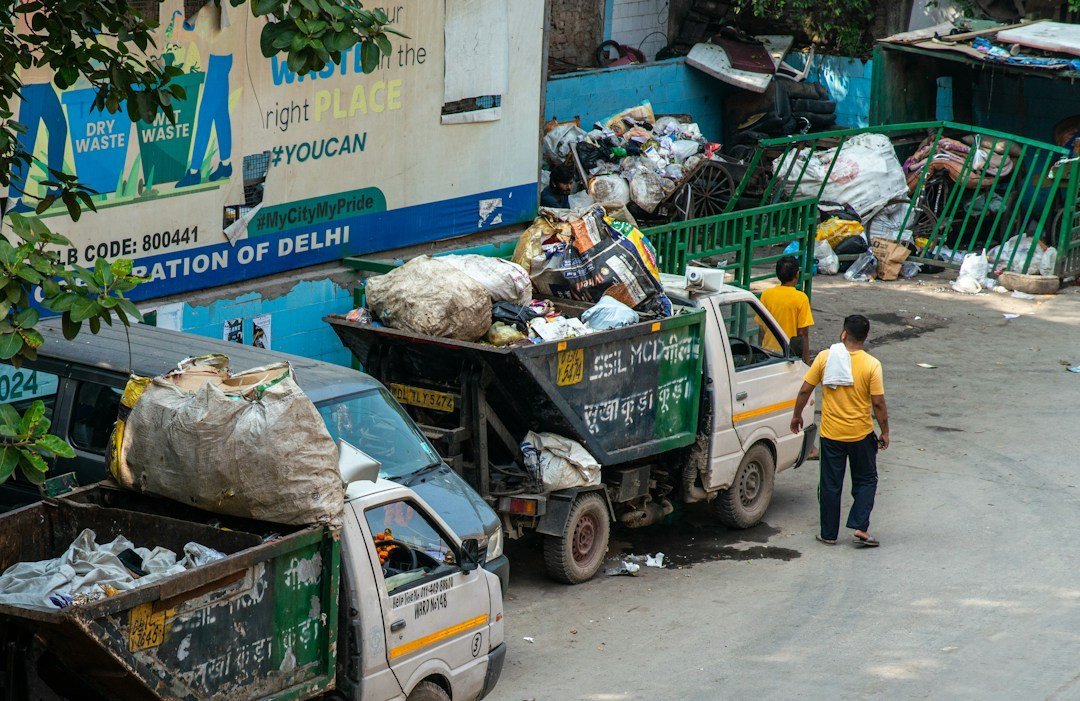
President Droupadi Murmu presented awards on 11 November. Navi Mumbai, Surat and Vijayawada topped the Super Swachh League; Visakhapatnam (GVMC), Jabalpur and Lucknow led the million-plus category. The tenth edition added riverfront, coastal and Himalayan city categories and reported over 350 ULBs rising by more than 500 ranks and 1,700-plus small ULBs improving year-on-year. See the complete rankings and municipal-governance article.
Why today’s announcements matter beyond headline numbers
Several decisions illustrate how policy instruments work together. A credit guarantee addresses lender risk; a nutrient subsidy influences the affordability of farm inputs; an export restriction seeks to secure industrial feedstock; and a connectivity project reduces geographic exclusion from digital services. For GS-II and GS-III answers, identify the responsible institution, instrument, beneficiary, implementation stage and measurable indicator. For example, a sanctioned telecom site is an infrastructure output, while reliable connectivity, service adoption and access to tele-education or telemedicine are outcomes that require separate measurement.
Likewise, a Cabinet approval is not the same as a completed project. The Aqua Line extension still requires execution and commissioning; a research dialogue identifies collaboration areas but does not prove that a pilot has been deployed; and a guarantee corpus is not the total value of loans sanctioned. These distinctions help avoid overstating government announcements in descriptive answers and current-affairs notes.
Exam relevance and static GK
- Banking/economy: credit guarantee vs direct subsidy; PMMY, NCGTC, Stand-Up India; collateral-free credit and inclusive entrepreneurship.
- Agriculture: Rabi, P&K nutrients, DAP/NPKS, NBS vs urea arrangements.
- Environment: circular economy, urban mining, battery EPR, critical minerals and hazardous-waste co-processing.
- Geography: India’s EEZ, coastal States/UTs and rural digital divide.
- Defence: Sea Vigil vs TROPEX; VBSS; Naseem Al Bahr–Oman; IMNEX–Myanmar.
- Governance: ULBs, Swachh Bharat Mission, citizen participation and municipal services.
Quick recall: NCGTC is the National Credit Guarantee Trustee Company; DGFT functions under the Department of Commerce; CSIR is India’s national R&D network; SINTEF is Norwegian; Yamuna is a major Ganga tributary; an EEZ extends up to 200 nautical miles under UNCLOS, subject to delimitation.
Primary sources
- Stand-Up India · CGFMU · NBS Rabi
- DGFT black mass · 4G saturation · Sea Vigil
- India–Norway dialogue · Swachh Survekshan
Continue with the Current Affairs Hub and Competitive Exams Hub. Distinguish a Cabinet approval, a target or research proposal from actual implementation.