Updated: 12 November 2026 | Reading time: 8–10 minutes
The results of Swachh Survekshan 2025–26, announced on 11 November 2026, offer more than a list of India’s cleanest cities. They provide a useful snapshot of how urban local bodies are improving waste collection, sanitation, public participation and service delivery. President Droupadi Murmu presented the awards at Vigyan Bhawan, New Delhi. The tenth edition also widened recognition to riverfront towns, coastal towns and Himalayan cities—categories that reflect the different environmental pressures faced by Indian settlements.
What happened?
The Ministry of Housing and Urban Affairs (MoHUA) announced the Swachh Survekshan 2025–26 award results. The assessment recognised city performance across population categories and special urban contexts. It also rewarded partnerships in the Swachh Shehar Jodi initiative, in which experienced “mentor” cities guide “mentee” cities on practical sanitation and waste-management improvements.
Among the headline results, Navi Mumbai, Surat and Vijayawada were the top three in the Super Swachh League clean-city category. In the million-plus population category, Greater Visakhapatnam Municipal Corporation (GVMC), Jabalpur and Lucknow emerged as the top three Swachh Shehar. Ahmedabad–Sanand, Indore–Depalpur and Tirupati–Kuppam were the leading city pairs in the Swachh Shehar Jodi category.
Why the results matter
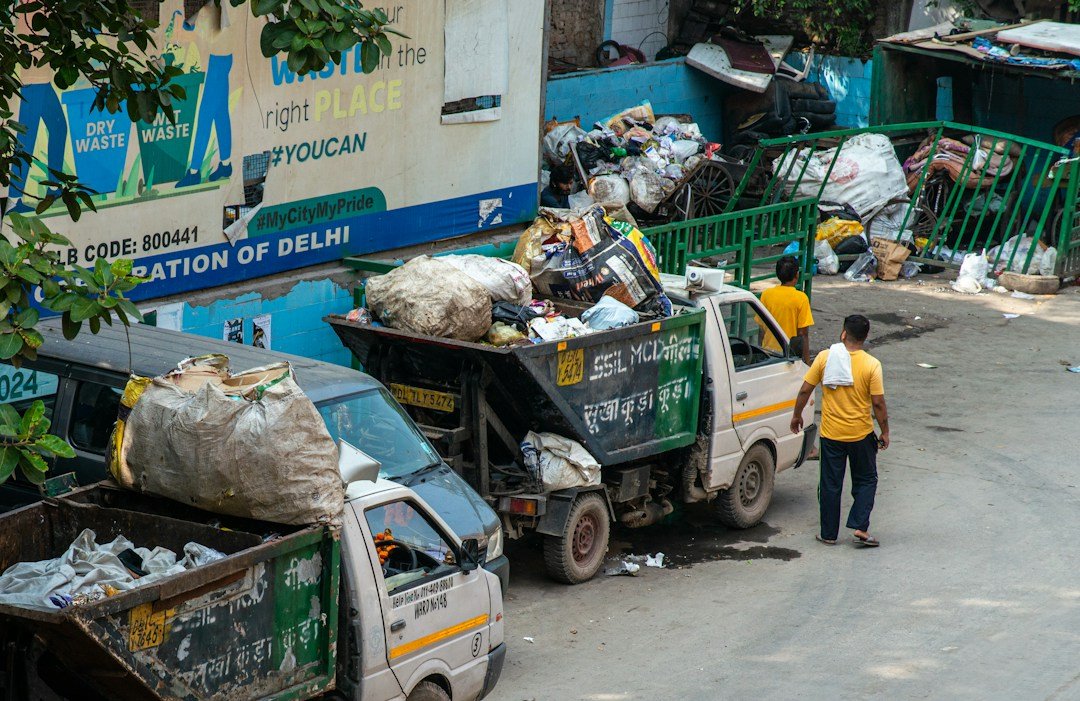
Urban cleanliness is not simply a matter of sweeping roads. It involves a chain of public services: segregation of waste at source, collection, transport, processing, treatment of wastewater, management of public toilets and prevention of littering. A weak link can undermine the entire system. Rankings can create incentives for cities to measure performance, compare practices and learn from better-performing peers.
The results also underline the importance of local government. Municipal corporations, municipalities and other urban local bodies are responsible for many everyday services, while state governments and the Union provide policy, finance and standards. This makes sanitation a practical example of cooperative federalism and decentralised governance.
Key figures and winners to remember
- Edition: 10th Swachh Survekshan.
- Awards announced: 60 national awards across five broad award groupings (including city categories and special categories).
- Super Swachh League: Navi Mumbai, Surat and Vijayawada (top three).
- Million-plus population category: GVMC Visakhapatnam, Jabalpur and Lucknow.
- Clean Himalayan Cities: Rudrapur (Uttarakhand), Jammu and Shopian (Jammu & Kashmir) were listed among the top three.
- Swachh River Front Town: Rewa (Madhya Pradesh), Bilaspur (Chhattisgarh) and Varanasi (Uttar Pradesh).
- Swachh Coastal Town: Puri (Odisha), Alappuzha (Kerala) and Ratnagiri (Maharashtra).
- Swachh Shehar Jodi: Ahmedabad–Sanand, Indore–Depalpur and Tirupati–Kuppam.
- Improvement: More than 350 urban local bodies (ULBs) moved up by over 500 ranks; more than 1,700 ULBs with populations below 50,000 improved their rankings compared with 2024–25.
These figures should be read in context: a ranking is a composite assessment, not a claim that every neighbourhood or every service in a city is equally clean. Population, geography, tourism, seasonal waste, water bodies and administrative capacity create different operating conditions.
How the city-pair model works
The Swachh Shehar Jodi initiative connects mentor cities that have demonstrated strong performance with mentee cities seeking to improve. The official account describes a network of 70 mentor cities and 191 mentee cities across 33 States and Union Territories. The idea is to transfer working methods—rather than merely circulate advisories—from one municipal team to another.
Reported changes in mentee-city indicators illustrate the approach. Visible cleanliness rose from 48% in Swachh Survekshan 2024 to 70% in the latest assessment; door-to-door collection increased from 52% to 74%; source segregation moved from 16% to 30%; access to sanitation from 11% to 38%; used-water management from 32% to 53%; and advocacy for cleanliness from 48% to 66%. These are indicator-level comparisons reported by MoHUA, not percentage-point changes in an overall city rank.
The mentorship logic is straightforward: a city that has solved a collection-route, segregation or citizen-engagement problem can share operating procedures and training with a city facing a similar challenge. It is a peer-learning mechanism within urban governance, and its outcomes depend on local implementation rather than copying a model without adaptation.
Assessment: what should candidates understand?
Swachh Survekshan is associated with Swachh Bharat Mission–Urban (SBM-U), the Union government’s urban sanitation programme. Its broader policy setting includes solid-waste management, sanitation access, behaviour change and urban service delivery. The assessment uses field evaluation and evidence-based verification; the 2025–26 process involved more than 3,000 trained assessors and digital, GPS-enabled monitoring, according to the pre-award official release.
For a governance answer, avoid writing that “cleanliness is achieved through awareness alone.” A credible response connects behaviour with infrastructure and institutions: households segregate waste; municipal bodies collect it separately; processing facilities recover or treat material; rules and contracts create accountability; and citizens monitor services. Public participation matters, but it cannot substitute for municipal capacity.
Exam relevance: UPSC, State PCS, SSC, Railways and other exams
- UPSC/State PCS GS-II: urban local bodies, 74th Constitutional Amendment, decentralisation, municipal functions, accountability and citizen participation.
- GS-III: solid-waste management, pollution, urbanisation, sustainable development and environmental governance.
- Essay: “Clean cities are built through institutions and citizen behaviour”; “Urban governance as a test of cooperative federalism.”
- State PCS: match the award-winning towns with their states; Uttarakhand’s Rudrapur is especially relevant for state-specific geography and current affairs.
- SSC/Railways/Defence: factual questions on MoHUA, SBM-U, award categories, cities and the edition/year.
- Interview: explain how rankings can improve service delivery and why outcome indicators need independent verification.
Static GK connection: institutions and constitutional provisions
Ministry: Ministry of Housing and Urban Affairs (MoHUA). Constitutional anchor: the 74th Constitutional Amendment Act, 1992, gave constitutional status to urban local bodies and inserted Part IX-A (Articles 243P–243ZG). The Twelfth Schedule lists 18 functions that may be entrusted to municipalities, including urban planning, public health, sanitation, solid-waste management and protection of the environment.
Remember the distinction: the Constitution provides the framework; state legislation determines the detailed powers and functioning of municipalities. Swachh Survekshan is an administrative assessment/recognition exercise, not a constitutional body or a statutory regulator.
Possible MCQ areas (practice prompts)
- Swachh Survekshan is conducted under which Union ministry?
- Which Constitutional Amendment added Part IX-A and the Twelfth Schedule?
- Which city pair won the Ahmedabad mentor–Sanand mentee recognition?
- Which three towns were recognised among the Clean Himalayan Cities?
- Which of the following is a municipal function listed in the Twelfth Schedule?
Answers for revision: MoHUA; 74th Amendment; Ahmedabad–Sanand; Rudrapur, Jammu and Shopian; public health/sanitation/solid-waste management (among the listed functions).
What to watch next
The most meaningful follow-up is not only the next ranking. Candidates should track whether cities sustain source segregation, expand processing capacity, manage wastewater and improve services in informal settlements. State-level award ceremonies and municipal action plans may provide additional implementation details. Rankings are useful signals, but durable public-health outcomes require year-round operations.
Official sources
- PIB / MoHUA: Swachh Survekshan Awards 2025–26 (11 November 2026)
- PIB / MoHUA: pre-award methodology and Swachh Shehar Jodi background
- Ministry of Housing and Urban Affairs
Related reading on DailyGKUpdate
- Current Affairs Hub – daily exam-oriented updates
- UPSC & State PSC Preparation Hub
- Competitive Exams Preparation Hub
- 9 November current affairs: VISTAR, energy storage and legal aid
Editorial note: This explainer is based on official PIB/MoHUA releases. City rankings and reported indicator figures are attributed to the ministry; readers should consult the official award document for category-specific details.