Thursday, 5 November 2026 | Daily briefing for UPSC, State PSC, SSC, Railways, Banking, Defence and other competitive examinations
Today’s official news agenda combines four Union Cabinet decisions announced on 4 November with a mining-sector conference beginning in Goa, a scheduled interaction with India’s Asian Para Games contingent and fresh railway freight data. The most useful exam connections are critical-mineral supply chains, statistical governance, judicial capacity, disability-inclusive sport, federal coordination and logistics performance.
1. Cabinet approves ₹2,814-crore critical mineral processing scheme
The Union Cabinet approved the Capex Support Scheme to Promote Critical Mineral Processing with a five-year outlay of ₹2,814 crore for FY 2026–27 to 2030–31. It aims to build domestic processing capacity for lithium and nickel ores or intermediate products into high-purity compounds. Cobalt is expected to be recovered as a by-product of nickel processing.
The scheme provides a 30% capital subsidy on eligible investment for four plants: two lithium facilities with minimum capacity of 30 kt each and two nickel plants with minimum capacity of 50 kt each. Maximum support is capped at ₹500 crore per lithium beneficiary and ₹900 crore per nickel beneficiary. Selection will follow technical qualification and financial bidding, using the least-cost support sought; assistance will be paid in three milestone-linked tranches.
Why it matters: mining and processing are different links in the value chain. Domestic processing can add value, reduce exposure to concentrated refining locations and support EVs, battery storage, electronics, defence and speciality steel. It does not automatically eliminate imported feedstock or replace the wider National Critical Mineral Mission.
Exam link: UPSC GS-III—mineral resources, industrial policy, energy transition and supply-chain resilience; economy—capital subsidy, capex and import substitution. Read the full Critical Mineral Processing Scheme explainer and the Ministry of Mines’ National Critical Mineral Mission document.
2. Fast Track Special Courts scheme extended to 2031
The Cabinet approved continuation of the Centrally Sponsored Scheme for Fast Track Special Courts (FTSCs), including exclusive POCSO Courts, from 1 April 2026 to 31 March 2031. Total outlay is ₹3,788.04 crore: Central share ₹2,353.15 crore (funded from the Nirbhaya Fund) and State/UT share ₹1,434.89 crore.
The programme provides for 850 courts, compared with 779 functional courts reported at approval, including 399 exclusive POCSO Courts. It has disposed of 4,02,457 cases since launch and covers 29 participating States/UTs. Each court is to have a Judicial Officer, a dedicated Special Public Prosecutor and six support staff. The Department of Justice will monitor implementation through the FTSC Dashboard, reports and consultations with High Courts and States.
Background: the scheme began on 2 October 2019 after the Criminal Law (Amendment) Act, 2018 and Supreme Court directions of 25 July 2019 in Suo Motu Writ (Criminal) No. 1/2019. The POCSO Act, 2012 defines a child as a person below 18 years.
Exam link: GS-II—judiciary, access to justice, child rights, women’s safety and Centrally Sponsored Schemes. Read the FTSC extension and 850-court explainer.
3. VISTAR: ₹4,371.10 crore for statistical transformation
The Cabinet also approved the Viksit Bharat Initiative for Statistical Transformation, Analytics & Research (VISTAR) for FY 2026–27 to 2030–31 with an outlay of ₹4,371.10 crore. The Central Sector Scheme is intended to modernise the official statistical architecture under the Ministry of Statistics and Programme Implementation (MoSPI), improving timeliness, granularity, interoperability and AI-readiness.
Its three components are Comprehensive Statistical Operations and Strengthening of Ecosystem, Support for Statistical Strengthening (SSS) and Economic Census. MoSPI proposes 59 surveys during the 16th Finance Commission cycle, compared with 43 major surveys earlier. The initiative also envisages the 8th Economic Census and stronger State/UT statistical capacity through a redesigned, deliverable-linked SSS 2.0 framework.
Exam link: national income and official statistics, data governance, evidence-based policy, Economic Census, PLFS, HCES and ASUSE. See the VISTAR full-form and objectives article.
4. ₹14,500-crore grid-scale storage VGF scheme
The Cabinet approved ₹14,500 crore in Viability Gap Funding for 92 GWh of grid-scale energy storage: 60 GWh of pumped-storage projects, 30 GWh of Battery Energy Storage Systems and 2 GWh of emerging technologies. The scheme is designed to help storage projects become financially viable and improve flexibility as solar and wind generation expands.
Remember the units: GWh measures stored energy, while GW measures power capacity. Storage shifts energy across time; it is not equivalent to creating the same amount of new generation. Read the detailed grid-storage VGF explainer.
5. Fourth Conference of Mining Ministers begins in Goa
The Ministry of Mines is organising the 4th Conference of Mining Ministers on 5–6 November 2026 in Goa. State Mining Ministers and senior Central and State officials will discuss progress, opportunities and challenges in the mining sector and share best practices. The official release describes the conference as a platform for coordination and deliberation; it does not announce a new mining policy or specific state-wise decision.
Exam link: federalism and cooperative governance, mineral administration, state role in mining, and the Centre–State interface. The conference is relevant alongside the critical-mineral processing scheme because mineral blocks, extraction, clearances and implementation involve multiple levels of government.
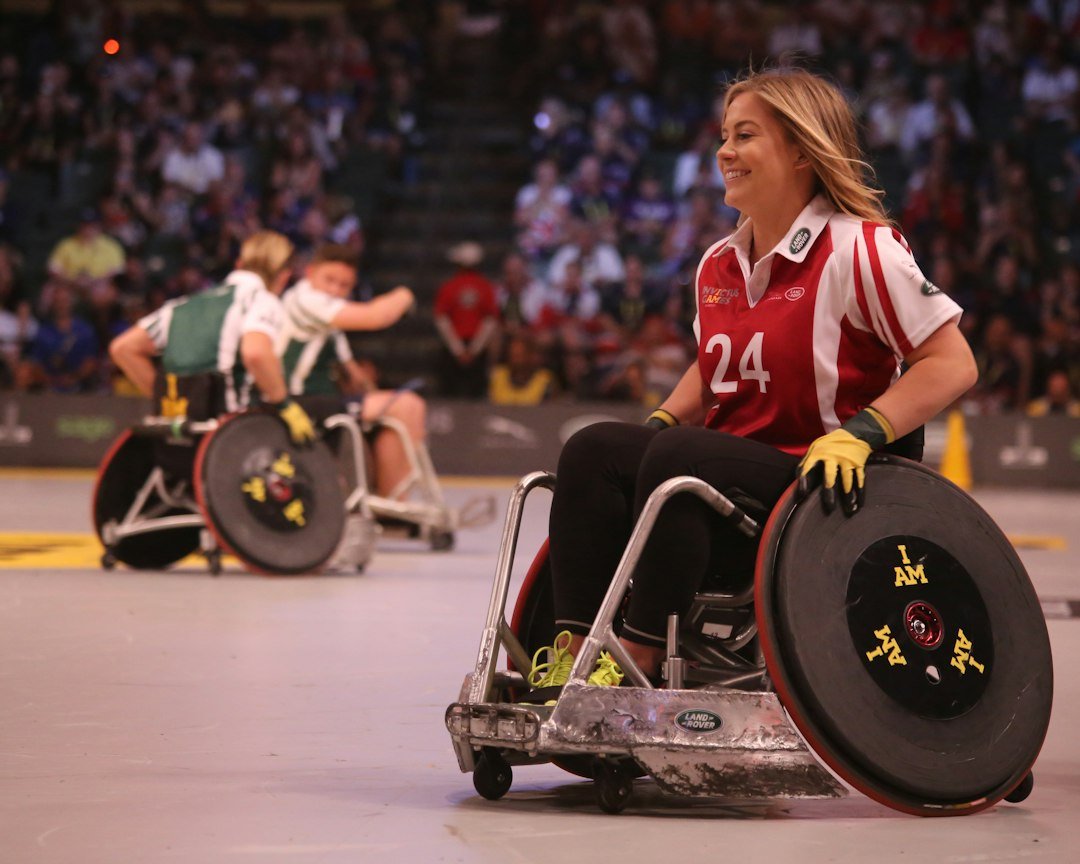
6. Prime Minister to interact with Asian Para Games contingent today
Prime Minister Narendra Modi is scheduled to interact with the Indian contingent that participated in the Asian Para Games 2026 at around 4:30 p.m. on 5 November at Indira Gandhi Sports Complex, New Delhi, and address the gathering. This is a scheduled event at the time of this briefing; the article does not report the interaction as completed.
India recorded its best-ever performance at the Games in Aichi–Nagoya, Japan: 97 Indian para-athletes won 114 medals—30 gold, 35 silver and 49 bronze. The programme is expected to include athletes, coaches, Paralympic Committee of India and Indian Olympic Association officials, National Sports Federations and Ministry of Youth Affairs and Sports representatives.
Exam link: sports governance, disability inclusion, Paralympic movement and medal tally arithmetic. The Asian Para Games are a continental multi-sport event for athletes with disabilities; do not confuse them with the Paralympic Games, which are global events held in the Olympic cycle.
7. Cabinet creates a new Agnipath retention pathway
The Cabinet approved a revised progression under the Agnipath scheme on 4 November. The existing 25% merit-based regular employment after the initial four years remains. The remaining 75% may take a further two-year engagement based on willingness; after completing it, all Agniveers in this pathway will be offered regular-soldier enrolment subject to willingness and selection criteria. The second engagement will carry higher remuneration, an enhanced Seva Nidhi package and seniority benefits; exact terms were not in the release. Do not describe this as unconditional automatic absorption. Read the Agnipath 2026 update explainer and the Ministry of Defence/PIB decision.
8. Indian Railways records 145.07 million tonnes freight in October
Indian Railways reported 145.07 million tonnes of freight loading in October 2026, against 133.93 million tonnes in October 2025—an increase of 8.32%. April–October loading reached 978.78 million tonnes, surpassing the corresponding period of FY 2025–26.
Commodity trends were also notable: food-grain loading rose 26.3%, domestic coal 16.0%, other goods 11.0% and domestic containers 6.3% over October 2025. Coal supply to power houses increased 19.5%. These are freight and logistics indicators, not passenger traffic figures.
Exam link: Railways as a logistics backbone, freight corridors, multimodal transport, coal supply and economic infrastructure. Source: Railway Ministry/PIB release dated 4 November 2026.
9. Central DA rises to 63% from 1 July
The Department of Expenditure issued its 29 October 2026 order revising Central Government DA from 60% to 63% of Basic Pay, effective 1 July. The Cabinet-approved DR revision for pensioners has the same three-percentage-point increase. The combined annual financial implication is ₹10,016.10 crore for about 48.54 lakh employees and 68.71 lakh pensioners. For the rate, examples, CPI-IW context and arrears illustration, read our Central DA 63% explainer and the official DoE order.
10. Quick static-GK revision
- Agnipath: 2022 scheme; four-year initial engagement; 25% merit-based regular enrolment at first stage; 2026 Cabinet adds a willing two-year engagement for remaining 75%, followed by conditional regular-enrolment offer.
- MoSPI: Ministry of Statistics and Programme Implementation; nodal ministry for official statistical system and coordination.
- Nirbhaya Fund: dedicated corpus for women’s safety initiatives; FTSC Central share is funded from it.
- POCSO: Protection of Children from Sexual Offences Act, 2012; child means below 18 years.
- Critical minerals: Ministry of Mines identified 30 minerals in 2023; lithium is an alkali metal, nickel and cobalt are transition metals.
- Storage units: GWh is energy; GW is power.
- Asian Para Games: Aichi–Nagoya, Japan; India’s tally 30 gold + 35 silver + 49 bronze = 114 medals.
- Rail freight: October 2026 145.07 MT; April–October 978.78 MT.
Official sources and related reading
- Cabinet: Critical Mineral Processing Scheme
- Cabinet: FTSC continuation
- Cabinet: VISTAR
- Cabinet: Grid-scale storage
- Ministry of Defence: Agnipath retention pathway
- Ministry of Mines: 4th Conference of Mining Ministers, 5–6 November
- PMO: Asian Para Games interaction, 5 November
- Railways: October freight loading
Related reading: Current Affairs Hub · Competitive Exams Preparation Hub · UPSC & State PSC Preparation Hub · Latest Articles · Government Jobs Alert 5 November

One thought on “Daily Current Affairs 5 November 2026: Critical Minerals, FTSCs, Para Games & Railways”
Comments are closed.