Published 17 October 2026 | Reading time: about 8 minutes
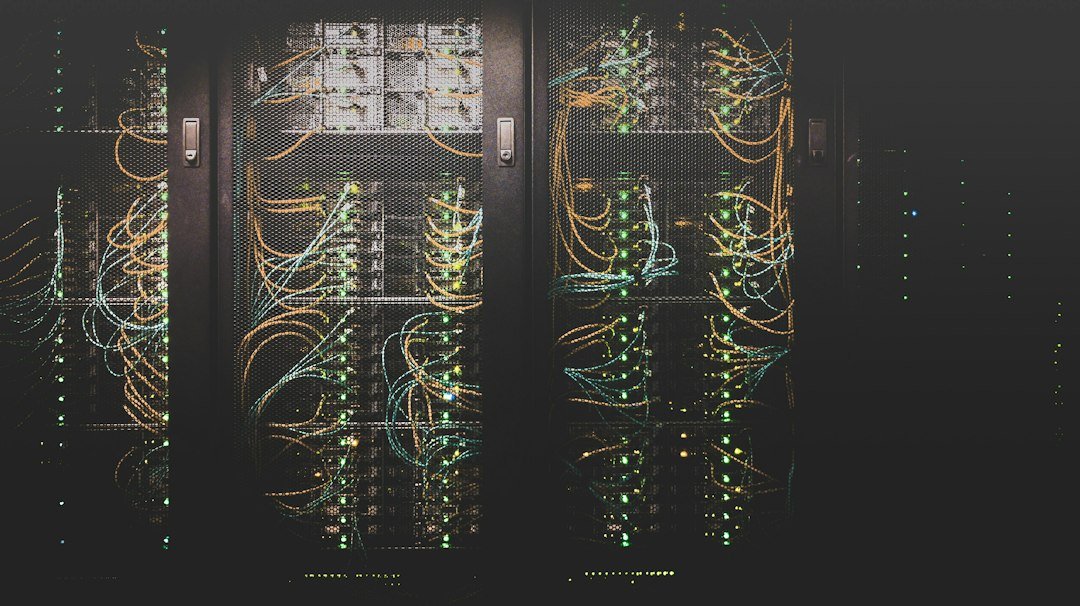
India’s data-centre capacity has increased from about 375 megawatts in 2020 to approximately 1.5 gigawatts, according to a Press Information Bureau release issued on 15 October 2026. That expansion reflects demand for artificial intelligence (AI), cloud computing, high-performance computing and digital services. It also raises a harder policy question: where can new facilities be built without overloading electricity networks, increasing water stress or offering public incentives for projects that produce limited long-term value?
NITI Aayog’s Frontier Tech Hub released a Data Centre Evaluation Framework on 14 October to help States assess those questions before supporting investment proposals. The framework is a decision-support tool, not a new licensing regulator. Its importance lies in bringing infrastructure readiness, resource sustainability, economic value and implementation capacity into the same assessment.
What happened?
The framework was developed with inputs from industry, the Ministry of Electronics and Information Technology (MeitY), the Ministry of Power and the Department for Promotion of Industry and Internal Trade (DPIIT). The launch was attended by Prof. Abhay Karandikar, Member of NITI Aayog; Shri Anurag Jain, CEO of NITI Aayog; and Ms Debjani Ghosh, Distinguished Fellow. The official release emphasised a shift from simply attracting data-centre investment to ensuring that projects are ready to be built and can operate sustainably.
For context, 1.5 GW is equal to 1,500 MW. Compared with 375 MW in 2020, the reported capacity is about four times as large. This is a comparison of stated capacity, not a claim that every facility runs at full power continuously or that capacity is evenly distributed across States.
The five pillars explained
1. Power and energy
Data centres need reliable electricity around the clock. Interruptions can affect cloud services, financial systems, enterprise networks and other digital operations. The framework asks States to assess grid readiness and net grid draw rather than treating a proposed connection as proof that adequate power will be available. It also recommends considering renewable energy and storage-backed power.
The distinction matters because a project may have a large announced investment but still face delays if transmission capacity, substations or reliable supply are not available. Power planning should also consider competing demand from households, hospitals, industry and other essential users. Renewable supply and storage can help, but their actual contribution depends on the project’s load profile, grid arrangements and operating requirements.
2. Water and cooling
Servers generate heat, and cooling systems must remove it to keep equipment within safe operating ranges. Some designs use substantial water, while others rely more heavily on air cooling or closed-loop systems. The framework calls for basin-level water-stress assessment and attention to impacts on public water supply. It also recommends rainwater harvesting, on-site water treatment and storage.
For a State, the right question is not only how much water a facility says it will use, but whether the source is dependable during dry periods and whether local communities already face scarcity. Water availability differs by basin and season. A single national average cannot substitute for site-specific analysis.
3. Siting and environmental sustainability
Location affects connectivity, land use, climate exposure, access to skilled workers, power availability and the cost of cooling. A site that looks attractive because of cheap land may be less suitable if it requires expensive network upgrades or places pressure on a stressed water basin. The framework encourages States to identify suitable data-centre zones and evaluate environmental constraints early.
Environmental planning should also cover the full life cycle of equipment. The PIB release highlights planning for e-waste, batteries and other hazardous waste. These materials require appropriate collection, handling and disposal routes; a project’s environmental assessment should not stop at the building boundary.
4. Economic and strategic value
Not every data-centre investment creates the same economic spillovers. The framework recommends distinguishing colocation facilities from active compute services. In a colocation model, customers rent space, power and related infrastructure for their own equipment. Active compute services provide processing capability and may support a wider range of digital applications. The difference matters when a government assesses the local value generated by a project.
The framework also encourages links with domestic manufacturing under the broader Make in India objective, covering both IT and non-IT infrastructure. Relevant questions include whether local firms can supply equipment or services, whether the project creates skilled employment, and whether incentives are tied to outcomes that can be measured rather than only to announced investment.
5. Policy, governance and implementation
Even a technically sound proposal can stall if responsibilities are unclear or approvals move unpredictably. The framework supports time-bound approvals, defined accountability and monitoring of project commitments. This does not mean removing environmental safeguards; it means making requirements clear early enough that agencies and investors can plan around them.
For State governments, a common evaluation structure can make proposals easier to compare. It can also help identify missing infrastructure before a project reaches the construction stage, reducing the risk that public support is committed to a site that is not ready.
Why the framework matters now
AI and cloud services are increasing demand for computing capacity. Data centres provide the physical infrastructure behind applications that users often experience as software. As capacity grows, electricity, water, fibre connectivity and cooling become strategic planning questions rather than narrow facilities-management issues.
The policy environment includes a tax holiday until 2047 for eligible foreign cloud service providers leveraging India-based data-centre infrastructure, as described in the PIB release. The wording is important: it should not be interpreted as a universal tax exemption for every operator or every service. Eligibility is governed by the applicable policy and tax provisions.
In the longer term, the quality of investment matters alongside its size. A sustainable facility needs dependable power, a credible cooling strategy, sound waste management and a realistic plan for operating costs. A project that depends on scarce local resources or provides incentives without measurable commitments can create public costs that are not visible in the initial investment announcement.
What students should remember
- Institution: NITI Aayog’s Frontier Tech Hub released the framework.
- Capacity comparison: about 375 MW in 2020 versus approximately 1.5 GW currently, as reported by PIB in October 2026.
- Five pillars: Power and Energy; Water and Cooling; Siting and Environmental Sustainability; Economic and Strategic Value; Policy, Governance and Implementation.
- Key ministries and departments involved: MeitY, Ministry of Power and DPIIT, alongside industry inputs.
- Policy character: a decision-support framework for State governments, not an additional regulator.
- Environmental issues: power demand, water stress, cooling, e-waste, batteries and hazardous waste.
Exam relevance
For UPSC and State PCS, connect the framework to cooperative federalism, sustainable development, industrial policy, infrastructure planning and technology governance. For SSC, railway and other objective exams, focus on the institution, the five pillars, the capacity figures and the full forms of MeitY and DPIIT. Banking, insurance and management candidates can relate it to cloud computing, AI infrastructure, business continuity, capital investment and energy costs. Science and engineering candidates may be asked about cooling, power reliability, high-performance computing or environmental management.
Possible MCQ areas
- Which NITI Aayog unit released the framework? Frontier Tech Hub.
- How many pillars structure the framework? Five.
- Which of the following is not one of the pillars: water and cooling, economic and strategic value, monetary policy, or siting and environmental sustainability? Monetary policy.
- What does MW measure in this context? Power capacity.
- Which department is abbreviated DPIIT? Department for Promotion of Industry and Internal Trade.
- Why assess basin-level water stress? To understand local availability and the effect on competing public needs.
Official source and further reading
The primary source is the PIB release dated 15 October 2026, which summarises the framework and links to the full report. Also consult NITI Aayog for official material. This explainer distinguishes figures reported by the government from broader interpretation; the linked framework should be consulted for the complete methodology.
Related articles
- Daily Current Affairs 17 October 2026: Data Centres and PLFS Employment Data
- PLFS September 2026: LFPR, WPR and Unemployment Rate Explained
- Competitive Exams Preparation Hub
- Current Affairs Hub
- Latest Articles
Editorial note: the framework’s stated recommendations are summarised from the official release. Check the full document for State-level implementation details and the applicable rules for any tax or incentive provision.


One thought on “NITI Aayog Data Centre Evaluation Framework 2026: Five Pillars Explained”
Comments are closed.