Updated: 11 November 2026 | Reading time: 8–10 minutes
This edition uses verified government releases available through 10 November 2026. It separates confirmed announcements from background concepts; candidates should always read the linked original notification before relying on a date, eligibility condition or operational figure.
Featured national development: Odisha’s millet roadmap
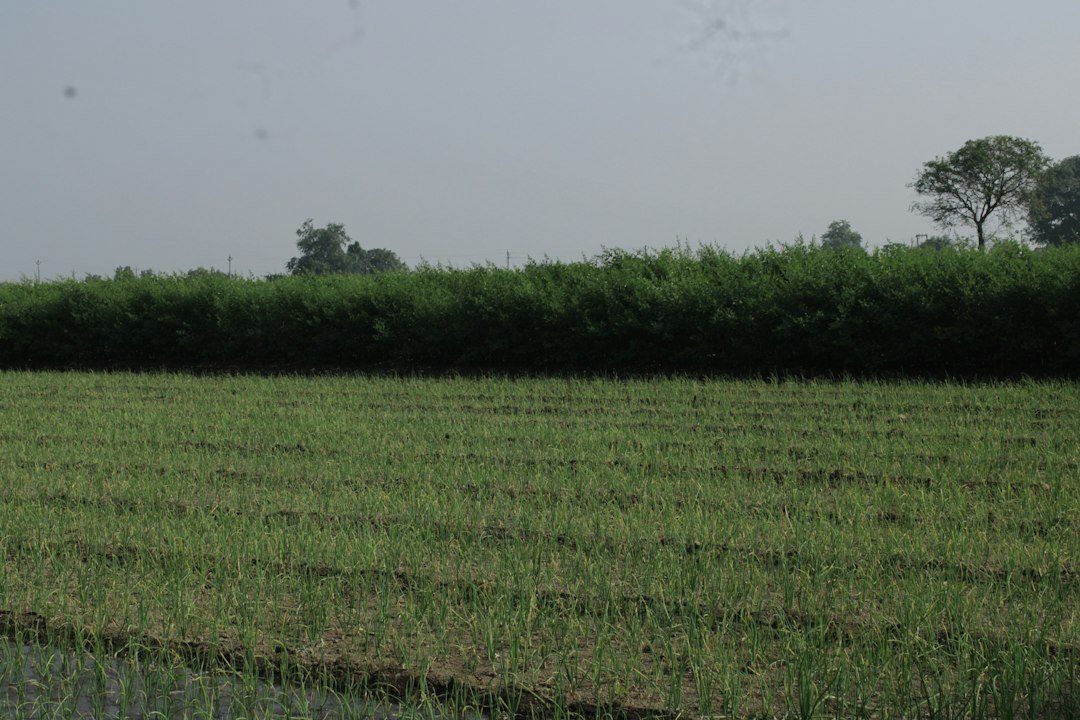
A major agriculture development reported by the Press Information Bureau (PIB) on 10 November is Odisha’s proposed long-term expansion of millet cultivation. At a national event on agro-biodiversity conservation, climate-resilient agriculture and sustainable food systems in Bhubaneswar, ICAR Director General and DARE Secretary Dr Mangi Lal Jat highlighted a roadmap to expand millet cultivation area in Odisha from 1.79 lakh hectares to 5 lakh hectares by 2047, with a production target of 8 lakh metric tonnes.
The announcement is significant because it links crop diversification with climate resilience, soil health, nutrition and rural livelihoods. Millets—often grouped under the policy term Shree Anna—can be relevant in farming systems where water availability, heat stress and input costs make crop choice important. Their value, however, depends not only on cultivation but also on reliable procurement, processing, consumer demand and market access. A production target is therefore a roadmap, not a claim that the target has already been achieved.
PIB also recorded Odisha’s ragi procurement of 7.5 lakh quintals during Kharif Marketing Season (KMS) 2024–25 and a target of 8 lakh quintals for KMS 2025–26. The release referred to 163 documented finger-millet landraces and named traditional varieties Kalia, Bati, Mami and Bharathi. It discussed expanding minor millets such as suan and kangu, affordable processing machinery, farmer producer organisations (FPOs), women’s self-help groups (SHGs), enterprise development and stronger market linkages. A proposed Centre of Excellence on Millets at Odisha University of Agriculture and Technology was also mentioned as an institutional idea—not as an already operational centre.
Why it matters for exams: this is a useful case study for agricultural diversification, agro-biodiversity, climate-resilient agriculture, nutrition security, FPOs and women-led rural enterprise. For a mains answer, connect the cultivation target to the value chain: seed diversity → climate-suitable production → procurement → processing → consumer demand → farmer income. Avoid equating acreage expansion alone with nutritional or livelihood outcomes.
Source: PIB: Odisha charts a National Roadmap for Millet-led Agricultural Transformation (10 November 2026).
International solar cooperation: India’s ISA presidency
India’s re-election as President of the International Solar Alliance (ISA) for a third consecutive term was highlighted by the Union Minister for New and Renewable Energy during the Bharat Renewable Energy Summit & Expo 2026. France was re-elected Co-President. The ISA was established through an India–France initiative in 2015 and works to promote solar cooperation among member countries, with a particular emphasis on mobilising finance and deployment.
At the summit, the minister referred to 130 ISA signatory and member countries, the USD 200 million Africa Solar Facility, and India’s commitment of approximately ₹225 crore (USD 25 million) to support affordable solar access in underserved communities. These are policy and cooperation figures: they should not be confused with installed solar capacity or a count of projects already completed. The stated priorities were to mobilise investment, accelerate deployment and translate partnerships into projects.
For prelims, remember ISA’s India–France origin and its solar-energy focus. For GS-III, the case connects renewable energy diplomacy, energy access, climate finance and the Global South. A balanced answer can distinguish an international platform’s financial mobilisation from actual project execution and outcomes.
Source: PIB: Shri Pralhad Joshi reaffirms commitment towards global solar cooperation (3 November 2026).
Science and technology: turn institutional news into concepts
Science headlines become exam-ready when the reader identifies the institution, scientific principle, stage of development, measurable result and limitation. A prototype is not a commercial product; a mission milestone is not necessarily mission completion; a policy announcement is not proof of implementation.
India’s research ecosystem includes the Department of Science and Technology (DST), Department of Biotechnology (DBT), Council of Scientific and Industrial Research (CSIR), universities and ISRO. DST supports science policy and research programmes; DBT promotes biotechnology; CSIR operates laboratories across industrial and scientific disciplines; ISRO develops and operates space systems and missions under the Department of Space.
Space sustainability
Orbital debris consists of non-functional human-made objects and fragments in space. At orbital velocities, even small pieces can damage operational spacecraft. Three concepts must be distinguished: space situational awareness (detecting and characterising objects), debris mitigation (preventing or limiting new debris) and active debris removal (removing existing objects). A target or mission plan should not be presented as proof that orbit is already debris-free.
Static GK: ISRO was established in 1969 and is headquartered in Bengaluru. Aryabhata, India’s first satellite, was launched in 1975. Pair these facts with mission-specific updates only after checking the official release.
Official sources: ISRO · DST · DBT · CSIR.
Agriculture and food security: understand the complete chain
Agriculture current affairs should be read through production, farmer income and food access. These are related but not identical. A large harvest may improve national availability without ensuring remunerative prices for every cultivator. Procurement can support prices for eligible crops and locations, while local market access, quality requirements and transport determine whether farmers can actually sell at the announced benchmark.
India’s food-security architecture combines production support, procurement, storage and distribution. The Food Corporation of India (FCI), established in 1965, is a major institution in central foodgrain procurement, storage and movement. The Department of Food and Public Distribution oversees food management and PDS policy; states are essential partners in procurement and last-mile delivery.
- MSP: announced support price for specified crops; it is not a universal guarantee that every farmer sells all produce at that price.
- Procurement: actual purchase by designated agencies subject to crop, quality and operational conditions.
- Buffer stock: inventory maintained for food-security and market-management needs.
- PDS: distribution of subsidised foodgrains to eligible beneficiaries under applicable rules.
- OMSS (Domestic): release of foodgrains into markets under specified conditions, distinct from PDS delivery.
These distinctions matter in UPSC GS-III, State PSC, NABARD and general-awareness papers. In mains answers, identify the actual bottleneck—productivity, price realisation, storage, input costs, irrigation, diversification or market access—rather than treating agriculture as one problem. When quoting production or procurement figures, record the crop year, unit, source and whether the number is provisional or final.
Primary sources: Ministry of Agriculture & Farmers Welfare · Department of Food & Public Distribution · FCI · NABARD.
Government schemes: a method for accurate revision
For every scheme, note nodal ministry, launch/approval date, target group, benefit, delivery channel, implementation partners and measurable target. Centrally Sponsored Schemes and Central Sector Schemes are not synonyms. For a revision or extension, explain what changed rather than repeating the full scheme history. Verify eligibility and application dates on the implementing ministry’s portal; PIB releases are useful for announcements but may not contain all operational rules.
Sources: PIB · National Portal of India.
Exam relevance and possible MCQs
- Odisha’s millet roadmap: expansion target 5 lakh hectares and 8 lakh metric tonnes by 2047.
- Ragi procurement in Odisha: 7.5 lakh quintals in KMS 2024–25; target 8 lakh quintals in KMS 2025–26.
- Finger millet diversity: 163 documented landraces cited in the PIB release.
- ISA: India elected President for a third consecutive term; France Co-President; India–France initiative in 2015.
- MSP does not automatically mean universal procurement.
- DST is associated with science and technology policy; DBT with biotechnology; CSIR with research laboratories; ISRO with space missions.
- Space situational awareness differs from debris removal.
UPSC Prelims can test institutions, crop terms and distinctions between targets and achievements. GS-III can use agricultural diversification, climate resilience, food management, renewable-energy finance and innovation. State PSCs may test regional crops and state programmes; NABARD may focus on FPOs, rural credit, warehousing and value chains. Railway, defence, teaching and other recruitment exams also draw from basic science, institutions and government schemes.
Related reading
Daily Current Affairs 10 November · India’s Debris-Free Space Mission 2030 · OMSS and food security · UPSC & State PSC Hub · Competitive Exams Hub.
Recruitment, results and admit-card notices are handled separately: candidates should use the official recruiting body’s notice and login portal, not rely on a current-affairs explainer.
Agriculture and food security: understand the complete chain
Agriculture current affairs should be read through production, farmer income and food access. These are related but not identical. A large harvest may improve national availability without ensuring remunerative prices for every cultivator. Procurement can support prices for eligible crops and locations, while local market access, quality requirements and transport determine whether farmers can actually sell at the announced benchmark.
India’s food-security architecture combines production support, procurement, storage and distribution. The Food Corporation of India (FCI), established in 1965, is a major institution in central foodgrain procurement, storage and movement. The Department of Food and Public Distribution oversees food management and PDS policy; states are essential partners in procurement and last-mile delivery.
- MSP: announced support price for specified crops; it is not a universal guarantee that every farmer sells all produce at that price.
- Procurement: actual purchase by designated agencies subject to crop, quality and operational conditions.
- Buffer stock: inventory maintained for food-security and market-management needs.
- PDS: distribution of subsidised foodgrains to eligible beneficiaries under applicable rules.
- OMSS (Domestic): release of foodgrains into markets under specified conditions, distinct from PDS delivery.
These distinctions matter in UPSC GS-III, State PSC, NABARD and general-awareness papers. In mains answers, identify the actual bottleneck—productivity, price realisation, storage, input costs, irrigation, diversification or market access—rather than treating agriculture as one problem. When quoting production or procurement figures, record the crop year, unit, source and whether the number is provisional or final.
Primary sources: Ministry of Agriculture & Farmers Welfare · Department of Food & Public Distribution · FCI · NABARD.
Science and technology: laboratory result, mission milestone or deployment?
Science headlines become exam-ready when the reader identifies the institution, scientific principle, stage of development, measurable result and limitation. A prototype is not a commercial product; a mission milestone is not necessarily mission completion; a policy announcement is not proof of implementation.
India’s research ecosystem includes the Department of Science and Technology (DST), Department of Biotechnology (DBT), Council of Scientific and Industrial Research (CSIR), universities and ISRO. DST supports science policy and research programmes; DBT promotes biotechnology; CSIR operates laboratories across industrial and scientific disciplines; ISRO develops and operates space systems and missions under the Department of Space.
Space sustainability
Orbital debris consists of non-functional human-made objects and fragments in space. At orbital velocities, even small pieces can damage operational spacecraft. Three concepts must be distinguished: space situational awareness (detecting and characterising objects), debris mitigation (preventing or limiting new debris) and active debris removal (removing existing objects). A target or mission plan should not be presented as proof that orbit is already debris-free.
Static GK: ISRO was established in 1969 and is headquartered in Bengaluru. Aryabhata, India’s first satellite, was launched in 1975. Pair these facts with mission-specific updates only after checking the official release.
Official sources: ISRO · DST · DBT · CSIR.
Government schemes: a method for accurate revision
For every scheme, note nodal ministry, launch/approval date, target group, benefit, delivery channel, implementation partners and measurable target. Centrally Sponsored Schemes and Central Sector Schemes are not synonyms. For a revision or extension, explain what changed rather than repeating the full scheme history. Verify eligibility and application dates on the implementing ministry’s portal; PIB releases are useful for announcements but may not contain all operational rules.
Sources: PIB · National Portal of India.
Exam relevance and possible MCQs
- FCI is associated with central foodgrain procurement and storage.
- MSP does not automatically mean universal procurement.
- DST is associated with science and technology policy; DBT with biotechnology; CSIR with research laboratories; ISRO with space missions.
- Space situational awareness differs from debris removal.
- Check crop year and estimate status before quoting agricultural data.
UPSC Prelims can test institutions, MSP/procurement/PDS distinctions and science terminology. GS-III can use food management, agricultural marketing, innovation and space sustainability. State PSCs often test regional crops, irrigation and state institutions; NABARD may focus on FPOs, rural credit, warehousing and value chains. Railway, defence, teaching and other recruitment exams also draw from basic science, institutions and government schemes.
Related reading
Daily Current Affairs 10 November · India’s Debris-Free Space Mission 2030 · OMSS and food security · UPSC & State PSC Hub · Competitive Exams Hub.
Editorial note: this explainer is concept-focused and does not invent a new recruitment, result or admit-card notice. Publish actionable updates only after checking the relevant official notice and candidate link.