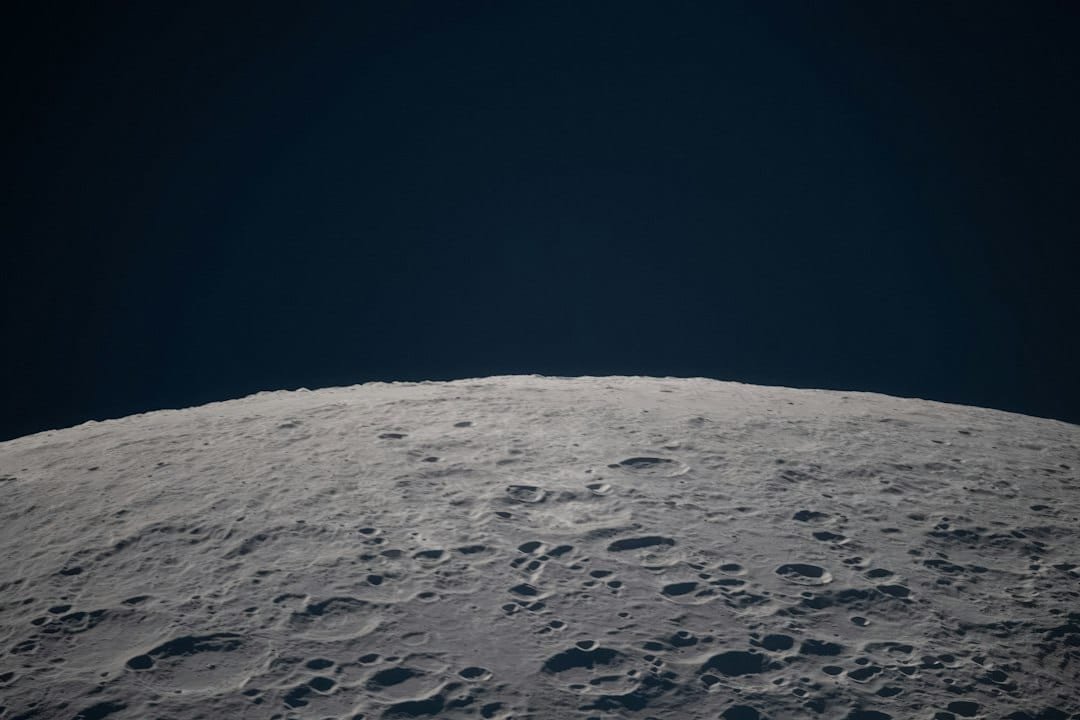
The National Meet on Scientific Exploration of the Moon through Chandrayaan Missions is being held by ISRO from 28 to 30 September 2026 at the Laboratory for Electro Optics Systems (LEOS), Bengaluru. The event is significant because it links scientific findings from completed Chandrayaan missions with the research and technology pipeline for future lunar exploration.
What happened?
ISRO brought together researchers, academics and students to review the scientific contributions of Chandrayaan-1, Chandrayaan-2 and Chandrayaan-3 and discuss future missions. ISRO reported approximately 150 registered participants, including 75 participants from Indian academia and research institutes representing more than 45 institutions. The event also includes 36 students actively pursuing lunar research.
Why it matters
Space missions are often remembered as launch and landing events, but scientific missions create a continuing research cycle. Data from one mission produces questions for the next mission; universities and laboratories analyse the data; and those research results influence instruments and mission objectives. The national meet is therefore useful for understanding how an exploration programme develops beyond a single spacecraft.
Chandrayaan mission progression
| Mission | Why it matters for exams |
|---|---|
| Chandrayaan-1 | India’s first lunar mission; major lunar scientific observations |
| Chandrayaan-2 | Lunar orbiter plus attempted lander-rover phase |
| Chandrayaan-3 | Successful soft landing and surface exploration in higher lunar latitudes |
| Chandrayaan-4 | Planned lunar sample-return mission |
| Chandrayaan-5/LuPEX | India-Japan/JAXA collaboration for lunar-volatiles research |
Chandrayaan-4: why sample return is a major step
Surface instruments can analyse material where it is found, but returning a sample to Earth creates a different scientific opportunity. Laboratories can apply instruments that are too large, heavy or complex for a lunar spacecraft. The mission therefore requires careful sample selection, surface operations, ascent from the Moon, rendezvous or transfer operations and safe Earth return.
For examination preparation, remember the phrase Chandrayaan-4 = lunar sample return. Do not confuse it with Chandrayaan-3, whose central achievement was a successful soft landing and surface mission.
LuPEX: India and Japan work together on lunar volatiles
ISRO identifies Chandrayaan-5/LuPEX as an India-Japan collaborative mission with JAXA. The mission is associated with exploring lunar volatiles including water ice near a permanently shadowed region in the lunar south-polar area.
What is a permanently shadowed region?
It is an area that receives little or no direct sunlight. Near the lunar poles, the geometry of the Moon’s surface can keep some depressions in near-permanent darkness. Extremely low temperatures can help preserve volatile substances. This is why the lunar polar regions are scientifically important when researchers investigate possible water ice.
People and institutions to remember
M Ganesh Pillai, Scientific Secretary, ISRO, inaugurated the meet. R. Venkateswaran, Director, LEOS; Dr Tirtha Pratim Das, Director, Science Programme Office, ISRO Headquarters; and Prof. Anil Bhardwaj, Director, Physical Research Laboratory, are among the officials and scientists highlighted in the ISRO event release.
Data figure
| Indicator | Figure |
|---|---|
| Meet dates | 28–30 September 2026 |
| Venue | LEOS, Bengaluru |
| Registered participants | About 150 |
| Academic/research participants | 75 |
| Institutions represented | 45+ |
| Students pursuing lunar research | 36 |
Static GK connection
LEOS is an ISRO centre in Bengaluru. JAXA is Japan’s national space agency. The current-affairs association worth remembering is ISRO–JAXA–LuPEX–lunar south pole–water ice.
Possible MCQ areas
- Where was the Chandrayaan National Meet held?
- How many participants and institutions were reported?
- What is the objective of Chandrayaan-4?
- Which agency is India’s partner in LuPEX?
- Why are permanently shadowed lunar regions important?
- Who inaugurated the national meet?
Official source
ISRO – National Meet on Scientific Exploration of the Moon through Chandrayaan Missions
Related articles
GalaxEye OptoSAR Satellite · Current Affairs 2026 · Daily Current Affairs 30 September 2026